The ballot proves nothing
Thailand's 2024 Senate was chosen by 46,000 applicants voting for each other. The design cannot distinguish coordination from association — which is why establishing what happened has taken 700 witnesses and 75,722 pages, and why the Commission has now referred 77 people to the Supreme Court.
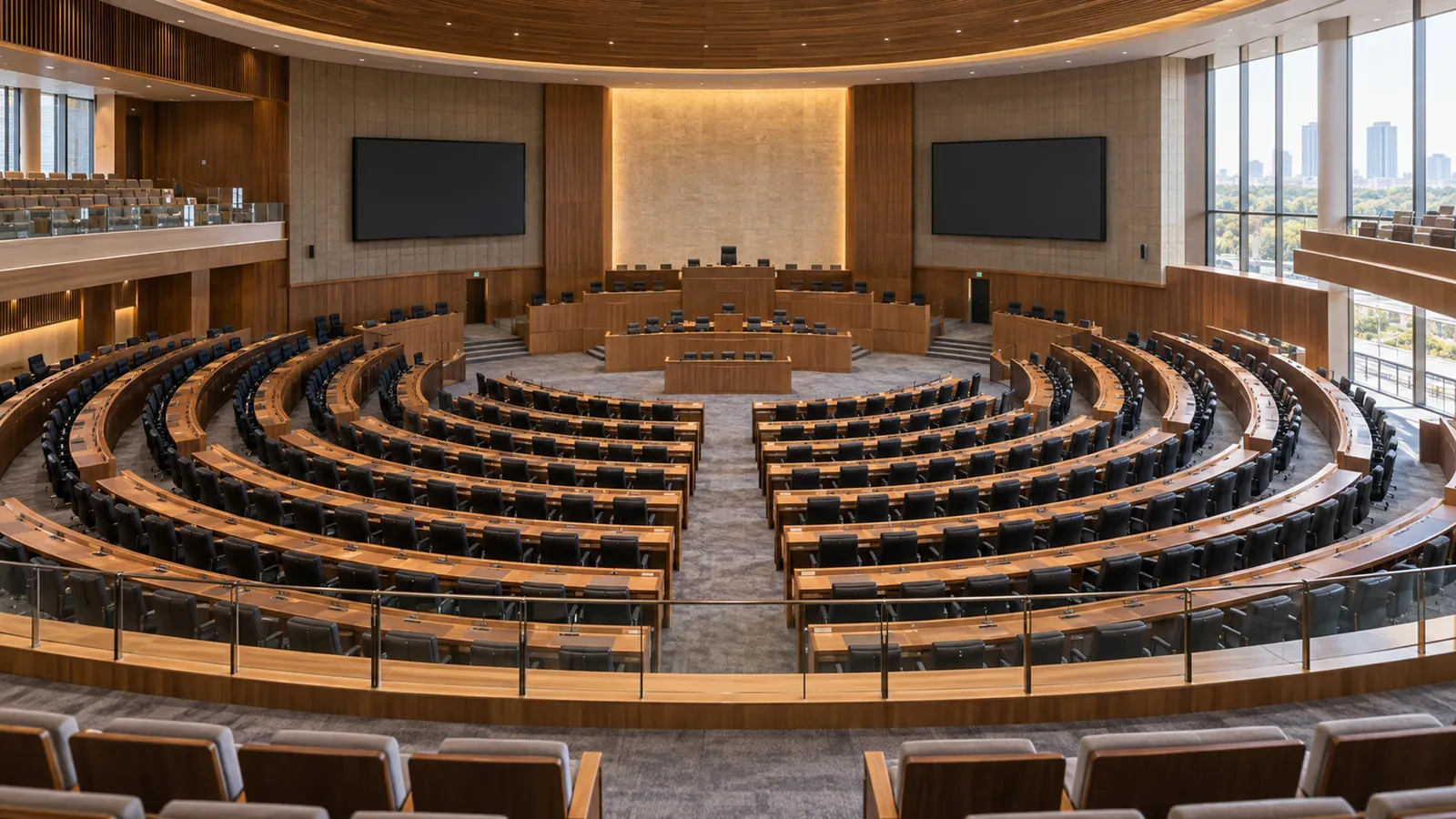
In June 2024, Thailand chose two hundred senators without holding an election.
Around forty-six thousand people applied. They then voted for each other. No member of the public cast a vote, and none was entitled to.
Establishing what happened in that process has since taken an investigation subcommittee, more than seven hundred witnesses, and a case file the Election Commission puts at 75,722 pages.
That is the argument of this article, and it is a point about design rather than about anybody’s conduct. An election that has to be reconstructed from testimony, at that scale, is one whose own records contain nothing decisive. The ballot proves nothing, because it was built so that it could not.
How it was supposed to work
The intention was defensible and worth stating fairly.
Thailand’s designers faced a real problem. An elected Senate becomes a second chamber of party politics. An appointed Senate is a patronage instrument. So the 2017 Constitution tried a third thing: let people select from among themselves, by occupation, so that the chamber represents expertise rather than parties.
Twenty occupational groups. Two hundred seats, ten from each group. Applicants register in the group matching their background and are selected upward through three levels — district, then province, then national.
At each level there are two rounds. First you vote within your own group. Then comes the safeguard: การเลือกไขว้, cross-selection. The groups are divided into four lines of three to five groups each, and in this round you may not vote for yourself or for anyone in your own group. You must vote for strangers in another occupation.
That second round is the anti-collusion device, and it is the interesting part of the whole system.
Why the safeguard points the wrong way
Cross-selection defeats exactly one kind of bloc: one confined to a single occupational group. If twenty accountants agree to vote for each other, the round in which they cannot vote for accountants destroys the arrangement.
It does nothing whatever to a bloc that spans groups. For a coordinated set of entrants distributed across several occupations, cross-selection is not an obstacle. It is a mechanism, because it converts an advantage held inside one group into votes delivered into another.
The safeguard is orthogonal to the threat. It was built against the arrangement that is easiest to imagine and hardest to organise, and it is indifferent to the arrangement that is harder to imagine and much easier to organise.
That is a criticism of a design, not an allegation about anyone. It would be true if the 2024 selection had produced a chamber nobody complained about.
The property that makes it unauditable
Now the deeper problem, and it is the one this site keeps arriving at from other directions.
In an ordinary election, the electorate and the candidates are different populations. That separation is what makes electoral offences detectable at all: something has to pass between the two groups, and the passing can leave a trace — money, a list, an instruction, a witness on the other side of the transaction.
Here the voters are the candidates. Every elector is a competitor and every competitor is an elector.
Which means the observable behaviour of collusion and the observable behaviour of legitimate association are the same behaviour. People in a professional group who know each other, travel together, share a region and vote for one another are doing something the system explicitly invites. A coordinated bloc does the identical thing and leaves the identical record.
And the arithmetic removes what little signal might remain. With roughly forty-six thousand applicants spread across twenty groups and hundreds of districts, the number of voters in any single district-level group ballot is very small — frequently double figures, sometimes fewer. In a contest that size, a handful of coordinated entrants is decisive, and their effect on the result is statistically invisible. There is no turnout anomaly to find, no improbable margin, no discontinuity.
So there is nothing in the ballot to audit. Not “hard to detect”. Nothing to detect, by construction.
This is the legibility problem this archive has now hit six times. Rules bind when the behaviour they govern is observable by another person. Article 134 Nobody hears you speed found it in the horn that nobody hears. Article 142 Somebody has to be in the chair found the benign version — a market that works because performance happens in public. Here it is load-bearing for the constitutional order, and it fails.

Which is why it takes seventy-five thousand pages
Follow the consequence.
If wrongdoing cannot be established from the electoral record, it can only be established from outside it — from testimony, phone records, money movements, travel, accommodation, and people willing to say what they were told and by whom.
That is not an election petition. It is a conspiracy investigation, and it has to be conducted with the tools of one.
Which is exactly what has happened. The joint Election Commission and Department of Special Investigation subcommittee reported gathering evidence from more than seven hundred witnesses, in a file the Commission has since put at 75,722 pages. Separately, reserve candidates have pressed the DSI to advance parallel lines of inquiry under secret-society and money-laundering provisions rather than electoral law.
Read that as a structural verdict rather than a scandal. When the ordinary machinery of election scrutiny is useless, the state reaches for organised-crime statutes instead. The design forced that, whatever the outcome turns out to be.
What is alleged, and what has actually happened
This section is reporting, not conclusion. Nothing below is established.
In July 2025, the central investigation and inquiry subcommittee — a joint EC and DSI body chaired by a Deputy Secretary-General of the Election Commission — resolved to refer 229 accused persons to the Election Commission for consideration. Thai reporting of the resolution described these as 138 sitting senators and 91 executive committee members of the Bhumjaithai Party and associated network.
The provisions cited were sections 36 and 62 of the Organic Act on the Acquisition of Senators B.E. 2561 (2018), enforced through section 70 — section 36 prohibiting collusive, dishonest or unfair conduct in the selection, section 62 prohibiting supporting or conniving at breaches. Section 77(1) permits the Commission, where a political party is implicated, to petition for that party’s dissolution. Reporting also referred to section 113 of the Constitution, which prohibits senators from being under the mandate of a political party.
The Election Commission publicly stated that reports it had prosecuted 229 people were untrue and that the file remained at its first stage. The EC Secretary-General recused himself, having served as Director of the Senate Selection and therefore being an interested party.
The position has moved since, and the direction of the movement matters.
As at 5 September 2026, and on Thai press reporting throughout: the prosecution service is reported to have returned the file to the Department of Special Investigation on 27 July 2026. The Election Commission was reported to have closed its file and scheduled a vote for 14 September 2026. An Election Commission investigation subcommittee was reported to have resolved, five votes to two, that the allegations against the 229 were without foundation — a subcommittee opinion, not a decision of the Commission.
The Commission voted on 14 September 2026
It has now decided, and this section is written from the Commission’s own published statement rather than from reporting of it. Election Commission statement 445/2569 (2026), 14 September 2026.
The file was 75,722 pages. There were 67 complainants and 427 respondents. The Commission considered it across eleven sittings between 8 June and 28 August 2026 before voting.
It resolved to petition the Supreme Court and pursue criminal proceedings against 77 people. By the Commission’s own breakdown: 26 sitting senators, 36 people entitled to vote in the selection who were not senators or reserves, and 15 others.
And the number it referred from the category this case has always been really about is nil.
Party executives, members of parliament and holders of political office: none. The first two heads of allegation — sections 76 paragraphs one and two of the Organic Act, which prohibit a party executive, MP, local politician or political office-holder from acting to help or hinder a candidate, and prohibit a candidate from accepting such help — produced no referrals at all. Zero under each.
That is the Commission declining to take to court the proposition that a party organised this, and it is the single most important thing in today’s decision for anyone who has followed the story through the phrase “blue senators”. It is not an acquittal of anybody and it is not a finding that no such conduct occurred. It is a decision about what the Commission considers it can prove.
What it did refer runs to the mechanics. Thirty-six people under section 36 with section 70, introducing themselves other than by the method the Commission prescribed. Seventy-seven under sections 77(1), 77(3), 79 and 81 — providing or promising money or benefits, hosting, demanding or accepting payment to stand or not stand, and demanding or accepting payment to vote or abstain.
The conduct the Commission says the Department of Special Investigation’s evidence indicated, in its own words: candidates grouped and rates of payment set at each level; national-round voters brought together to prepare a slate; deposits paid and travel to the selection venue arranged; and the morning and cross-selection rounds producing results matching that slate. That is the Commission’s characterisation of an allegation it has now put to a court. It is not a finding, and this article does not adopt it.
What happens next is defined and it is quick. The Commission must write its decision and file with the Supreme Court within sixty days. Once the Supreme Court accepts the petition, any senator named must cease performing their duties until judgment. If convicted, membership ends from the date duties ceased. Vacancies are filled from the reserve list of the same occupational group by announcement of the Senate President; where a group’s reserve list is exhausted, the President draws lots against other groups’ lists; and if reserves run out entirely and fewer than half the senators remain with more than a year of the Senate’s term to run, a fresh selection follows within sixty days.
Those referred are entitled to the presumption of innocence. Several have denied the allegations publicly. No court has determined any of it, and the Supreme Court has not yet accepted the petition. Every date here is a date, not an outcome.
The term “สว.สีน้ำเงิน” — blue senators — is in general use in Thai media, blue being the party’s colour, to describe senators observed to be aligned with a major party. iLaw has documented the concentration of successful applicants in particular provinces, noting that Buriram returned the largest number of any province at fourteen. Concentration is a fact about the results. It is not proof of anything and is not offered as such.
And it should now be read alongside the Commission’s decision of 14 September 2026, which referred no party executive, no member of parliament and no holder of political office to the Supreme Court. The phrase has been in circulation for two years. The body with the investigative file and the power to prosecute has declined to put the party proposition to a court, and anyone who has carried that inference — including anyone who took it from an earlier version of this article — is entitled to know that.
Why any of this matters beyond the case
Here is the part that survives whatever the Commission decides, and it is the answer to why this is a democratic question rather than a procedural one.
Under the 2017 Constitution the Senate is not a debating chamber. It is a gatekeeper.
It participates in confirming appointments to the independent agencies — the bodies that regulate elections, investigate corruption, and adjudicate constitutional questions. And constitutional amendment cannot proceed without a threshold of Senate support, which is the mechanism by which the charter has remained unamended in the ways that matter.
So the chamber selected by the least auditable method in the system holds the veto over changing the system, and a hand in appointing the people who police it.
One consequence of that deserves stating plainly and without any accompanying insinuation. The Election Commission is among the bodies whose membership the Senate has a role in confirming. The Election Commission is also the body now adjudicating allegations about how that Senate was selected. That is a feature of the constitutional architecture as drafted. It is not an accusation against any commissioner, and nothing here suggests any commissioner has behaved improperly.
Article 76 Nothing lasts long enough to build found that Thailand has never let a constitution live long enough to accumulate the conventions that make one work. Article 11 111 dissolved parties: how Thailand made disbanding politics routine found party dissolution normalised as a routine instrument.
This is the same disease at a different site. A rule was written to keep parties out of the Senate. The rule cannot see whether parties are in the Senate. So the question of whether the chamber is legitimate cannot be settled by looking at what the chamber did — only by a criminal investigation, whose outcome will itself be contested, and which will be adjudicated in part by institutions the chamber helped to staff.
Whatever the answer, the country cannot get it from the ballot. That is what was actually built.
The honest counter-argument
It deserves a hearing and this site’s rule is to give it one.
The alternative designs are all worse in obvious ways. A directly elected Senate duplicates the lower house and is captured by parties openly rather than covertly. An appointed Senate is capture by definition. A Senate selected by professional bodies hands the power to whoever controls those bodies.
The designers were not solving an easy problem and there is no clean solution to it. It is also true that some senators selected in 2024 have no alleged connection to anything, and that treating the entire chamber as illegitimate is both unfair to them and analytically lazy.
And a system being unauditable does not establish that it was abused. That is precisely the point of this article and it cuts both ways: the design cannot prove collusion, and it cannot disprove it either. Everyone selected under it — including anyone entirely innocent — now carries a suspicion the system gave them no way to dispel.
That is the strongest thing that can be said against the design, and it does not require anybody to be guilty.
Common misconceptions
“Thais elected this Senate.” No member of the public voted. Roughly 46,000 applicants selected from among themselves.
“229 senators have been charged.” No. An investigation subcommittee referred 229 accused to the Election Commission for consideration in July 2025. The Commission publicly corrected reports that charges had been brought.
“The cross-selection round prevents collusion.” It prevents blocs confined to one occupational group. It is not an obstacle to a bloc spread across groups.
“If it happened, the results would look strange.” With very small numbers of voters in each district-level group ballot, a coordinated minority is decisive and leaves no statistical signature.
“The case will settle it.” It may determine criminal liability. It cannot make the selection method auditable, and the next selection runs on the same rules.
Common questions
- How was Thailand's 2024 Senate chosen?
- By self-selection. Around 46,000 applicants registered in 20 occupational groups and voted for one another through district, provincial and national levels. The public did not vote.
- What is ฮั้ว?
- A Thai term for collusion or rigging — an arrangement between parties who are supposed to be competing.
- What is alleged?
- That the self-selection process was coordinated. In July 2025 a joint EC–DSI subcommittee referred 229 accused to the Election Commission. On 14 September 2026 the Commission resolved to petition the Supreme Court against 77 people — 26 sitting senators, 36 selection voters and 15 others — and referred no party executive, MP or political office-holder. Nothing has been proven and no court has ruled.
- Has anyone been convicted?
- No. As at 5 September 2026 the Election Commission had not voted. A subcommittee is reported to have resolved five to two that the allegations were without foundation, and a Commission vote is reported to be scheduled for 14 September 2026. Nothing is decided and no court has ruled.
- What was the cross-selection round for?
- To prevent bloc voting by forcing candidates to vote outside their own occupational group. It breaks single-group blocs and does not impede blocs spanning several groups.
- Why does the Senate matter so much?
- It has a role in confirming appointments to the independent agencies, and constitutional amendment requires a threshold of Senate support.
- Will the next selection use the same system?
- The rules have not changed.