Pillar · 43 articles
City & Life
Bangkok — infrastructure, history, the things you walk past — and the customs nobody explains to you.
How the romance scam industry actually works — and who is actually in the compounds
At least 300,000 people work in Southeast Asia's scam operations, and a large share are trafficking victims. In Thailand the people losing money aren't the foreigners — they're Thais.
Bangkok before the Skytrain: the 31 years the city chose cars
Bangkok had electric rail in 1894, scrapped it in 1968, and didn't get it back until 1999. What happened in between, and the thousand concrete pillars still standing as evidence.
Why Bangkok floods — and why it's mostly not the rain
Bangkok sinks up to 3cm a year, sits on a river that falls 1.5m per 100km, and filled in its canals for roads. Around 70% of projected flood cost increases by 2050 come from subsidence, not sea level rise.
The foreigner price: a Thai explanation
Thai national parks charge foreigners five to ten times the local rate. I'm Thai, I pay the local rate, and I think the policy is defensible and the enforcement isn't.
Bangkok scams: the pattern behind all of them
Every Bangkok tourist scam works the same way — it interrupts you before you reach the real thing. Learn the pattern and you're protected against the ones nobody's invented yet.
Why Bangkok has no city centre
Bangkok's business district has moved four times in seventy years, river to Silom to Sathorn to Sukhumvit. It is a moving average, and the transport network decides where it sits.
Bangkok's air: which months are actually bad, and why
Bangkok's PM2.5 hit 79–108 µg/m³ in January 2026 — nearly triple the Thai threshold. But it's seasonal, predictable, and largely blown in from somewhere else.
Why Thai addresses make no sense (and why they actually do)
Soi 20 can be a mile from Soi 21. House 150/1 sits next to 89. Thai addresses aren't a map — they're a chronology, which explains everything.
Thailand has more than 16,000 7-Elevens. That's not a fun fact, it's infrastructure.
Thailand has more 7-Elevens per person than any country on Earth — 16,284 of them, all run by one company. It stopped being a shop chain a long time ago.
Why no shadow may fall on a spirit house
Thai spirit houses follow strict placement rules — specific directions, a minimum height, and no shadow from any building or tree. In a city of towers, that last rule explains everything.
Thirteen digits: what a Thai ID number actually tells you
Every digit of a Thai ID number means something — including whether your parents registered your birth on time. It's on your card for life.
The pension system is called your children
Remittances from adult children reach around 30% of rural Thai household income. That is the pension system, and a fertility rate of 0.86 for 2025 is about to break it.
The other foreigners
Four to five million migrant workers are in Thailand depending on which count you use — over 10% of the labour force and 4.3–6.6% of GDP. When either Thais or expats say "foreigners in Thailand", neither group means them.
The English Thailand isn't a translation of the Thai one
English-language Thai news is a separate product written for a different audience. Here's what the Thai-language press carries that it doesn't, and how to get at it.
Your nickname is older than your name
Thai nicknames are what's left of the naming system Thailand had before 1913, which is why Kanchana is called Kai.
Kreng jai: the one rule underneath all the others
Kreng jai, saving face, mai pen rai, the smile, the avoidance of confrontation: one mechanism with five names, and it has real costs.
When the tour arrives
Thailand's online pile-ons are called ทัวร์ลง — "the tour descends." A culture built on not imposing on people produces some of the most intense mobbing anywhere. That isn't a contradiction.
The org chart is in the grammar
Thai has no neutral way to address a colleague. Every sentence places you above or below them, which is why seniority survives, why you can't leave before your boss, and why nobody tells you the plan won't work.
The air-conditioned town square
Bangkok has 8.2 million square metres of retail supply. That is the only public space in a city where outdoors is too hot, too polluted or underwater.
The price of milk and rice
Sin sot's old name was ค่าน้ำนมข้าว — the price of milk and rice. It isn't buying a wife. In a country with a ฿600 pension, it's a transfer between retirement systems.
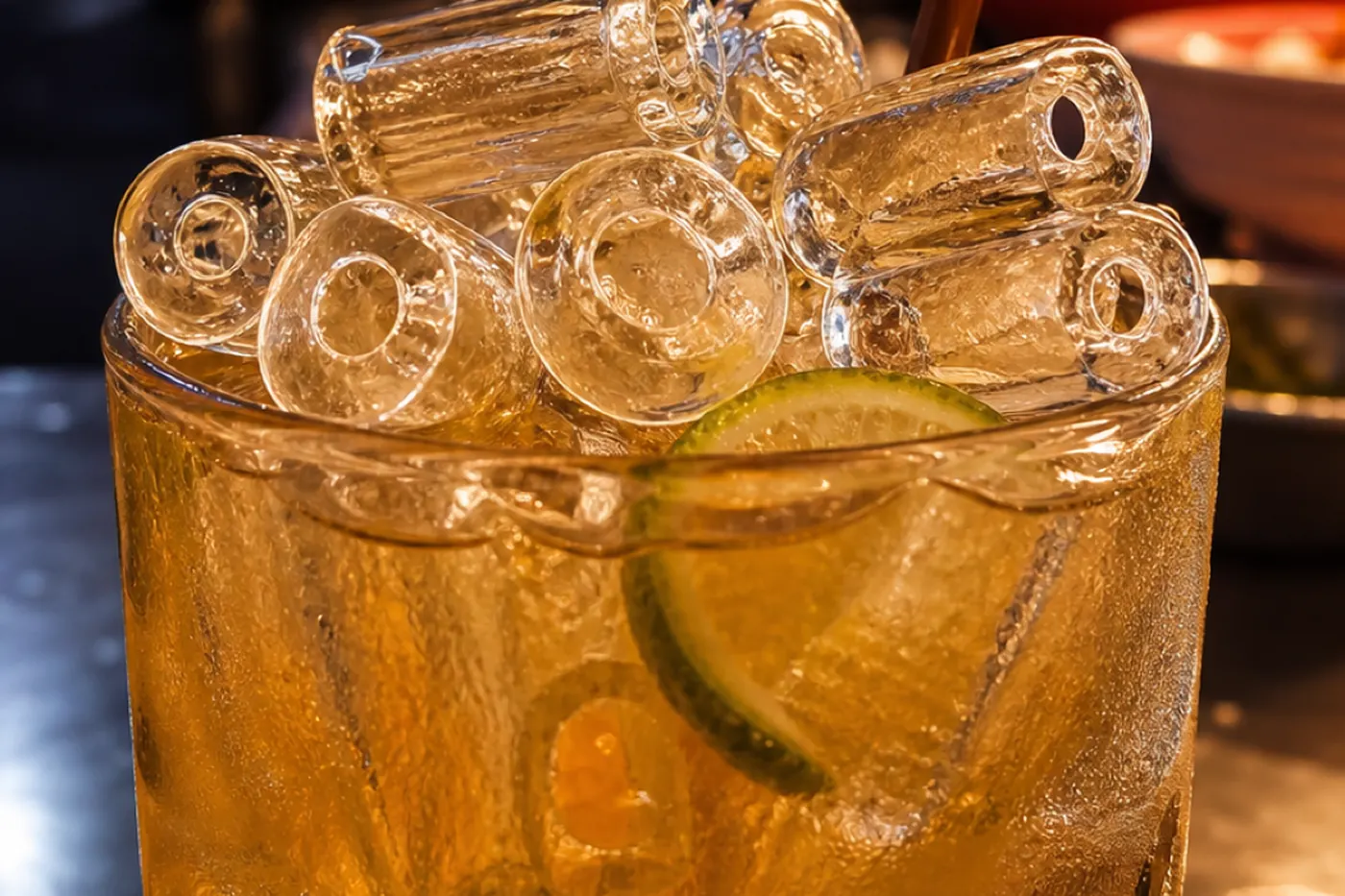
The hole in the ice
The ice with a hole through it is the drinking ice. Thailand manufactures it at ฿0.80 a kilo in factories producing 670 tonnes a day, and delivers it daily to everywhere.
No word for please
Thai has no everyday word for "please" and doesn't need one. Politeness lives in the pronoun and the final particle, which is why Thais sound blunt in English.
Nobody else is called this
Thai law requires every surname to be unique to one family. If you meet someone with your surname, you're related. That single rule explains more than it looks like.
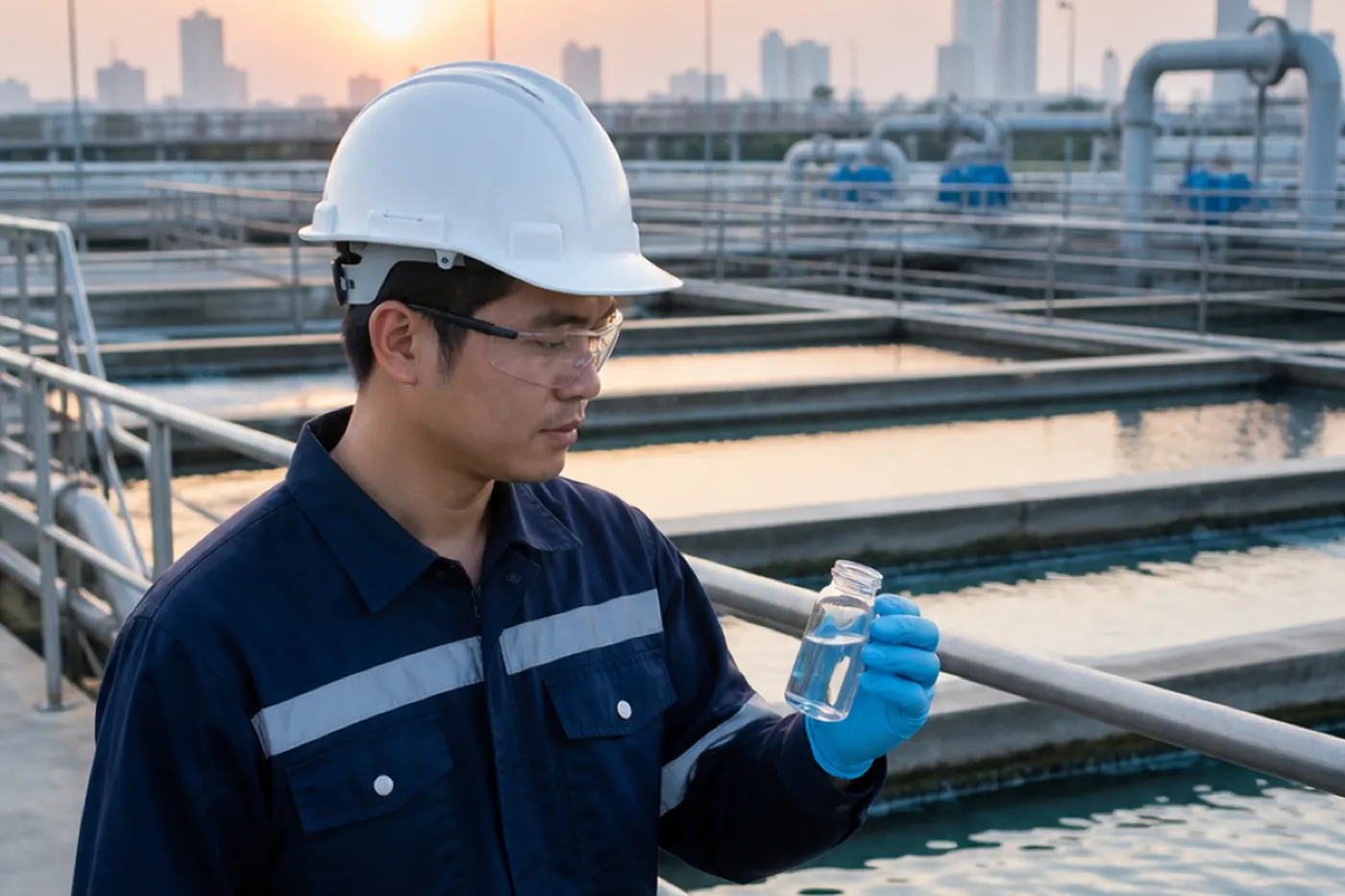
The last fifty metres
Bangkok's water authority says its tap water meets WHO drinking standards. It does, at the plant. What happens after that is why the whole country buys water.

Six gongs in the evening
Thai hour-words are the sounds the instruments made. โมง is a gong. ทุ่ม is a drum. ตี is the act of striking one. The clock was a temple, and the words survived it.
The bottle stays
Thai drinks come in bags because the glass bottle is worth more than the drink. It solved two real problems in the 1950s and created a bigger one since.
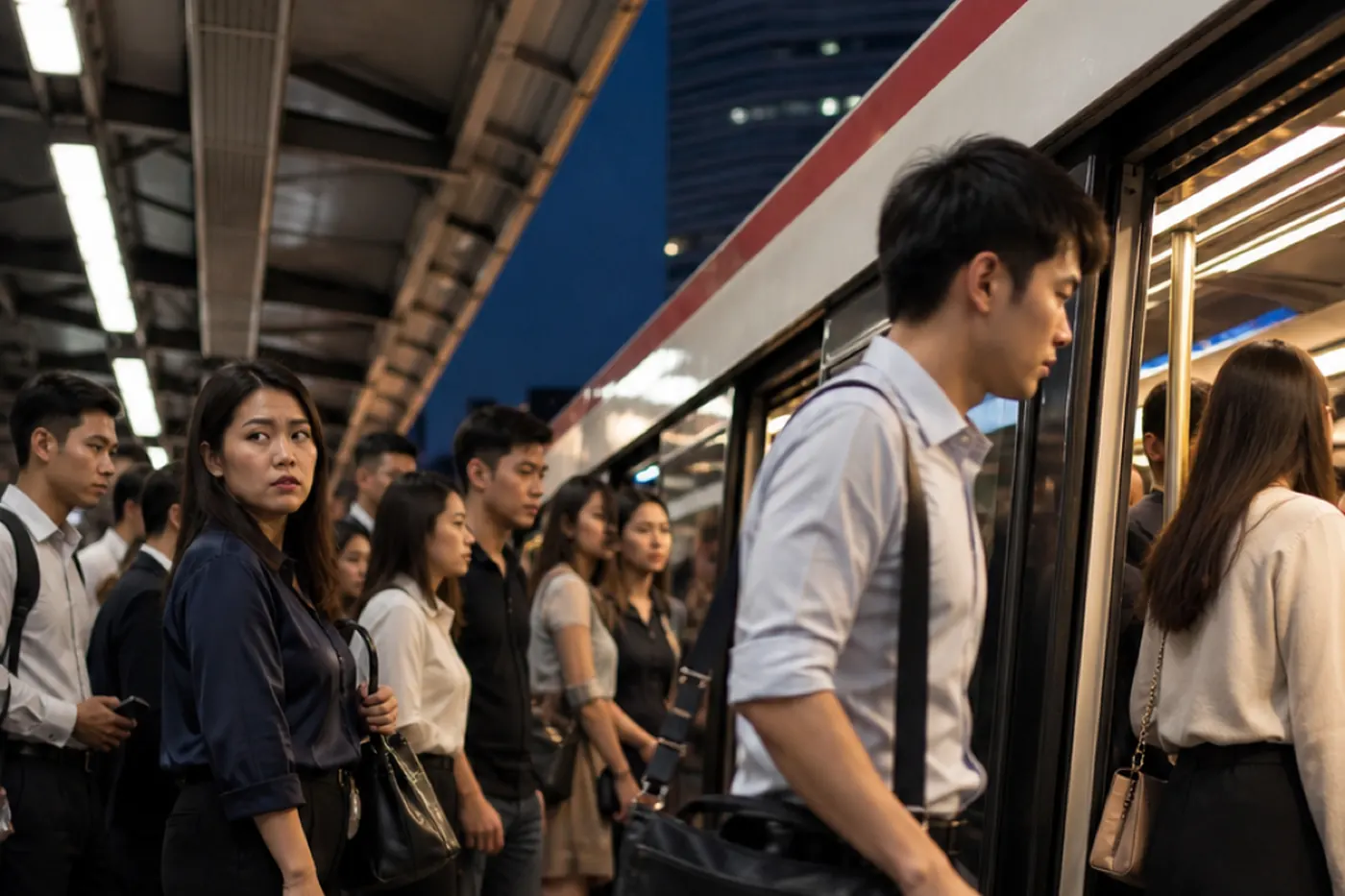
The polite person finishes last
มนุษย์ป้า is Thai for the person who cuts the queue. The Department of Mental Health's own explanation is that in an unenforced queue, this is the behaviour that works.
The bridge is the asset
Three malls at Phrom Phong, one operator. Three at Siam, two companies and a joint venture. What looks like competition is usually one estate, and the skywalk connecting them is the thing that's actually worth money.
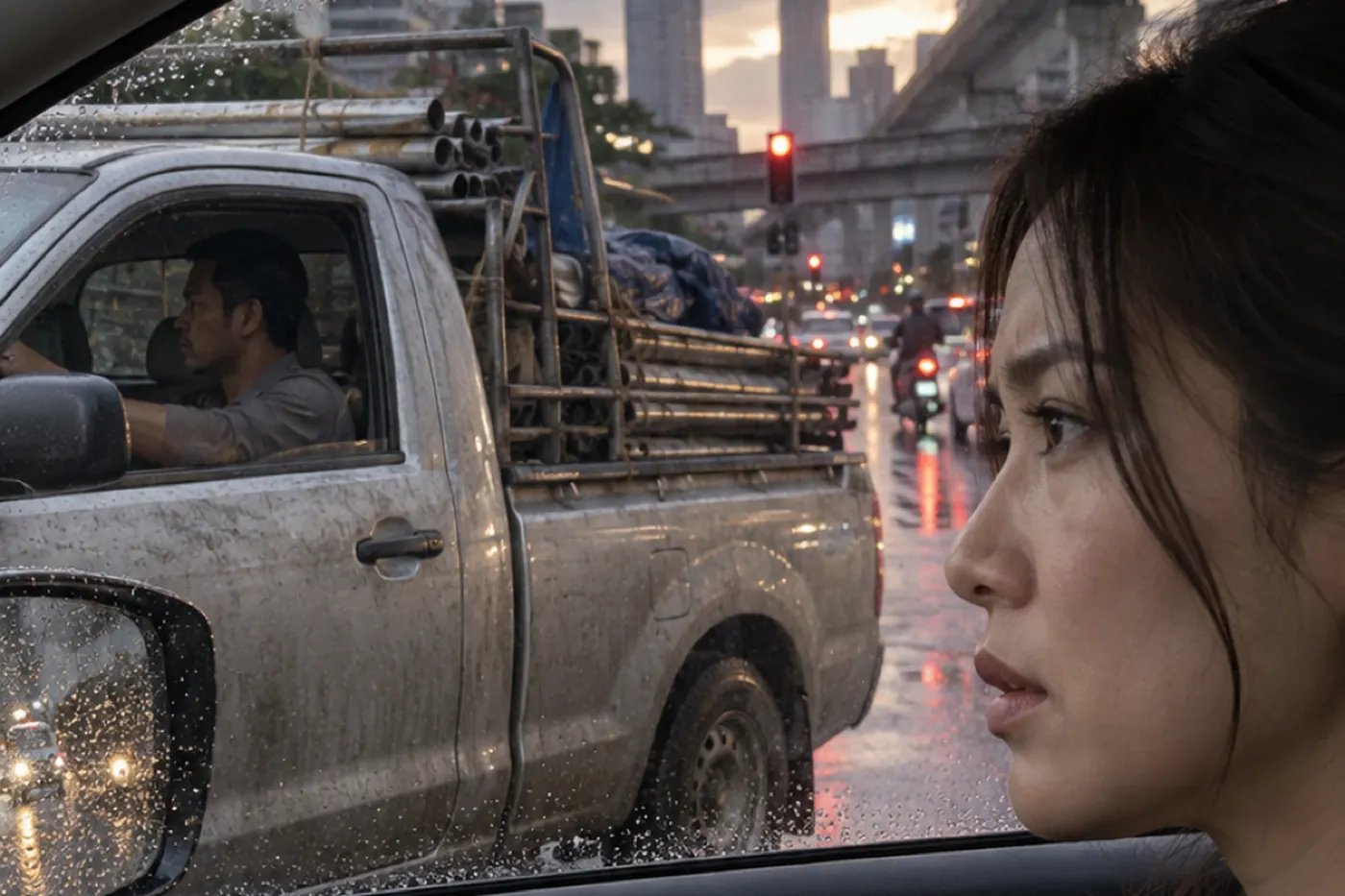
You can only see the car
Everyone in Thailand has a theory about which vehicles have the worst drivers. The theories exist because until this year there was almost no way to know anything about a driver at all.
Gone back to the planet
Thais call their pets น้อง — younger sibling — and when they die, they have gone back to their planet. Both are solutions to a problem the language and the cosmology each create.
The one that got taken back
ทรงเอ began as an accusation — that you look like a drug dealer. Then it became a rap track, a styling guide and a shopping category. Almost no Thai label manages that.
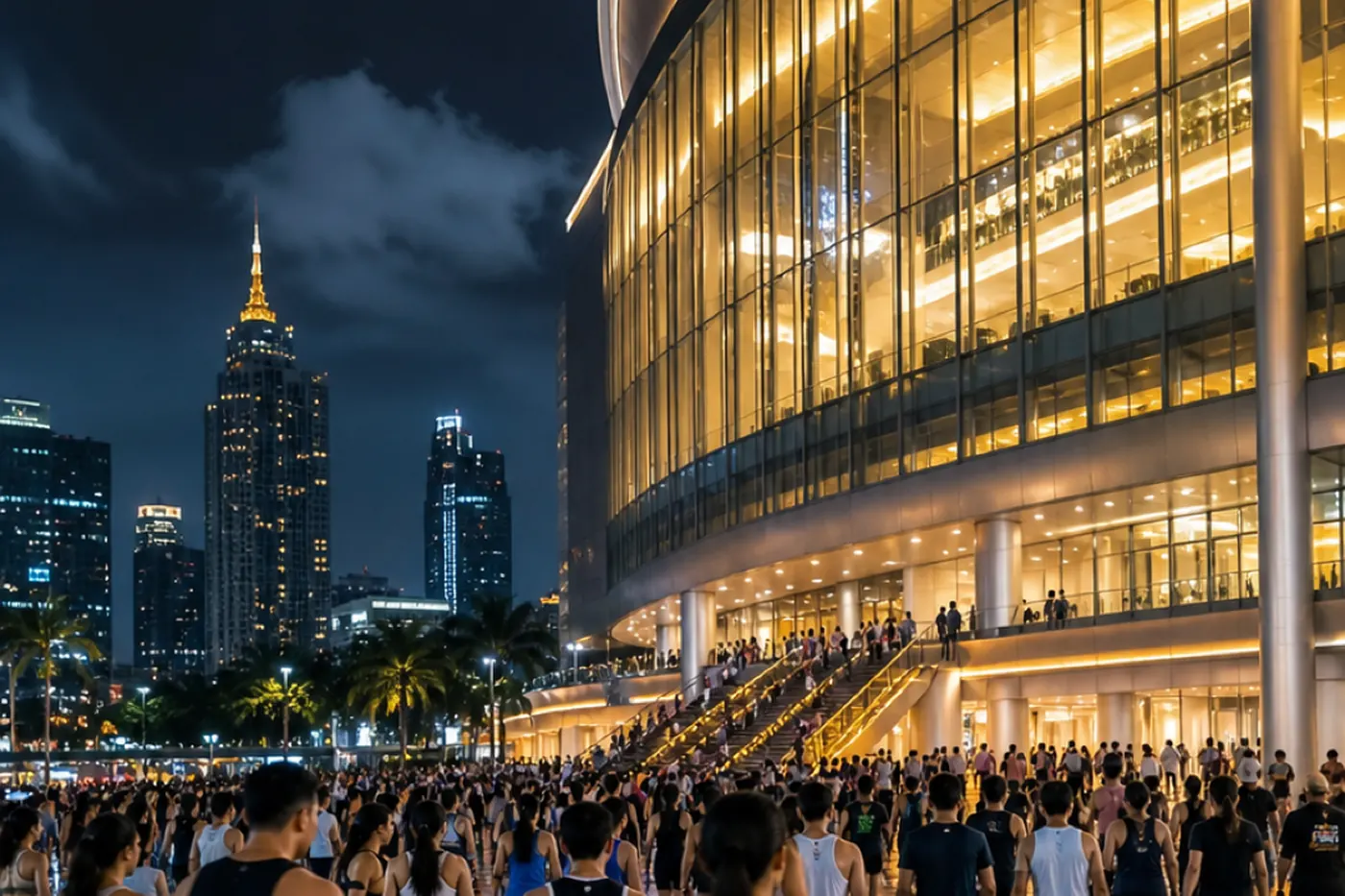
You still have to do it
Over 17,500 people entered HYROX Bangkok and paid around ฿200 million to do it. In a country where almost every status signal can be bought, a finish time is one you have to produce.
The listener does the swearing
Thai has a four-century-old device for saying something rude without saying it. The joke is assembled in the listener's head, which means the speaker technically never said a thing.
The phone is the confrontation
Somebody on the BTS did say something, and it cost her. Then the phone came out, and within days a company in another country had apologised. That order of events is not an accident.
Nobody hears you speed
Thai traffic law goes largely unenforced, and yet almost nobody honks. The horn is governed by the system that actually works here, and that system only reaches what other people can hear.
You cannot buy it for yourself
ฝาก means to entrust to somebody. So ของฝาก is, grammatically, for another person — and the roadside shops on the way home exist because of it.
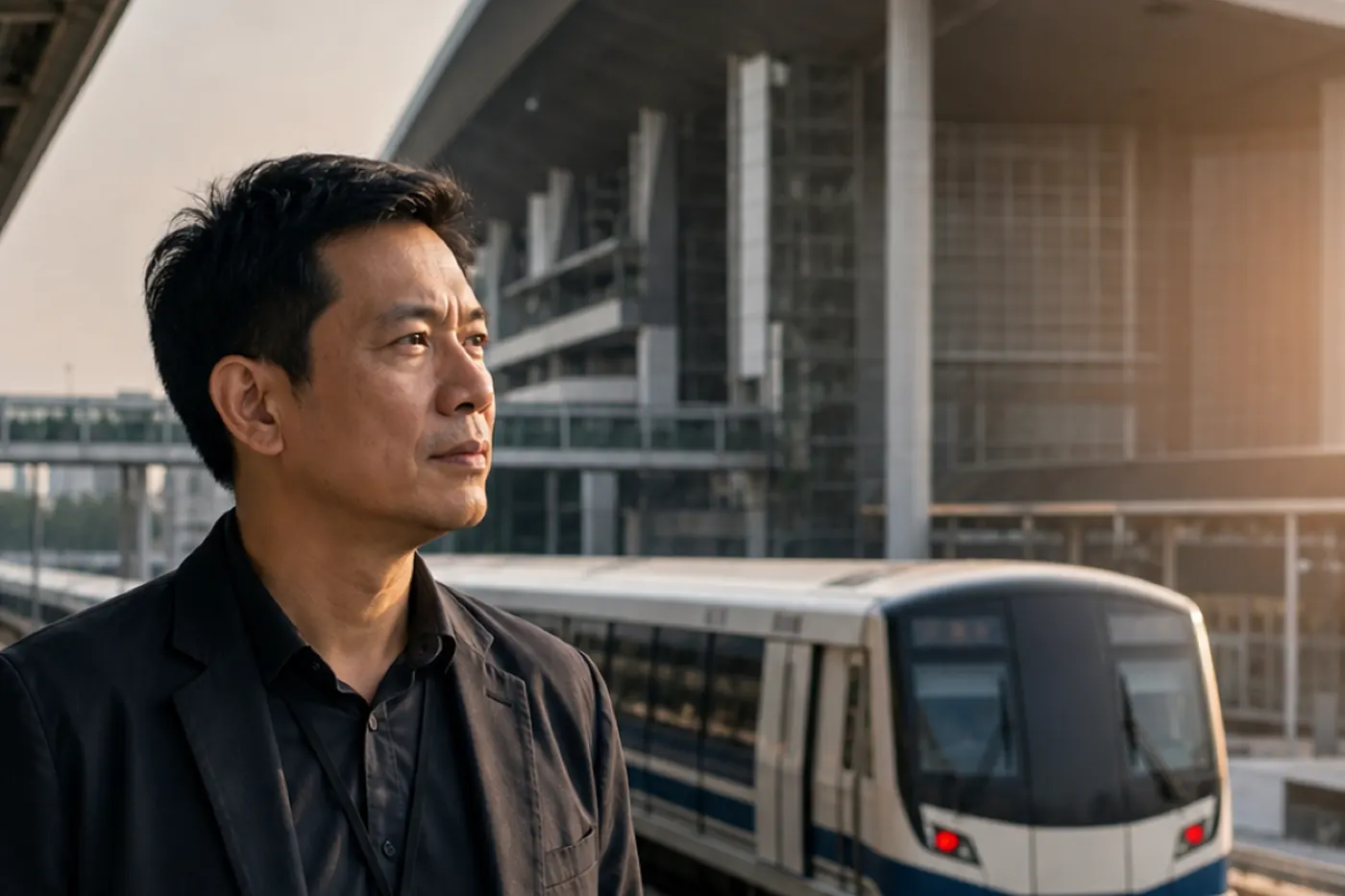
Nobody builds their own station
Thailand's three great exhibition venues sell an identical product. What separates them is the transit map — and you either wait twenty-six years for it, or spend ฿15 billion to be where it already is.
The loudest junction
Bangkok's two circulating rankings of its worst junction measure vehicles and complaints. Neither measures delay — the only number anybody actually wants.
The instrument is the truck
Thailand's สายย่อ is not defined by how it is written but by how it is played back. The rhythm underneath it is Cuban, arriving in 1955. The rig that plays it costs up to ฿10 million — and that is where the money is.
It's on the seat because it works
Thai sunscreen ends up on the car seat because mineral UV filters sit on top of the skin rather than soaking in. That is the entire mechanism. A filter that absorbed would not be a filter.
Not the act, the claim
Thai fidelity norms are drawn around whether a competing claim was created, not around whether an act occurred. The vocabulary proves it — เมียน้อย is a household and กิ๊ก is a relationship. Both are things the neighbours can see.
None of it is visible at the roadside
Thailand's red plate comes with four restrictions — thirty days, three thousand kilometres, a logbook, and no driving after sunset. Not one of them can be checked by looking at the car.

Nobody can check your Pali
When Thai listeners were tested, mixing English into Thai raised the speaker's rated status and lowered their likeability. The complaint has a referent, but not the one it names.
One email a week.
The Thailand stuff that's actually useful — visas, money, how things work here, and the things documented at length in Thai that very few sources cover in English.
Free. At least one new piece a week, usually at the weekend — and another midweek when I find something worth sharing. Unsubscribe in one click, which I have made deliberately easy and would rather you used than quietly stopped opening it. I don't sell your address to anyone, ever.