Two housing crises, opposite directions
Bangkok has 60,000 empty condominiums. Thailand also has a programme targeting a million households who lack secure housing, and it's one of the better ideas anyone has had about slums.

Article 43 Empty by the hundred thousand established that Thailand is carrying more than 200,000 unsold condominium units, worth about ฿700 billion, with five to six years of unsold housing inventory in and around Bangkok.
Thailand also runs a national programme whose twenty-year plan targets 1,053,702 households who lack secure housing.
Two housing crises, in the same country, pointing in opposite directions. Too many homes nobody can buy, and too many households living somewhere they have no legal right to remain.
That’s not a paradox so much as a description of how housing markets fail; they produce what’s profitable, not what’s needed. But the scale of the mismatch here is unusual, and the response to the second crisis is genuinely interesting.
What Baan Mankong is
บ้านมั่นคง — “secure housing” — began in 2003, with an initial Cabinet allocation of ฿146 million to the Community Organizations Development Institute, CODI.
Its premise is the opposite of what most countries do with informal settlements.
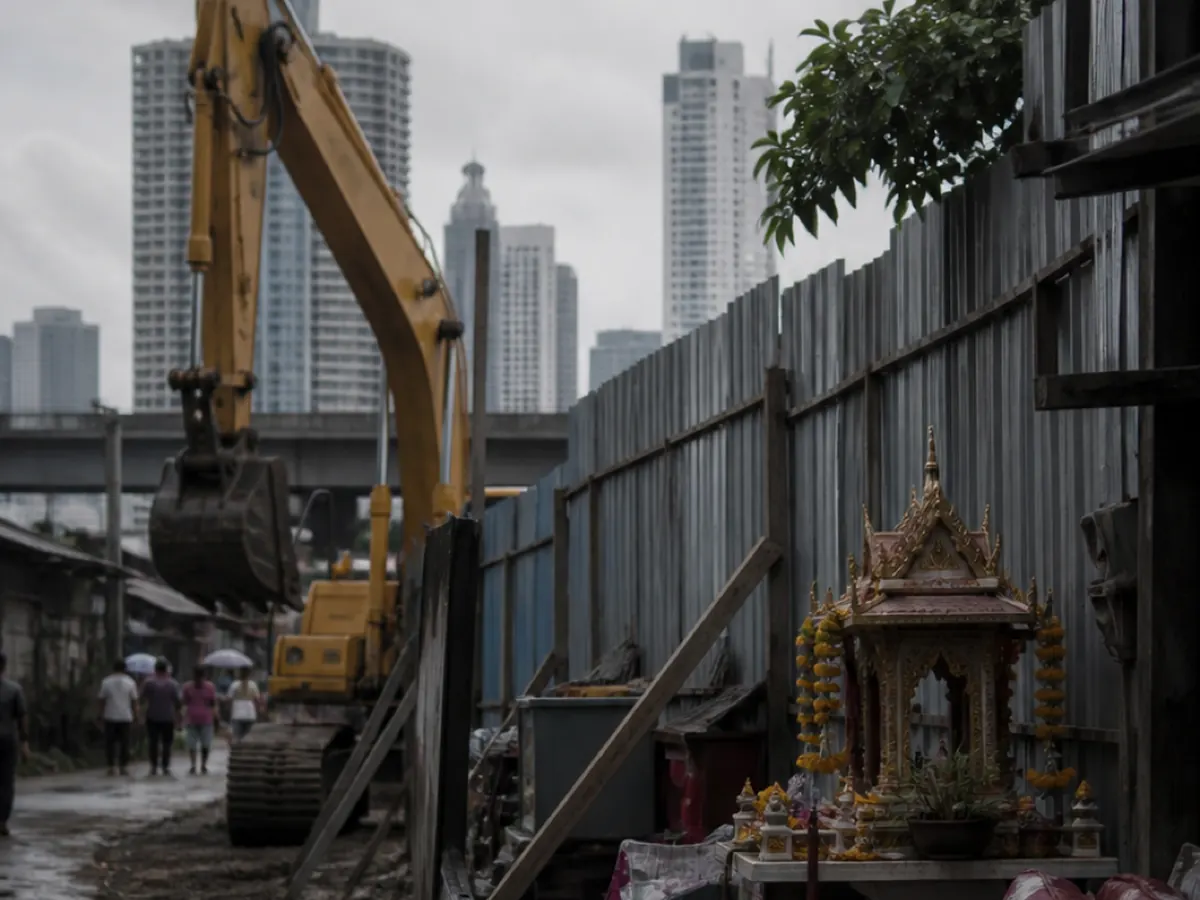
The standard approach is clearance: demolish, relocate residents to public housing somewhere cheaper, redevelop the land. It’s fast, it’s legible to planners, and it has a long record of destroying functioning communities and producing estates people don’t want to live in.
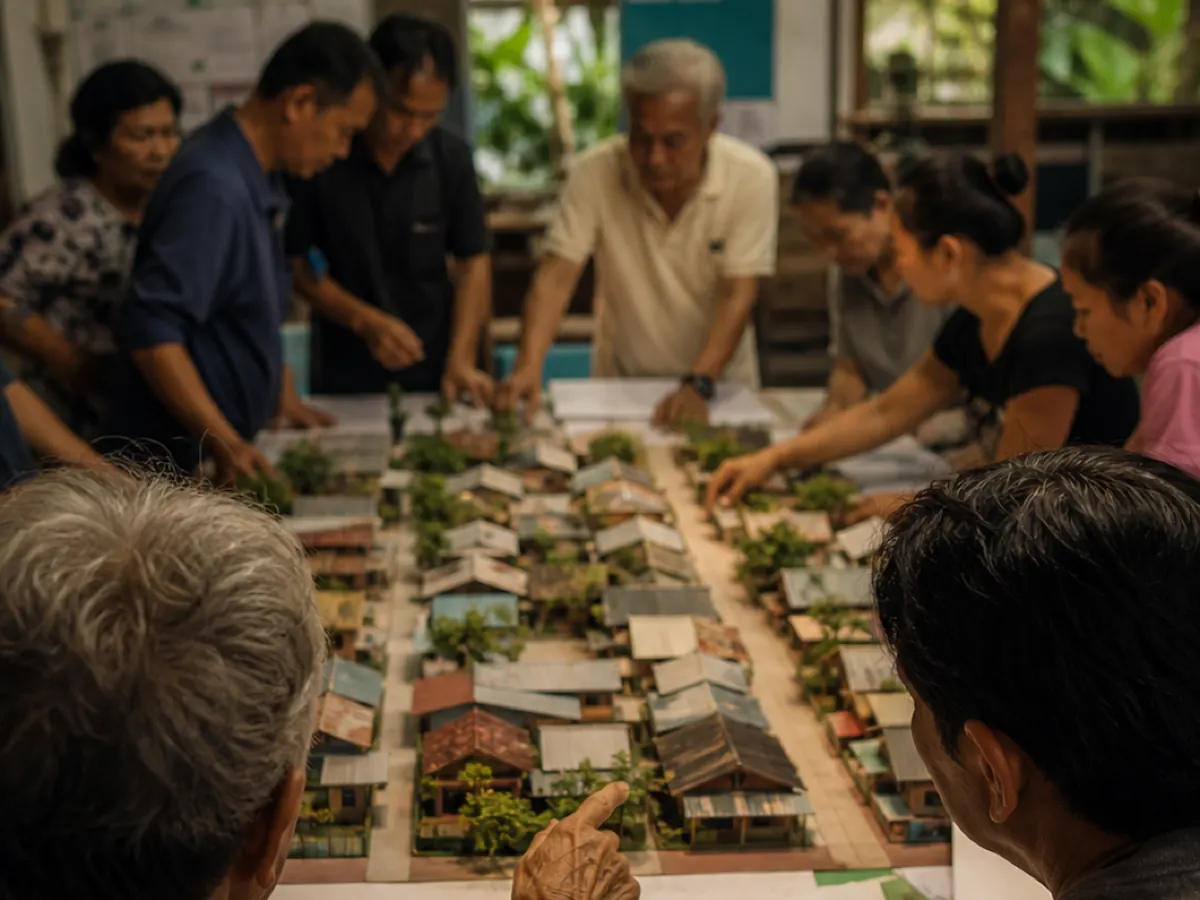
Baan Mankong instead gives the community the money and the legal security, and lets it rebuild itself.
The mechanics: residents form a housing cooperative. The cooperative negotiates land tenure — purchase, long-term lease, or an arrangement with the landowner. CODI provides low-interest loans with long repayment terms, plus subsidies toward construction and utilities. The community decides the layout, the design and the allocation.
The state finances. The community builds. That inversion is the whole idea, and it is the reason the programme gets studied internationally.
Why it’s a better idea than it sounds
Three reasons worth stating for anyone who assumes community-led means slow and amateurish.
It preserves the thing that actually works about informal settlements — the social network. People in these communities have childcare arrangements, credit relationships, work contacts and mutual obligation of exactly the kind described throughout the parallel economy series. Clearance destroys all of that and the estate that replaces it has none.
It produces housing people will maintain, because they designed it, chose it and are paying for it.
And collective tenure is more robust than individual title for low-income households. An individual with a title can be pressured or bought out one at a time. A cooperative holding land collectively is considerably harder to dismantle, which matters in a city where land values move fast.
Now the honest criticism
Here is where I’d be doing propaganda rather than journalism if I stopped.
The pace is the problem.
CODI’s own statement for the programme’s twenty-second anniversary, in September 2025, gives 138,622 households under Baan Mankong itself since 2003 — 110,789 in towns and cities, 27,833 in rural areas. The same statement counts 320,932 households helped toward the twenty-year plan’s goals across all its housing work, and “over 400,000” across everything it has ever done for housing; the definitions widen at each step, so treat the numbers as nested rather than as one figure.
But take the twenty-year master plan target of 1,053,702 households by 2036 and set it against 138,622 in twenty-two years on the programme’s own count — or 320,932 on the widest count that the plan’s own progress reporting uses.
At the observed rate the plan takes somewhere between fifty years and a century and a half, depending on which count you believe. CODI’s target for the 2026 fiscal year alone is 130,000 households — nearly as many as the programme’s whole first twenty-two years — which tells you the gap has been noticed.
That is not a criticism of the model. It’s a criticism of the funding and the political priority. A programme that works and is resourced to reach a fraction of its own target is a policy success and an implementation failure at the same time, and both halves are true.
The juxtaposition
Put article 43 Empty by the hundred thousand next to this one and the picture is uncomfortable.
Two hundred thousand empty condominium units, built for a demand that didn’t materialise, in a market with five to six years of inventory and take-up that halved in a quarter.
A million households targeted for housing security, on a programme moving at a fraction of the necessary pace.
I’m not going to pretend those two things can simply be connected — the empty units are in the wrong places, at the wrong price points, owned by individual investors rather than available to policy. Housing doesn’t work that way and anyone claiming otherwise is selling something.
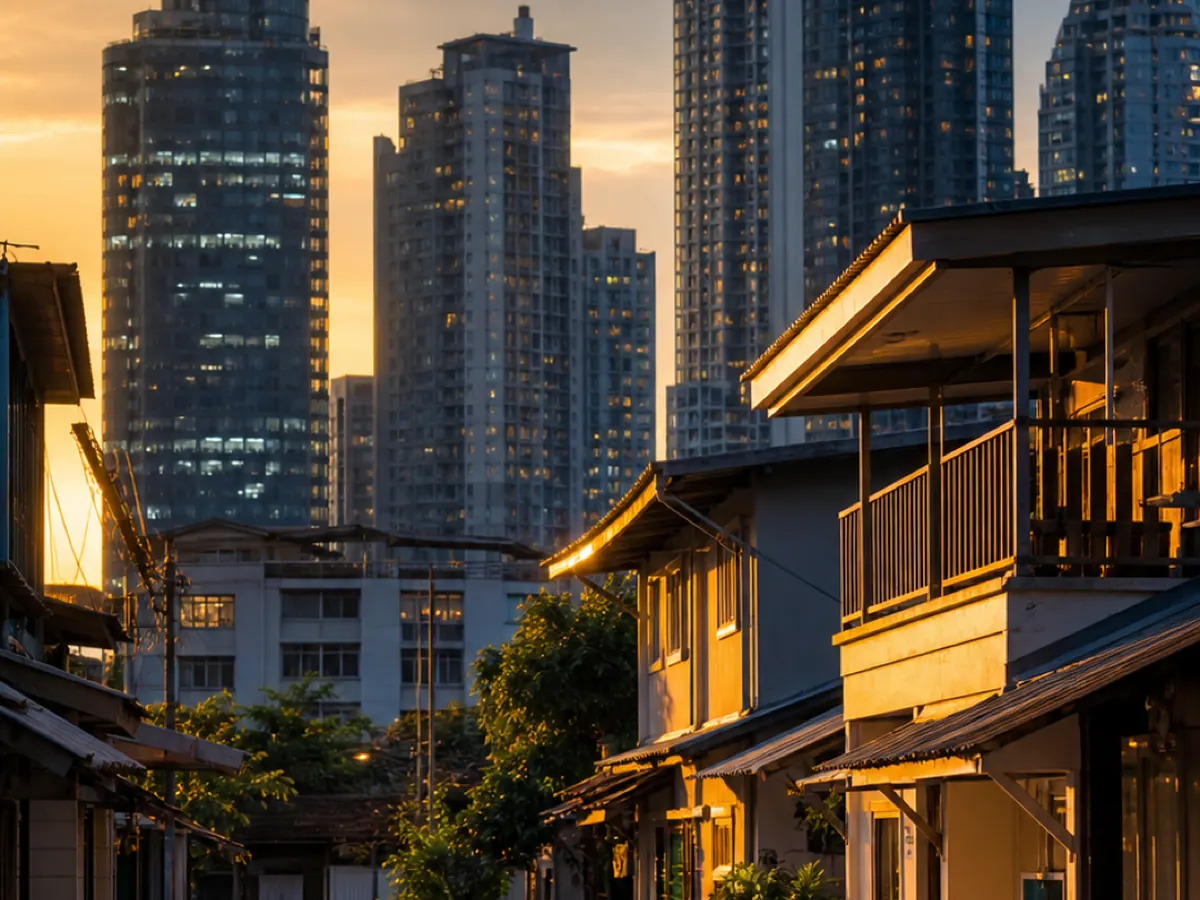
But the mismatch is worth sitting with. A country capable of financing hundreds of thousands of unsold units is not a country short of construction capacity, credit, or land. What it’s short of is a mechanism for directing any of that toward the households who need it most, and it has a good mechanism, running slowly, in the same cities.
Why this belongs alongside the healthcare piece
Article 36 ฿4,298 a year: how Thailand covered everyone argued that Thailand did something remarkable with universal healthcare, and that a publication cataloguing gaps without acknowledging it would be inaccurate.
Baan Mankong is the same category of thing. A genuinely innovative, internationally studied, community-led approach to a problem most countries handle badly — designed and run here, for two decades.
It’s just, unlike the health scheme, never been resourced to match its ambition.
Which may be the more general pattern in Thai policy: the ideas are frequently excellent and the follow-through is uneven. Healthcare got both. Housing got one. Old-age provision, per article 38 Six hundred baht a month, got neither.
Common misconceptions
“Thailand demolishes slums.” Clearance happens. But it also runs a two-decade programme explicitly designed to do the opposite, and that programme is internationally recognised.
“Informal settlements are lawless.” They have dense internal organisation, which is precisely what the cooperative model builds on.
“It’s charity housing.” Residents take loans and repay them. It’s finance and legal security, not a gift.
“Community-led means low quality.” Communities that design and pay for their own housing tend to maintain it. The failure mode of this model is slowness, not shoddiness.
“The empty condos could just be used.” Wrong locations, wrong prices, privately owned by individual investors. It isn’t a supply that policy can redirect.
Common questions
- What is Baan Mankong?
- A Thai community-led housing programme run by CODI since 2003, providing loans, subsidies and support for residents of insecure housing to form cooperatives, secure land tenure and rebuild.
- How does it differ from slum clearance?
- Clearance demolishes and relocates. Baan Mankong finances communities to redevelop in place, with the community controlling design and allocation.
- How many households has it reached?
- CODI's count to September 2025 is 138,622 households under Baan Mankong itself, 320,932 toward the twenty-year plan across its housing work, and over 400,000 across everything it has done for housing.
- What is the target?
- The twenty-year master plan (2017–2036) targets 1,053,702 households.
- Is it working?
- The model is internationally studied and well regarded. The pace, relative to its own target, is the substantial criticism.
- Why not use the empty condominiums?
- Wrong locations, wrong price points, and privately owned by individual investors rather than available to policy.