Nobody builds their own station
Thailand's three great exhibition venues sell an identical product. What separates them is the transit map — and you either wait twenty-six years for it, or spend ฿15 billion to be where it already is.
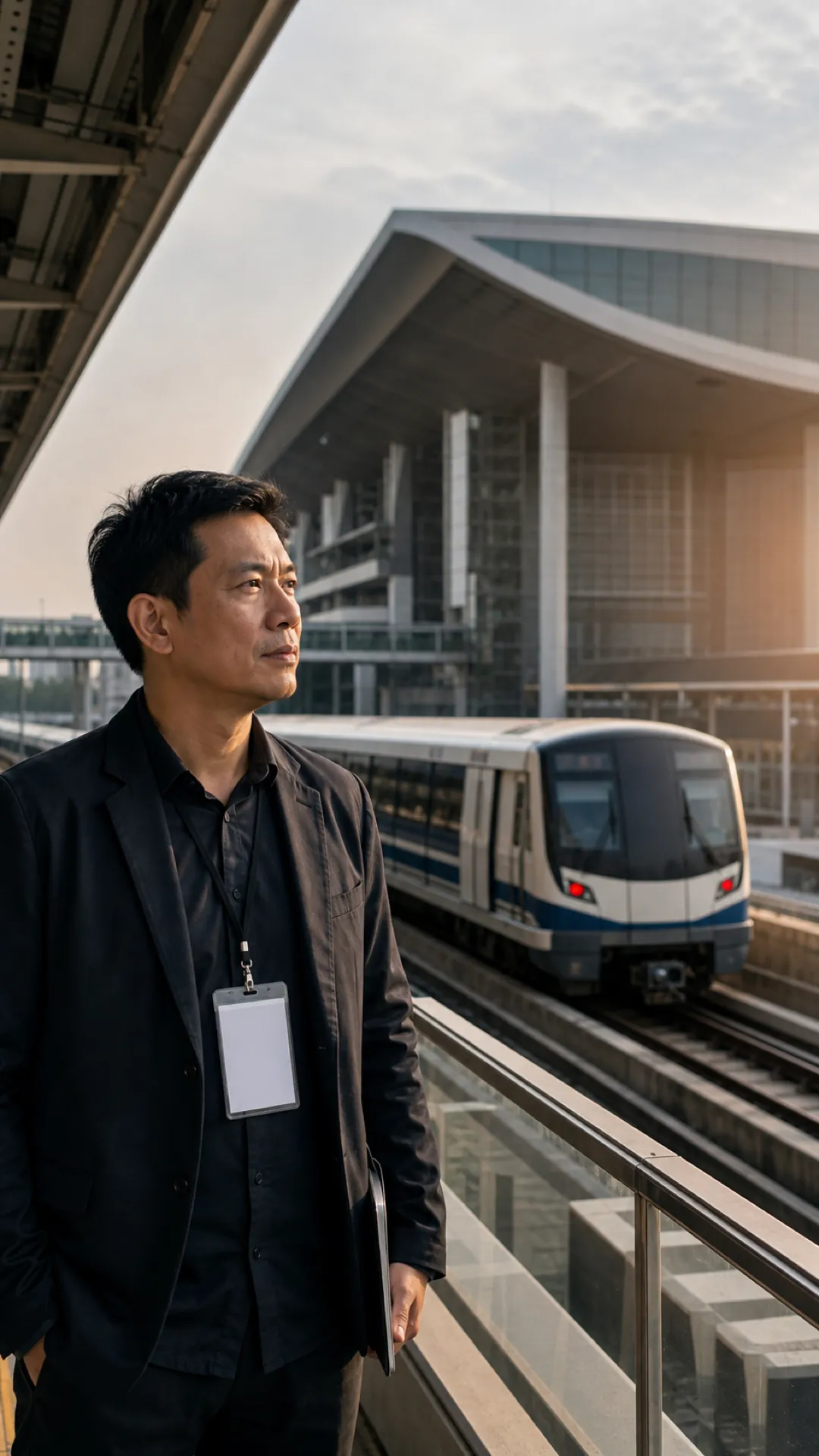
Thailand’s exhibition industry runs through three enormous buildings.
BITEC, in Bang Na, on the eastern edge. IMPACT, at Muang Thong Thani, on the northern edge. QSNCC, in the middle of the city, reopened in September 2022 after a rebuild.
They sell the same thing.
Column-free floor area. Ceiling height. Loading bays. Power and air conditioning at scale. An exhibition hall is a commodity: a very expensive one, but a commodity, buildable by anyone with capital and land.
What none of them sells, and none of them controls, is how easily forty thousand people can get there on a Saturday.
And the three of them represent three different answers to that problem, which is what makes this worth writing about rather than a listing.
Where IMPACT came from
The origin story is the best material here and it has never been told in English.
Muang Thong Thani was a satellite city. Bangkok Land began developing it in the late 1980s and built it out rapidly through the early 1990s, in the middle of Thailand’s property boom — an entire new town, north of the capital, on cheap land, at speed.
Then 1997.
Bangkok Land was among the most severely damaged companies of the crisis. Published accounts put its market value falling roughly a hundredfold — from around US$5.2 billion to about US$36 million. Projects halted. The township stood substantially unfinished and substantially unsold.
Article 43 Empty by the hundred thousand counted sixty thousand empty condominium units in Bangkok and called it a pathology. Muang Thong Thani is that at the scale of a city.
And IMPACT is what got built on top of it.
The complex grew out of facilities created for the 1998 Asian Games, which Bangkok Land had been selected to host before the crash, and which it completed less than a month before the Games opened in December 1998. It became one of the largest exhibition and convention centres in Southeast Asia — and the thing that returned Bangkok Land to profitability.
So Thailand’s largest exhibition complex is, in a real sense, the salvage value of a failed property speculation.
That is not a criticism of anybody. It is a far better outcome than an abandoned new town, it employs a great many people, and it works. It is also why the venue is where it is — not where the people are, but where land was cheap in 1990.
Strategy one: buy cheap land and wait
BITEC and IMPACT made the same trade, for the same reason.
That much floor area needs land, and land in central Bangkok has never been available at a price a warehouse-shaped business can pay. Article 116 The bridge is the asset found that Bangkok’s retail clusters where footfall already is. Exhibition halls do the opposite; they buy cheap land on the edge and then have to import the footfall.
Which leaves them permanently dependent on a decision they do not make.
BITEC has sat beside a BTS station for years — for a very long time the single largest structural difference between the two businesses. You could reach one by train and you could not reach the other.
IMPACT got its railway on 17 June 2025, when the Pink Line monorail extension into Muang Thong Thani entered full commercial service, with two stations serving the area and a free trial from late May.
The complex opened in December 1998. It waited more than twenty-six years.
Twenty-six years is not a business decision. It is a wait. The venue could lobby, run shuttle buses, and price around the disadvantage, and it could not fix it, because venues cannot build railways.
Strategy two: pay to be where the railways already are
And then QSNCC did the other thing.
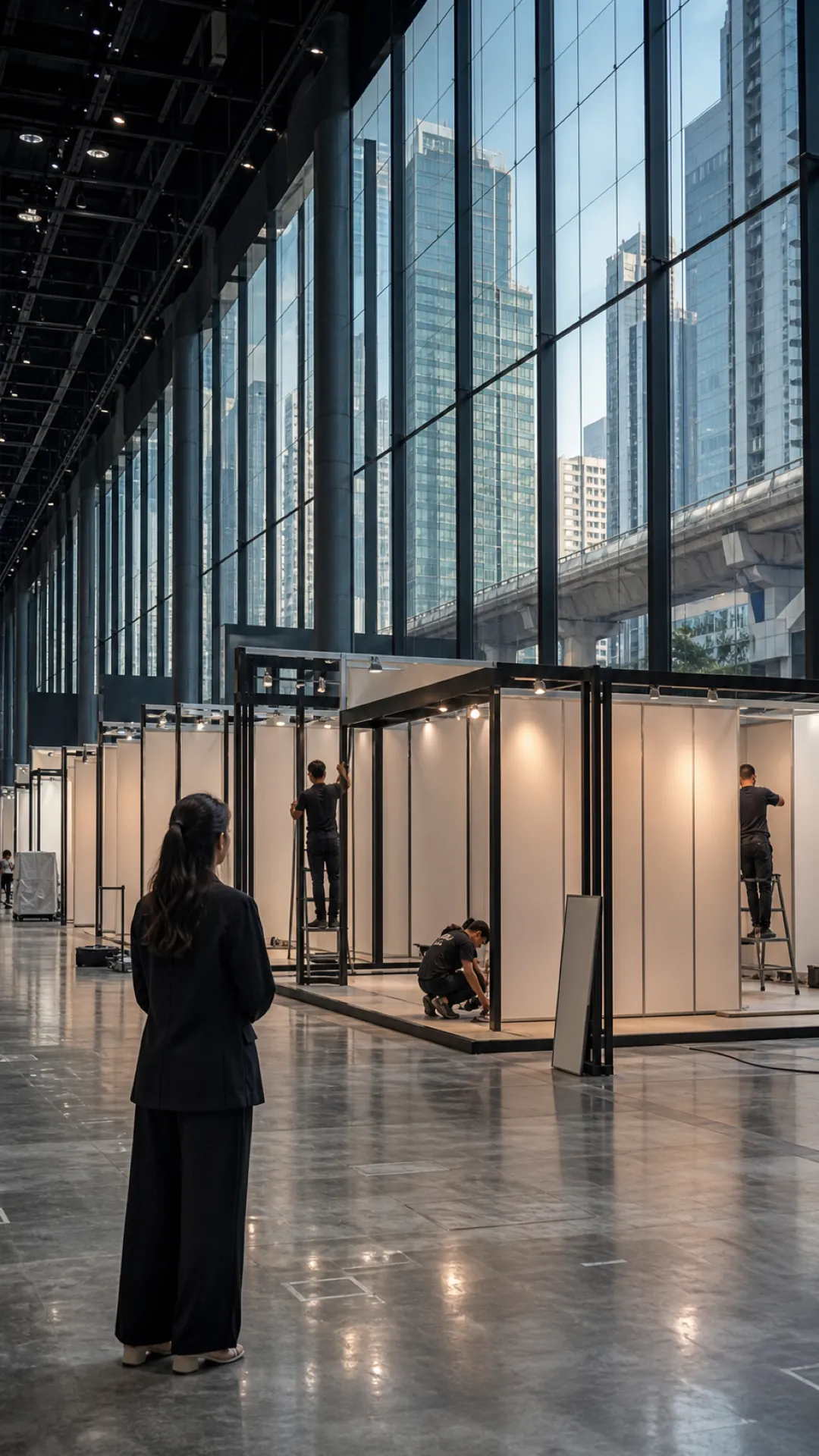
The rebuild was a ฿15 billion project. It took the site from 65,000 square metres to 300,000 — roughly five times larger — with about 78,500 square metres of event space, eight exhibition halls, fifty meeting rooms, parking for three thousand cars, and a stated capacity of up to 100,000 people a day. It reopened in September 2022, with projections of more than 13 million visitors a year across the whole complex.
I had this wrong in an earlier draft and it is worth stating plainly. I described QSNCC as a smaller central venue competing on access while the two giants competed on floor area. That is not what happened.
QSNCC did not trade scale for access. It bought both.
It is in the centre, on the MRT, in a district people already go to — and it is now enormous. The thing that made that possible was not cleverness. It was ฿15 billion, which is what a central Bangkok site costs when you want a warehouse-shaped business on it.
Which is the finding
Three competitors, one identical product, and the decisive input owned by none of them.
Article 116’s version of this was inside a mall district: the bridge is the asset, and whoever owns both ends captures the flow. A developer can build a bridge.
Here the connecting infrastructure is a railway, and nobody in this market can build one. So there are exactly two available strategies, and all three venues have now demonstrated one of them:
Buy cheap land on the edge and wait for the state to reach you. BITEC waited less. IMPACT waited twenty-six years. Neither wait reflected how well either business was run.
Or pay whatever central land costs, so that the access already exists. That is the QSNCC route and it costs ฿15 billion, which is why it took until 2022 for anybody to take it.
In a city where access is the scarce input, the entity allocating access decides the competition, and in Bangkok that entity is not a market participant. The only way to opt out of waiting for it is to buy your way to where it has already been allocated, and the price of that is the reason the edge strategy existed in the first place.
That is the whole shape of the industry, and it is not really a rivalry between three companies. It is three positions on one variable.

What it means now
The competitive picture as at 2026 is different from the one most people carry.
All three now have rail. The structural advantage BITEC held for years is gone. The structural disadvantage IMPACT carried for twenty-six years is gone. And QSNCC arrived with both scale and central access at the same time.
Which means, for the first time, they may actually be competing on the things a venue controls — price, service, hall configuration, the quality of the surrounding district, and what an exhibitor’s visitors will tolerate.
That is a genuinely new situation and nobody has written it up.
What I would want to measure
IMPACT’s visitor numbers either side of June 2025. It is the cleanest natural experiment available in Thai commercial property, a large venue acquiring a railway on a known date, and as far as I can find, nobody has published the before and after.
Event counts by venue since 2022. If QSNCC’s reopening moved market share, that is the strongest available evidence for the access argument, and it should be visible in the calendars.
And shuttle bus operations at IMPACT. They were the venue’s own substitute for a railway. If the railway works, they should shrink.
Practically
If you are choosing as an exhibitor: all three now have rail, so the question has changed. It is which side of the city your visitors are on, what their offices are near, and whether your audience will cross Bangkok on a weekday.
If you are attending: allow more time than the map suggests for BITEC and IMPACT. They are on the edge because that is where the land was, and edges are further away than they look. QSNCC is the one you can reach on a whim.
Common misconceptions
“It’s a two-horse race.” It has been three since September 2022, and the third arrived with both central access and roughly five times its previous floor area.
“QSNCC is the small one.” The rebuild took it from 65,000 to 300,000 square metres, with about 78,500 square metres of event space and a stated capacity of up to 100,000 people a day.
“IMPACT was always an exhibition centre.” It grew from facilities built for the 1998 Asian Games, on a satellite city development left unfinished by the 1997 crisis.
“IMPACT has always had a train.” Full commercial service on the monorail extension began on 17 June 2025 — more than twenty-six years after the complex opened.
“They compete on facilities.” Floor area, ceiling height and loading are broadly commodity attributes. Access was the difference, none of them controlled it, and as of 2025 all three have it.
Common questions
- What are Thailand's main exhibition venues?
- BITEC in Bang Na, IMPACT at Muang Thong Thani, and QSNCC in central Bangkok.
- Why are BITEC and IMPACT so far out?
- Large column-free floor area requires land at a price central Bangkok has not offered. Both bought cheap land on the edge and then had to import visitors.
- What happened to Muang Thong Thani?
- It was a satellite city development halted by the 1997 crisis, which reduced its developer's market value roughly a hundredfold. The exhibition complex later became the site's economic anchor.
- Does IMPACT have a train station?
- Yes, since 17 June 2025, when the Pink Line monorail extension entered full commercial service with two stations serving the area.
- How big is QSNCC after the rebuild?
- 300,000 square metres in total, up from 65,000, with around 78,500 square metres of event space and a stated capacity of up to 100,000 people a day.
- Which venue should an exhibitor choose?
- This article makes no recommendation. Since all three now have rail access, the relevant questions are where your audience is and how far across Bangkok they will travel.