The foreigner price: a Thai explanation
Thai national parks charge foreigners five to ten times the local rate. I'm Thai, I pay the local rate, and I think the policy is defensible and the enforcement isn't.
I have heard the mango story roughly two hundred times.
A foreigner buys a mango, later discovers a Thai person paid less, and arrives at a conclusion about the country. I’ve heard it in bars, in offices, in the replies to my own posts. It is the single most common complaint foreigners make about Thailand, and it is almost always about something that isn’t dual pricing at all.
So let me do this from the other side of the counter. Here is what my country actually charges you more for, why we do it, and the part of it I think is genuinely indefensible, which is not the part you’re annoyed about.
What we actually charge you more for
National parks. This is the real one. Foreign adult entry is ฿100, ฿200, ฿300 or ฿500 depending on which of four bands the park sits in, with Similan and Surin alone in the top one. Thai adults pay ฿20, ฿40, ฿60 or ฿100 — exactly a fifth, in every band, under the schedule in force since 7 June 2022.
It’s printed on the board at the gate. There’s no deception involved; we’re perfectly open about it.
Museums, some cultural sites and some temples run similar structures with varying transparency. Certain transport and hotel pricing carries versions of it too.
And there is the proposed kha yeap pan din — “stepping onto Thai soil” — which does not yet exist. The structure announced earlier was ฿300 by air and ฿150 by land or sea; the current proposal is a flat ฿450 regardless of how a visitor enters, reviewed by the National Tourism Policy Committee on 14 August 2026 and announced on 17 August 2026. It is in public consultation until 28 September 2026, needs Cabinet approval after that, and the ministry’s stated aim is to start collecting in early 2027. Until then it does not exist. That one wouldn’t be dual pricing either. It’s an arrival levy, in the same family as the tourist taxes half of Europe now charges.
What we don’t charge you more for, whatever you’ve been told
Here’s where most of the grievance comes from, and it’s a misunderstanding.
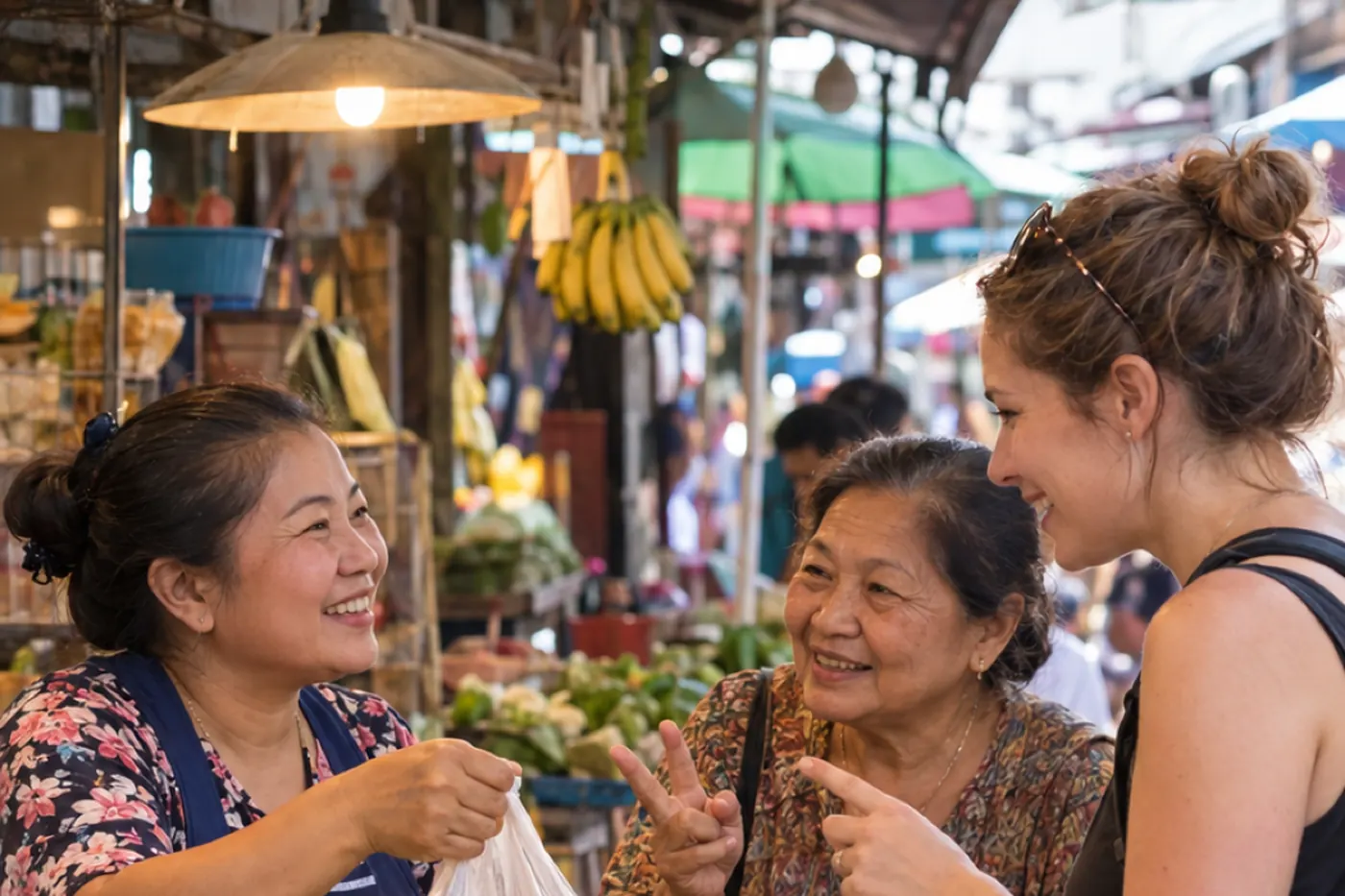
The market is not dual pricing. That’s bargaining, and we do it to each other constantly.
In a bargaining culture the opening price is an opening position. It goes to everyone. It’s adjusted by what the seller reads about the buyer — how much they want it, whether they know the going rate, whether they’re in a hurry. My mother gets opening prices. She simply answers with a number, because she’s been doing it for sixty years and the seller knows it.
Being quoted high isn’t being charged a foreigner price. It’s being identified as someone who might not counter. The remedy isn’t indignation, it’s knowing what things cost and saying a figure.
Taxis refusing the meter is the same shape with a different mechanism — a driver guessing you’ll accept a fixed price. Annoying, often illegal, and not a published two-tier tariff. Also largely solved by apps, which is why you hear about it less than you did.
Restaurants with two menus happen. They’re rarer than the folklore suggests and concentrated in about four streets in the entire country — streets no Thai person eats on either.
The useful line: official dual pricing is a published policy you can read. Everything else is a negotiation you can win.
Why we do it, put properly
I want to make this case seriously, because it usually gets made badly by tourism officials and dismissed accordingly.
Heritage costs money and we shouldn’t be priced out of our own country. A national park entry fee a family from Nonthaburi can afford is a small number. A fee that meaningfully funds conservation is a larger one. Charging visitors more is how you get both, and it’s a genuine policy problem rather than a scheme.
฿500 is not the same amount of money to everyone. To someone on a two-week holiday from London it’s a coffee and a sandwich. To a Thai family on a median income it’s a real decision. Pricing the same for both isn’t equality; it’s just charging the poorer person more in every way that matters.
And this isn’t a Thai peculiarity. The Taj Mahal does it. Petra does it. Dozens of countries do, usually described as a maintenance charge, usually without anyone writing a forum post about national character.
Someone paying ฿500 once a year to see Similan and describing it as discrimination has, on the evidence, a manageable set of problems.

Now the part I think is wrong
Here’s what I’d change, and I’d change it as a Thai person who thinks the current arrangement makes us look worse than we are.
The policy is written on nationality. It is enforced on appearance.
The rules are about nationality or residency. The gate is staffed by a person making a two-second judgement. So Korean, Japanese and Chinese visitors (foreign nationals, often on their first trip, frequently without a word of Thai) routinely pay the local rate, because they look like they might be one of us.
Meanwhile a European who has lived here fifteen years, speaks Thai, holds a work permit and pays Thai income tax pays the visitor rate. Every time. On sight.
So the system as written and the system as operated are two different systems. The written one is a defensible visitor levy that I’d argue for. The operated one is a visual test applied to money, and I don’t think we should be comfortable with that.
The standard defence (that it’s based on nationality, not race) is true about the policy and beside the point about the practice. Nobody at the gate is checking passports. They’re checking faces. We can do better than that, and it wouldn’t cost anything.
The second thing I’d change is residency. Foreign residents who pay Thai income tax are, in a real sense, funding the sites they’re charged the tourist rate to enter. That’s a legitimate grievance, it’s a much better one than the mango, and almost nobody making it seems to know they should be making it instead.
Practical, and this is the useful bit: many parks and attractions will give the Thai rate to a foreigner producing a Thai work permit, driving licence or residence documentation. Not all, and it depends on the site and whoever’s on the desk. But a large number of long-term residents pay tourist rates for years without ever discovering that the licence in their wallet would have done it. Ask. Politely. In Thai if you can manage it, which helps more than it should.
What it actually costs you
Let’s put a number on the outrage, because I don’t think anyone ever has.
Say you’re a resident who visits national parks five times a year, in the ฿300 band, and pays ฿240 more than I do each time. That’s ฿1,200 a year.
Against a ฿30,000 monthly cost of living, that’s 0.3% of one month. Less than one dinner in Thonglor. Half a taxi ride a month.
I’m not saying the policy is therefore fine. I’m saying the emotional weight foreigners put on this exceeds its financial impact by roughly a hundredfold, which tells you it was never really about the money.
It’s about being sorted, visibly, into a category, at a window, in front of a queue. That’s a real feeling and I’d rather name it honestly than pretend it’s an accounting dispute. It’s just a different complaint from the one people think they’re making, and the honest version is more sympathetic, not less.

What people get wrong
“Everything has two prices.” A small number of official categories do. The rest is bargaining or ordinary commerce.
“Thais never get quoted high prices.” We get them constantly. We negotiate. That’s the system working.
“It’s illegal.” Published differential pricing at state attractions is policy.
“It’s racist.” It’s nationality-based by design. The fair criticism is that enforcement is appearance-based, which is a sharper and more useful point than the blanket accusation, and one I’d make myself.
“The arrival fee is dual pricing.” It would be an arrival levy, like the ones across Europe — and it is not yet in force at all; consultation closes 28 September 2026 and the earliest stated start is early 2027.
“There’s nothing you can do.” Carry your driving licence. Astonishingly few residents try.
Where this goes
The arrival fee has been delayed repeatedly, partly over worry about deterring visitors in a soft tourism market — which tells you how sensitive the government considers foreign-visitor pricing to be.
Dual pricing at attractions faces no serious domestic pressure to end. It’s popular here, defensible internationally, and it raises money.
The reform that should happen is on residency, not abolition. Clear, consistently applied rules giving work permit and long-term visa holders the local rate. It answers the strongest criticism, costs almost nothing in revenue, and removes the bit that makes us look like we’re pricing by face.
That’s the thing foreign residents should be asking for. Not the end of dual pricing — they won’t get it, and I don’t think they should. Recognition that living here and paying tax here means something.
Final thoughts
I pay the Thai price. I’ll keep paying the Thai price. And I think most of what foreigners believe about the foreigner price is wrong in both directions — smaller and more defensible than the folklore, and flawed in a way the folklore never mentions.
Charging visitors more to fund heritage is normal and I’d defend it anywhere. Deciding who counts as a visitor by looking at them is a different thing, and it’s the bit that deserves the argument.
So: carry your driving licence. And when the woman at the market names her first number, don’t take it personally.
Take it as an opening. Say a number back.
Common questions
- Does Thailand charge foreigners more?
- At national parks, museums and some cultural sites, yes — officially and publicly. At national parks the foreign rate is five times the Thai rate in every band.
- How much are Thai national park fees for foreigners?
- ฿100, ฿200, ฿300 or ฿500 for an adult depending on the park's band; Similan and Surin are the only parks in the ฿500 band. Thai adults pay ฿20–100.
- Is dual pricing legal in Thailand?
- Published differential pricing at state-run attractions is official policy.
- Can foreign residents get the Thai price?
- Often, yes — many sites accept a Thai work permit, driving licence or residence documentation. It varies by site and isn't guaranteed, but very few residents ask.
- Is the tourist arrival fee dual pricing?
- No, and it is not yet in force. The current proposal is a flat ฿450 on foreign arrivals, in public consultation until 28 September 2026 with collection targeted for early 2027 if Cabinet approves; the earlier ฿300 air / ฿150 land structure is superseded.
- Am I being charged a foreigner price at markets?
- Almost certainly not. You're getting an opening price in a bargaining culture. Thais get them too, and then negotiate.