You are not buying dinner
How does a ฿299 all-you-can-eat buffet make money? It doesn't. The buffet is admission. The margin is in what you drink, and they charge you for the ice.
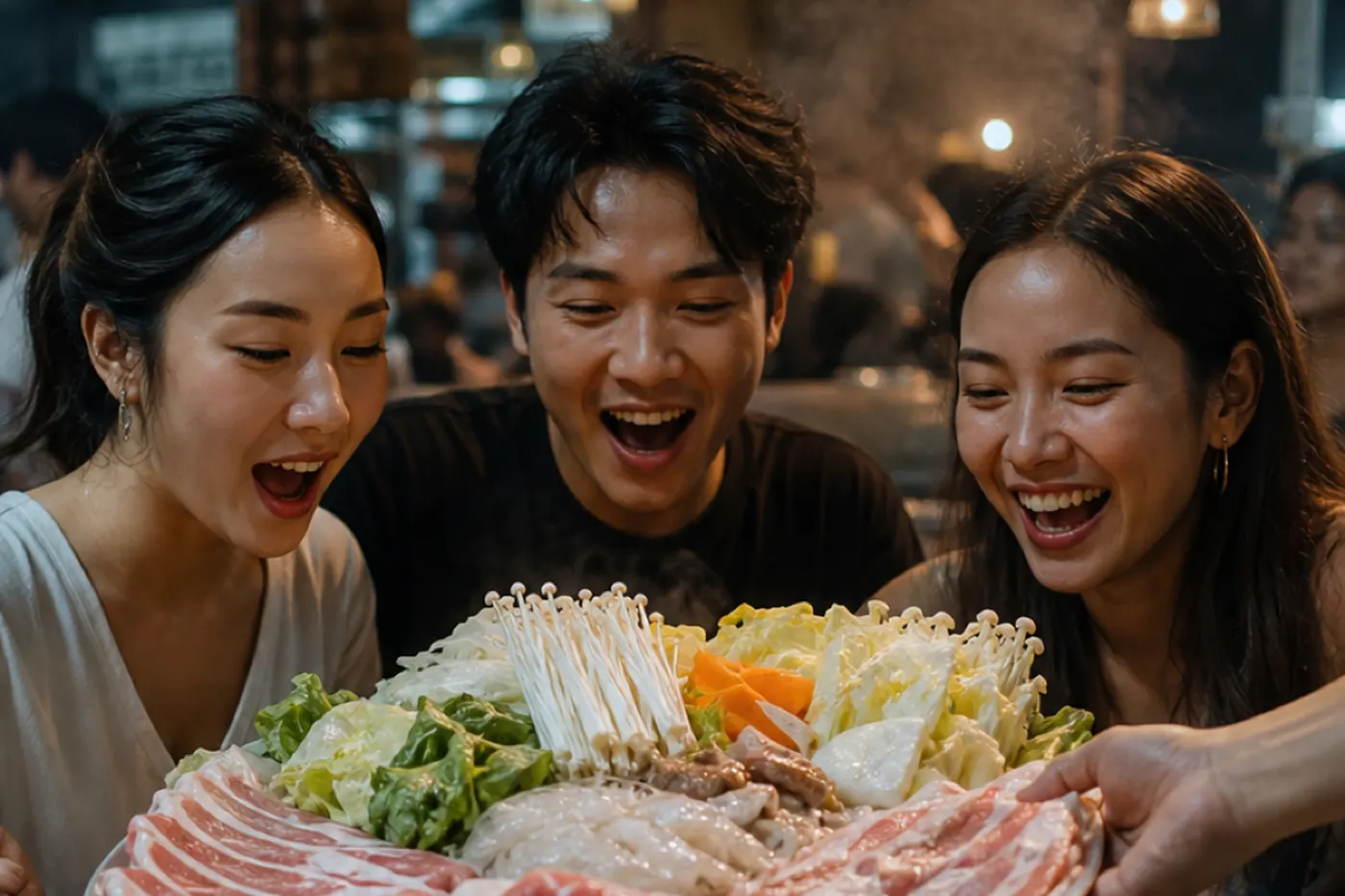
You sit down at a moo kratha place. Domed grill, moat of broth around the edge, a pyramid of pork belly, unlimited everything, and the sign says ฿299.
Three hours later you leave, and somewhere in the middle of the evening a reasonable person wonders: how is this a business?
You ate, conservatively, a kilo of meat. The staff kept bringing it. Nobody stopped you. And the answer is that they weren’t trying to.
You weren’t buying dinner. You were buying admission.
Where the money actually is
Thai restaurant business material is entirely open about this, and the advice given to people opening these places is consistent.
Set the buffet price to cover food cost, operating cost and a minimum margin, but the operational advice that follows is the real answer:
Sell drinks, alcohol and ice separately.
Read that list again. Ice. They charge you for the ice.
That isn’t stinginess. It’s the business model, stated in a line. The buffet gets you through the door and holds you at a table for three hours. What happens at that table for three hours is that you drink.
Why the maths works
The elegant part is that all-you-can-eat has a natural ceiling and drinking doesn’t.
You can only eat so much. However determined you are, there’s a biological limit and most people hit it in the first hour. Operators know the distribution precisely: a few people eat spectacularly, most eat far less than they intended, and the average is entirely predictable.
Drinking has no such ceiling. It has a duration. And moo kratha is a three-hour format by design: a table of friends, a grill that cooks slowly, no rush, nobody clearing plates.
The grill is slow on purpose. A format where the food takes time to cook is a format where people sit for a long time. Sitting for a long time, in Thailand, in a group, means beer.
So the pricing makes sense: heavily competed, near-cost buffet, with the margin sitting in a Leo tower and a bucket of ice.
The other half: sourcing
The second piece of standard advice is bulk purchasing from wholesale sources.
Which is article 31 Where the ฿50 plate actually comes from — Talaad Thai and Simummuang, turning over ฿500–600 million a day, 20 kilometres north, supplying the city overnight.
A moo kratha operator is buying at that layer, in volume, on thin margins, exactly like the street food vendor in article 13 What a Bangkok street food cart actually earns. The same distribution system that makes a ฿50 plate possible makes a ฿299 buffet possible, and both work on the same principle: the margin per unit is almost nothing and the volume is enormous.
The marinade advice is the giveaway — recipes that reduce cost while tasting good. That’s a business optimising at the level of the sauce, which tells you how thin the food margin actually is.
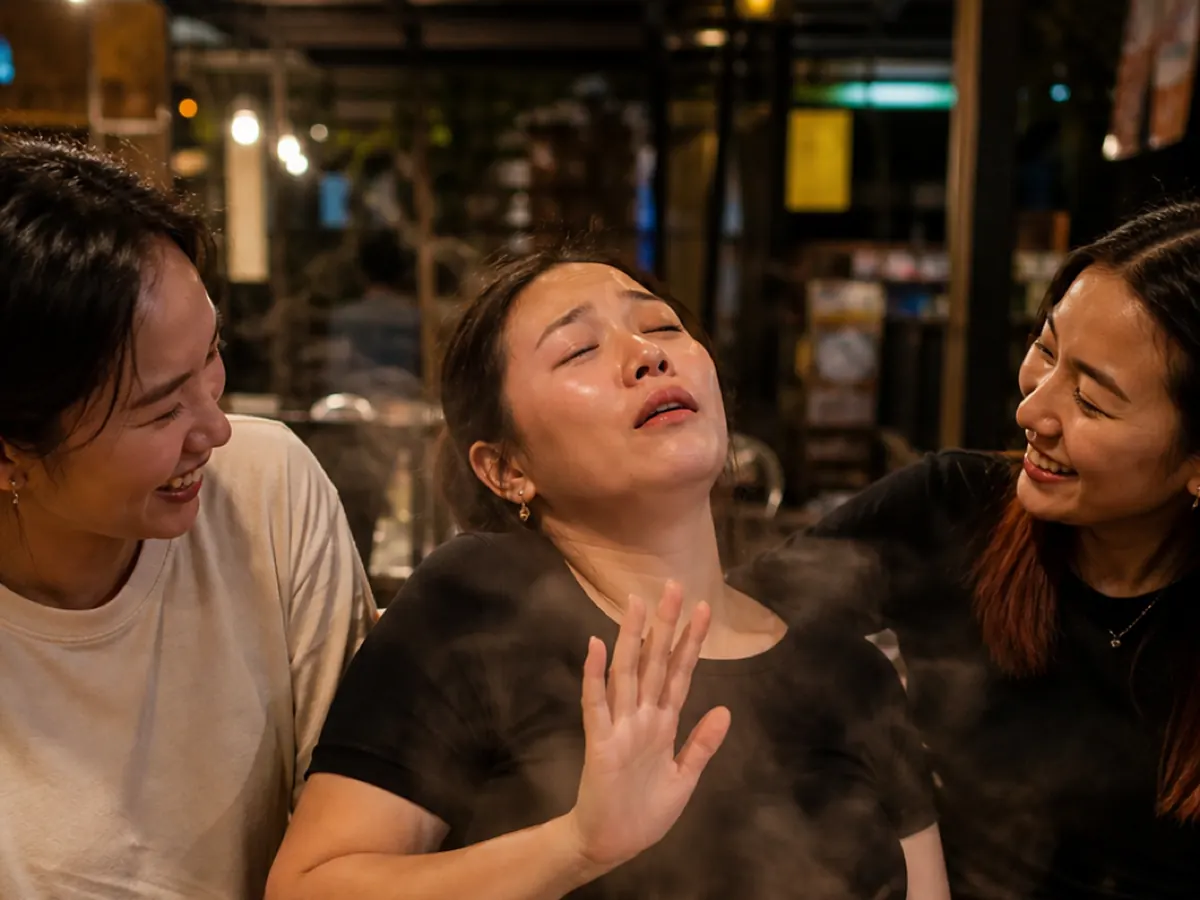
Why there are so many of them
Startup capital is low, Thai business material describes opening one from a few hundred thousand baht, with equipment, fit-out and rent as the initial outlay.
Low barrier to entry plus a proven format plus a population that eats out constantly produces exactly what you’d expect: enormous numbers of them, competing hard, on price.
Which is why ฿299 is ฿299 and not ฿450. It isn’t generosity. It’s competition in a market with almost no moat, where the only real differentiators are location, meat quality and how long people are willing to sit.
And article 09’s economics apply here as everywhere: 1.8–1.9% growth, household debt at 85.9% of GDP (Q1 2026), and a customer base extremely sensitive to price. A buffet operator raising to ฿349 loses the table to the place across the road, so nobody does, so everyone’s margin stays in the drinks.
What this is actually for
Here’s the part that isn’t economics.
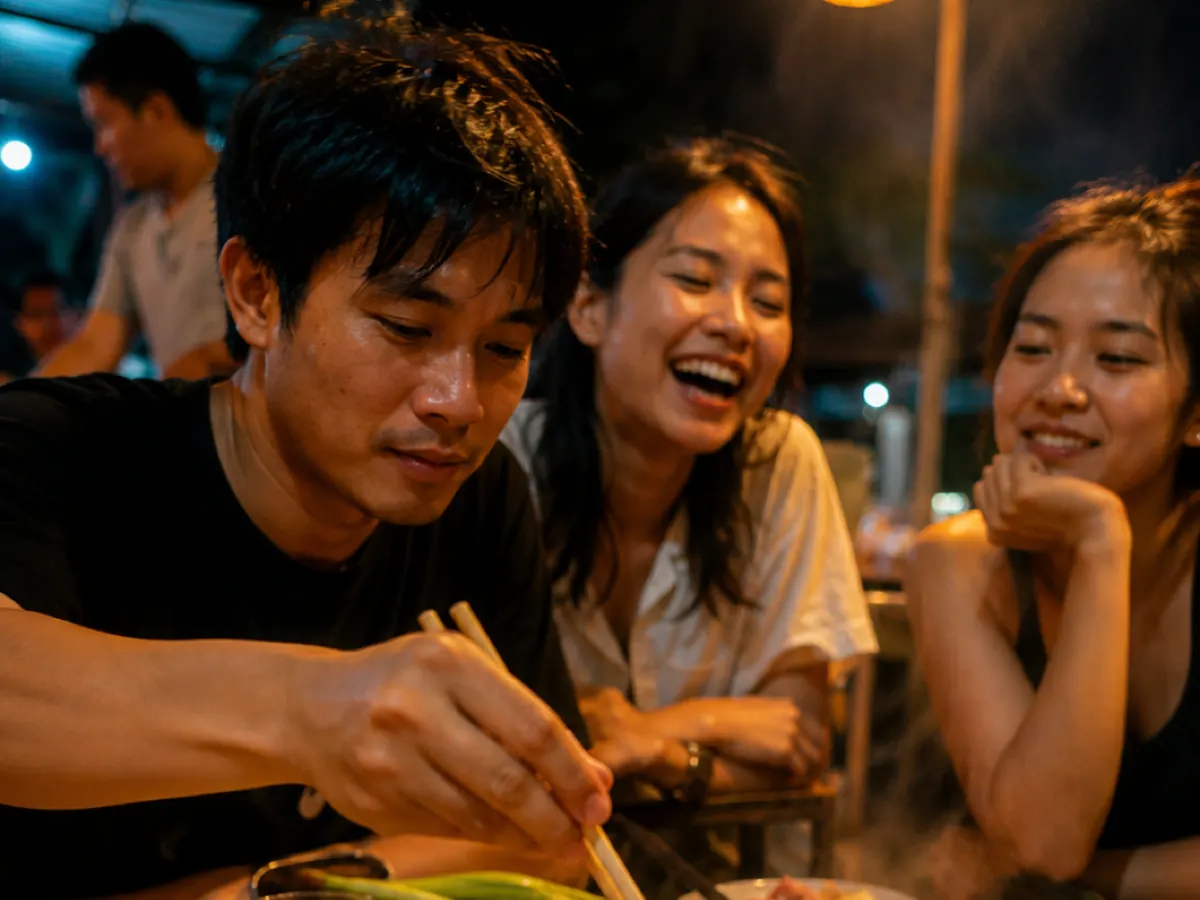
Moo kratha is not a meal. It’s a format for spending three hours with people.
The slow grill, the shared pan, the round table, the fact that somebody has to cook and somebody has to decide when the pork is ready; it’s structured group activity dressed as dinner. That’s why it’s what you do for a birthday, a leaving party, a payday, or a Tuesday when eight people need to be somewhere.
Article 58 The air-conditioned town square argued that Bangkok malls are the town square because the outdoors is unusable. Moo kratha is the same instinct at table scale: a cheap, air-conditioned, socially acceptable reason for a group to occupy a space for an evening.
The unlimited meat is not the product. The three hours are the product. The meat is just what justifies the table.
For foreigners
Order drinks or you’re the problem. The buffet price assumes you will. A table of water-drinkers is a table the restaurant loses money on, and while nobody will say anything, you should know what you’re doing.
Yes, they charge for ice. No, it’s not a scam — article 12’s pattern doesn’t apply. It’s a line item and it’s disclosed.
Don’t try to win. The people who arrive determined to eat ฿299 worth of pork are competing against an operator who has modelled exactly how much you’ll manage. You will not win, and you will feel unwell.
And don’t rush. If you eat efficiently and leave in forty minutes you’ve had a mediocre dinner. The point is the three hours.
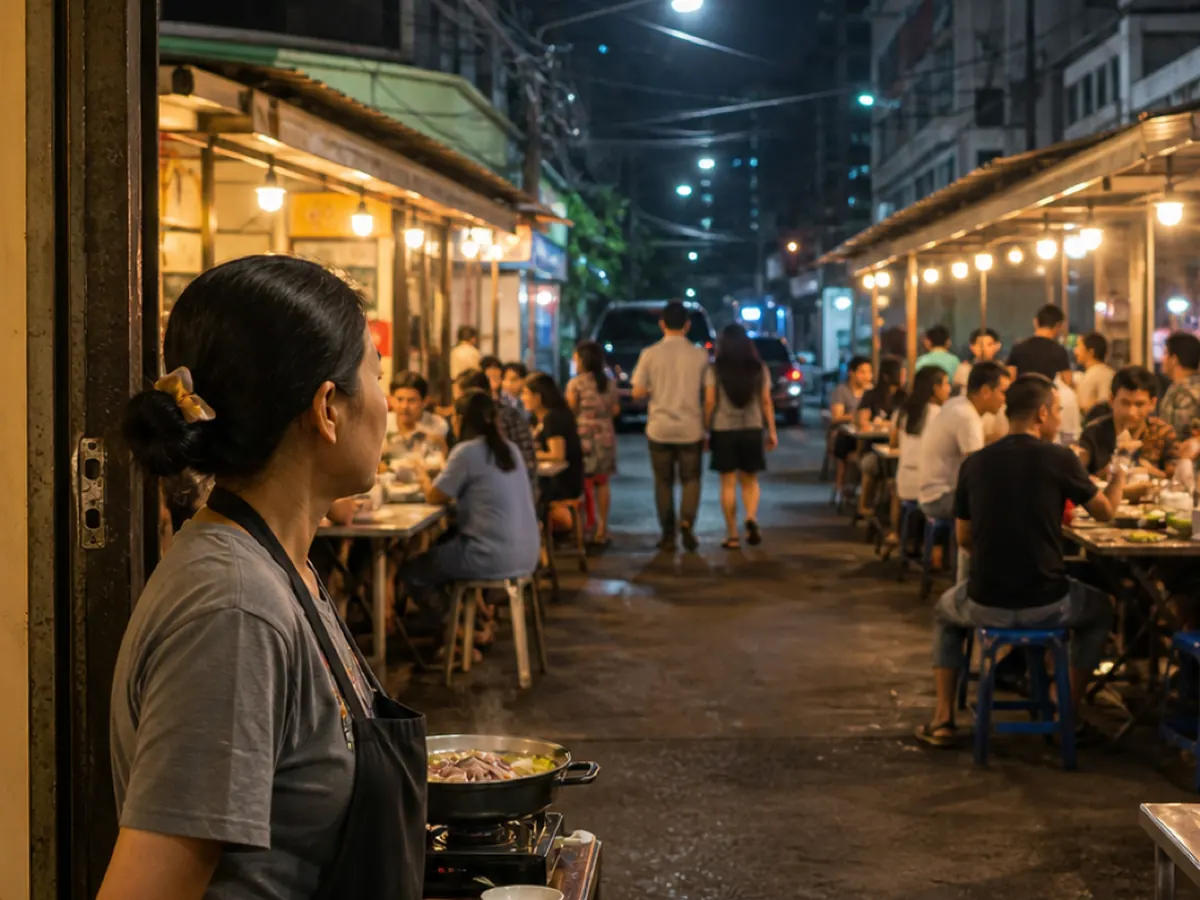
Common misconceptions
“They must lose money on big eaters.” They model the distribution. A few heavy eaters are priced in; the average is predictable and low.
“The meat must be poor quality.” It’s bought at wholesale volume from the same markets that supply everything else. Quality varies enormously by operator, and price is competition rather than corner-cutting.
“It’s an unsustainable business.” It’s a low-margin, high-competition business with the profit in beverages. That’s a normal restaurant model, stated plainly.
“Charging for ice is a rip-off.” It’s the margin. The ฿299 is the loss leader.
“It’s just Korean barbecue.” Different format, different broth moat, different social function. Moo kratha is its own thing and the moat around the dome is the tell.
Common questions
- How do Thai buffet restaurants make money at ฿299?
- The buffet covers food and operating cost with little margin. Profit comes from separately priced drinks, alcohol and ice.
- Don't big eaters ruin the economics?
- No. Consumption has a biological ceiling and operators model the average, which is far lower than most customers expect.
- Why is the grill so slow?
- A slow format means long sittings, and long sittings mean drinks. It isn't an accident.
- Do they really charge for ice?
- Yes, and it's standard. It's part of the beverage margin that makes the buffet price possible.
- Why are there so many of them?
- Low startup capital, a proven format and a population that eats out constantly — which produces intense competition and keeps prices down.
- What's the etiquette?
- Order drinks, don't rush, and don't treat it as a challenge. The three hours are the point.