A million baht at the gate, thirty thousand in the ring
A Thai stadium can take ฿1,000,000 in gate receipts and pay its main event fighter ฿30,000. Children start at seven, for ฿300 a fight. The economics of a national sport.
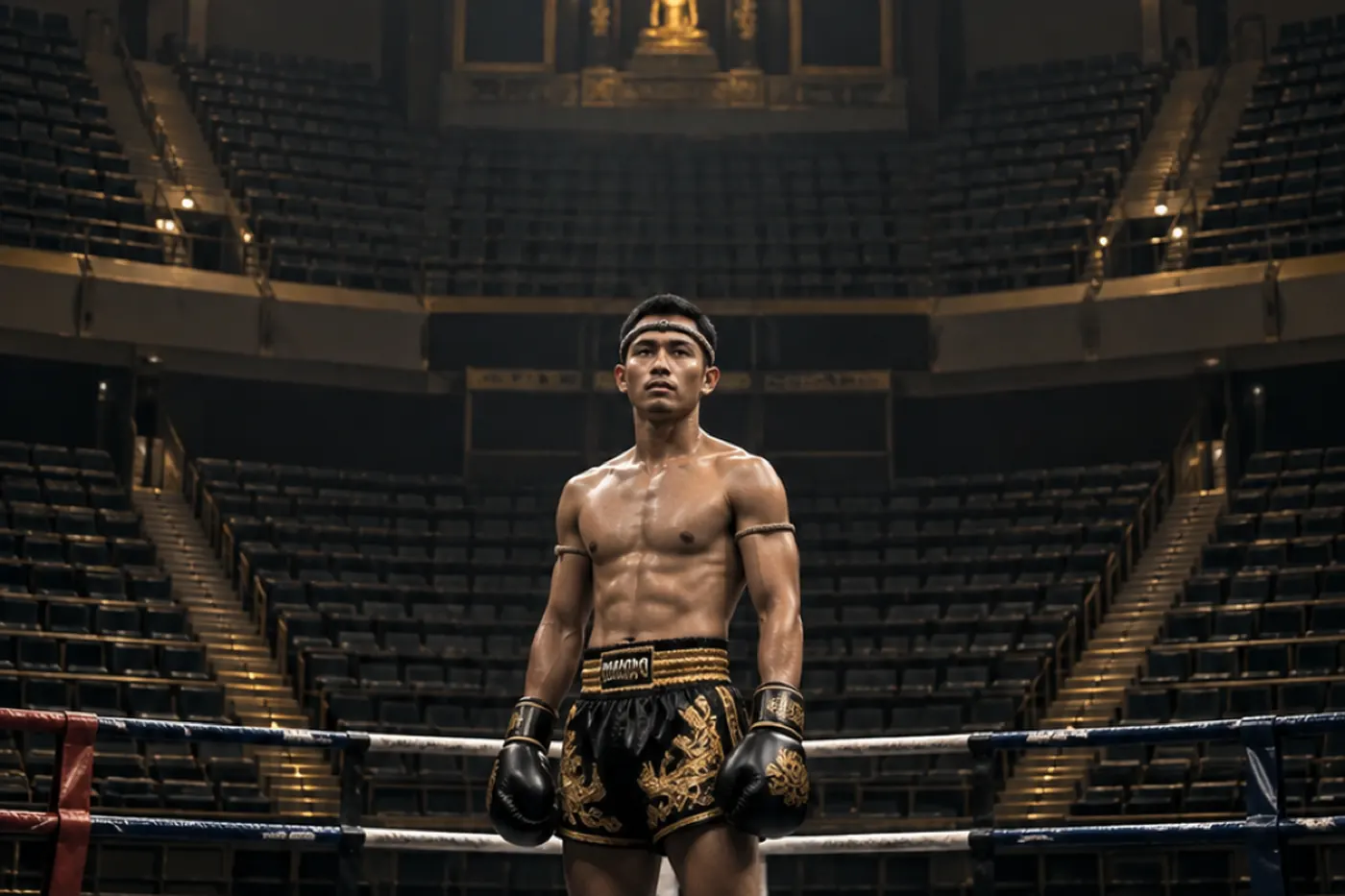
Thai reporting has put the arithmetic plainly: a stadium can take ฿1,000,000 in gate receipts on a card where the main event fighter is paid no more than ฿30,000.
Three per cent. To the two people the audience came to watch, doing the thing that causes the injuries.
That ratio is the whole story of Muay Thai’s economics, and it explains almost everything else — including why children fight for three hundred baht.
Where fighters actually start
Most Thai fighters begin at seven or eight years old.
At that age, a fight pays ฿300 to ฿500.
By twelve or thirteen, with experience and a following, it might be ฿3,000 to ฿10,000. On the temple-fair and provincial circuit, where most fighting actually happens, the average across young fighters is roughly ฿300 to ฿2,000 a fight, depending on record and reputation.
The gym takes a percentage of that, by agreement, for training and upkeep.
The children come overwhelmingly from the North, Isaan and the South, and overwhelmingly from families without money. Thai reporting is direct about why: fighting is how the family eats, and how the child’s schooling gets paid for.
That is the part foreigners consistently misunderstand in both directions. It is not a cultural quirk to be admired, and it is not simple exploitation by uncaring parents. It is a household making an economic decision with the options available, in the regions article 33 The average Thai farmer is 58 describes — where the farms are worked by people averaging 58 and the young have gone to the cities.
Why the money doesn’t reach the ring
Because the fighter is not the product.
At the traditional stadiums, the substantial money has never really been the gate — it’s the gambling, which happens continuously and audibly throughout every fight, with odds shifting round by round in the stands. The atmosphere foreigners find so electric is a live betting market operating at volume.
That structure means the value in the room is captured by promoters, stadiums and bettors. The fighters supply the volatility that the market prices. They are the instrument, not the participants.
And the supply of fighters is effectively unlimited. There is always another boy from another village who will fight for ฿500, because the alternative for his household is worse. When the supply of labour is that elastic and that desperate, the price stays where it is regardless of how much money moves through the building.
That’s not a moral failure by anyone in particular. It’s what a market does when one side has no leverage at all — the same shape as the street food economics in article 13 What a Bangkok street food cart actually earns, but with a child taking the physical risk.
The Thai debate
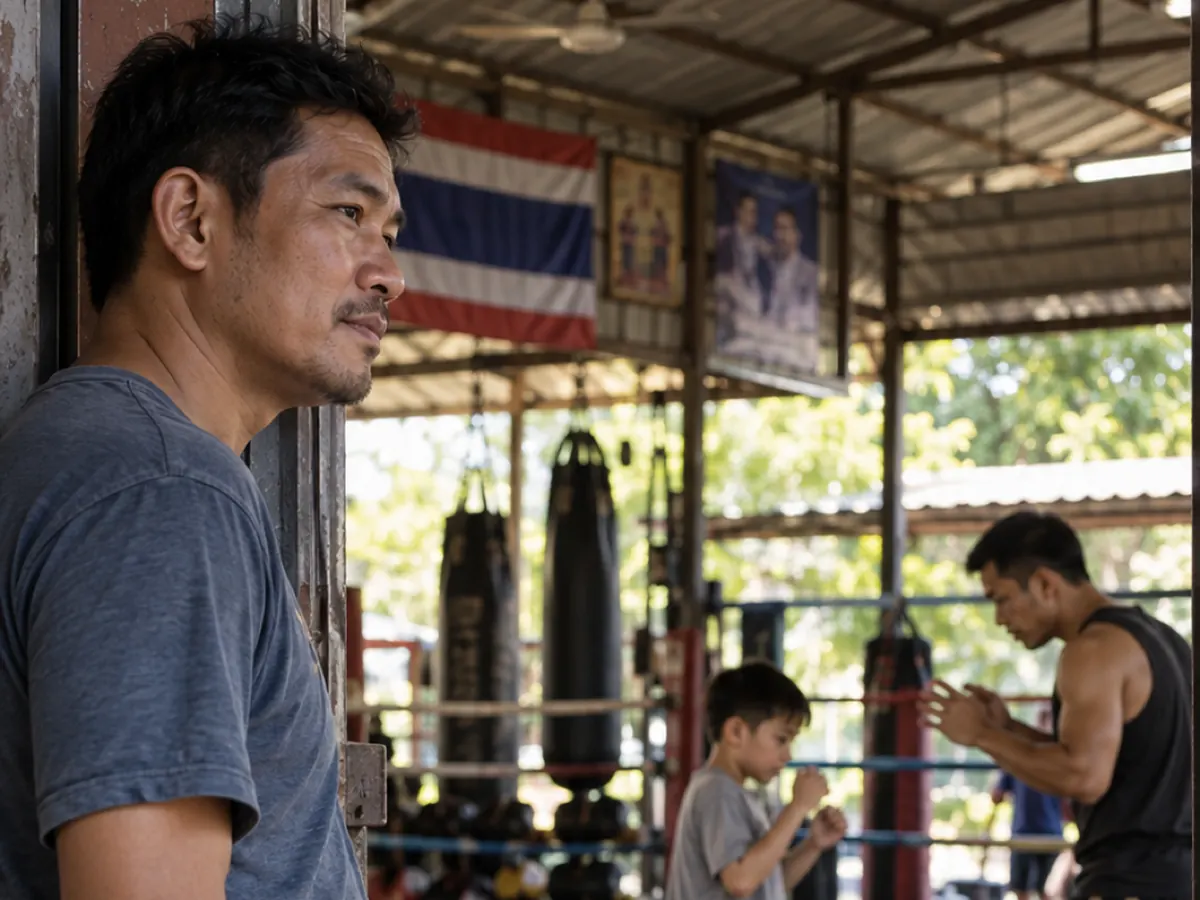
This is argued about here, seriously, by Thais, in mainstream media.
One formulation quoted in Thai reporting is blunt: that the Muay Thai system is adults taking advantage of children. That’s not a foreign NGO talking. That’s the domestic argument, in a Thai newspaper, about a Thai national sport.
The debate covers child fighter ages, medical oversight, head trauma, purse structures, and whether the traditional stadium model can survive at all. It has reached the statute book twice and passed it neither time. An attempt in 2018–19 to bar under-12s from the ring, after a thirteen-year-old died from a bout, was fought off by the boxing establishment. A new draft Child Protection Act, approved in principle by the Cabinet on 10 June 2025 and since through the Council of State, would make it an offence to put a child under fifteen in a bout at all, with conditions and protective equipment for fifteen-to-eighteens; the same objections have been raised again, and as of September 2026 the bill has not passed parliament. Under the Boxing Act as it stands, a child may fight with a guardian’s consent and a registered minor may sign for bouts without one.
And it runs against a genuine counterweight, which deserves stating properly rather than dismissed: Muay Thai has been a real route out of poverty for a great many people, has funded educations and supported families, and is a national art with deep cultural standing. The people defending it are not cynics. Many of them are former fighters who are clear that it gave them everything they have.
Both of those are true. A system can be a genuine opportunity for some and indefensible in its distribution of money at the same time, and pretending otherwise is how these arguments stay stuck.
The foreign market, and what it changed
There is a second Muay Thai economy now, and it pays completely differently.
International promotions and overseas fight opportunities pay Thai fighters at multiples of the domestic rate. The top Thai fighters earning abroad are on figures that would be unrecognisable at a provincial stadium.
Meanwhile the foreign training market (gyms in Phuket, Chiang Mai and Bangkok teaching Muay Thai to visitors) is a substantial industry in its own right, and one where the money genuinely does reach Thai trainers, many of them former fighters.
So the sport now has a domestic economy that underpays its athletes and an export economy that pays them properly. Which creates the obvious dynamic: the best leave, or fight abroad, and the traditional stadiums lose the talent that fills seats.
If you want to know why the domestic model is under pressure, that’s most of it. It isn’t only changing tastes. It’s that a fighter good enough to headline for ฿30,000 in Bangkok can earn considerably more elsewhere, and eventually does.
For anyone who trains here
A few things worth knowing, said plainly.
Your gym fees are one of the better-functioning parts of this economy. Money from foreign training goes fairly directly to Thai trainers.
Buying a ticket at a traditional stadium supports the traditional model, with all of the above attached. That’s not a reason not to go, I’d encourage anyone to see it, but go knowing what the ticket funds.
And if you’re watching a child fight, the child is being paid a few hundred baht. You are allowed to find that difficult. Plenty of Thais do.
Common misconceptions
“Muay Thai fighters get rich.” A handful, mostly abroad. Domestic purses are modest and the gate-to-purse ratio is stark.
“The gate money is the money.” The gambling is the money. The gate is the entry fee to the betting floor.
“Parents are exploiting their children.” Families in the poorest regions are making decisions with the options available. The question is why those are the options.
“It’s a cultural tradition foreigners shouldn’t comment on.” Thais are arguing about it in Thai newspapers. It’s a live domestic debate, not a sacred object.
“The foreign market is ruining it.” The foreign market is currently the part paying fighters properly.

Final thoughts
I’ve watched Muay Thai my whole life and I’d defend it as an art without hesitation.
But a stadium taking a million baht at the door and paying its headline fighter thirty thousand is not a cultural question. It’s a distribution question, and the answer is that the people taking the physical risk have no bargaining power, because there is always another child from another village.
The sport doesn’t need foreigners to save it or to judge it. It is already having the argument internally, in its own language, and losing its best fighters to promotions that pay them what they’re worth, which may in the end settle the question more effectively than any amount of debate.
Three per cent of the gate. Seven years old for three hundred baht.
Those are our numbers, reported in our newspapers. I’d rather write them down than let someone else discover them and tell the story badly.
Common questions
- How much do Muay Thai fighters get paid in Thailand?
- Widely variable. Thai reporting indicates main event purses at traditional stadiums of up to around ฿30,000, against gate receipts that can reach ฿1,000,000.
- How much do child fighters earn?
- Roughly ฿300–500 per fight at seven or eight years old, rising to ฿3,000–10,000 by twelve or thirteen with reputation. Provincial circuit averages run ฿300–2,000.
- Why do children fight?
- Predominantly economic. Most come from the North, Isaan and the South, from families for whom fight purses support the household and fund schooling.
- Where does the money go?
- Substantially to promoters, stadiums and the gambling market that operates throughout every card.
- Do fighters earn more abroad?
- Considerably. International promotions pay Thai fighters at multiples of domestic rates, which is drawing talent away from traditional stadiums.
- Is there a debate about this in Thailand?
- Yes — an active one, in mainstream Thai media, covering child fighter ages, medical oversight and purse structures.