What four hundred days is worth
859 workers were dismissed without severance. ฿244 million owed. Executives were jailed. Two years later the court awarded ฿9,076.92 each.
Article 74 Four hundred days made a claim I was fairly pleased with.
Thai statutory severance runs to 400 days’ wages at twenty years’ service, uncapped, calculated on actual pay. More generous than the UK’s scheme, incomparably more than the United States. I wrote that it was among the better arrangements anywhere and that almost nobody outside the country knows it.
That is all still true. Here is what it was worth to 859 people.
What happened
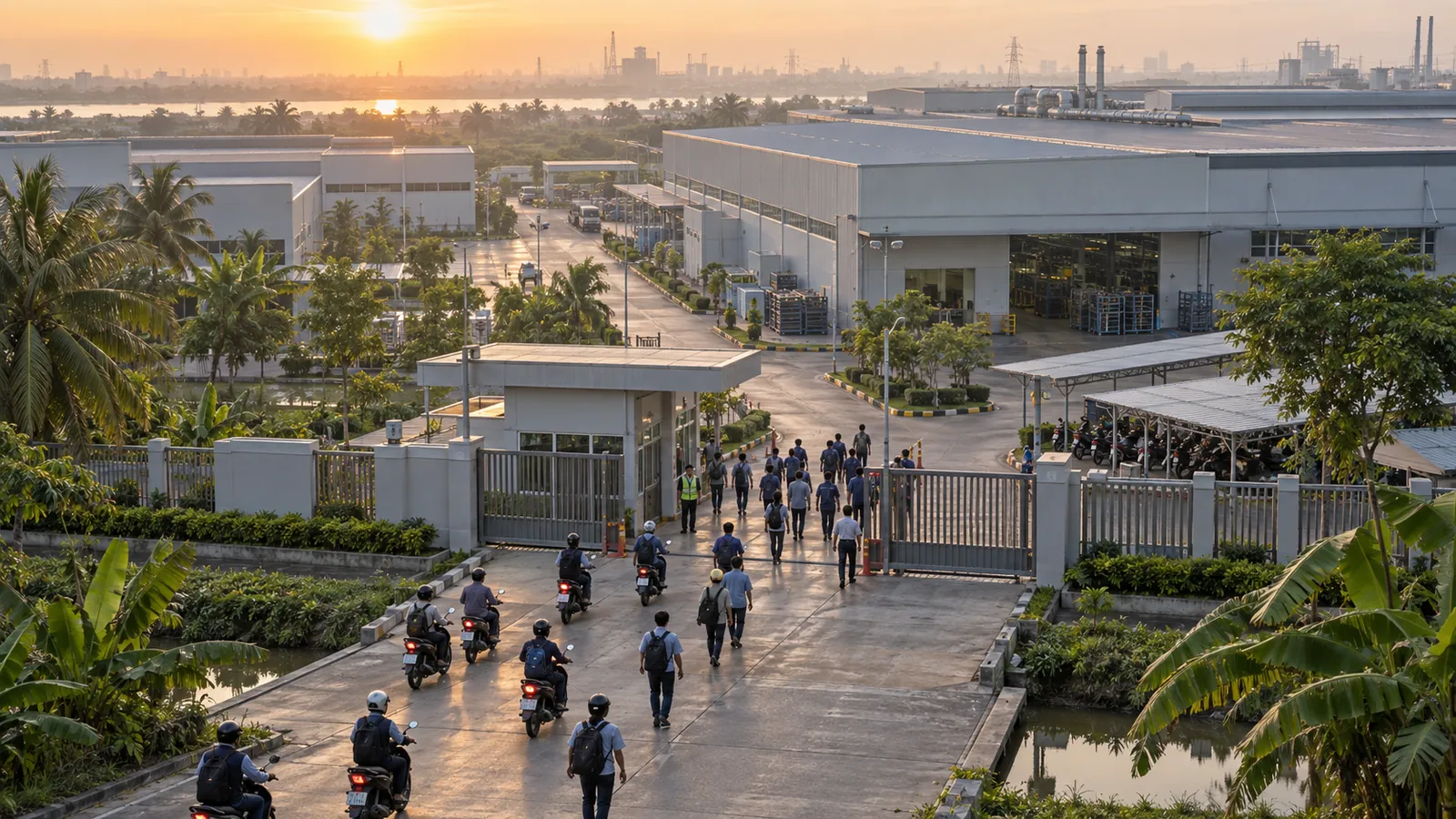
From late November 2024, workers at an auto parts manufacturer in Samut Prakan were dismissed and not paid.
859 people. Statutory severance and payment in lieu of notice, unpaid. Reported at ฿220 million in English coverage and ฿244 million in Thai reporting — I cannot reconcile the two and have not chosen between them.
A labour inspector ordered payment. The employer did not comply. The case went to the public prosecutor, and criminal charges followed.
On 6 August 2025 the Samut Prakan Provincial Court refused bail and ordered immediate detention.
That was reported, correctly, as a landmark. Thai labour law had shown it could reach past a company’s balance sheet to the people running it. Law firms wrote it up as a turning point. Labour groups petitioned the provincial governor opposing any release.
Then it took another year.
The ending nobody reported in English
On 5 August 2026, the court ruled on remedy.
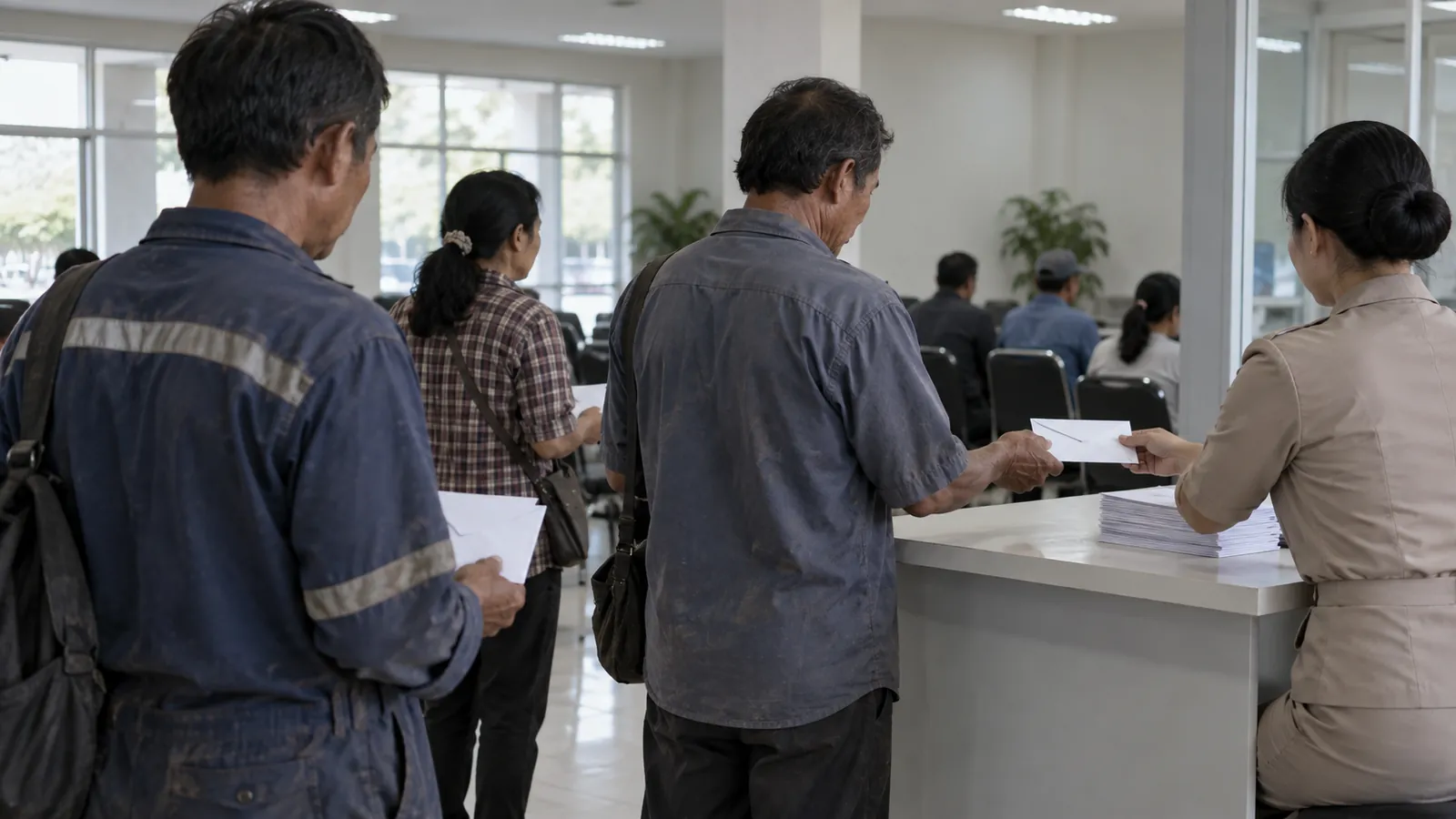
663 workers, ฿9,076.92 each. ฿6,018,000 in total.
And once paid, no criminal penalty in the case.
Work the arithmetic, because it is the article.
฿6.018 million against ฿244 million owed is about 2.5%.
Nine thousand and seventy-six baht — for people who had been dismissed without notice, who had waited nearly two years, whose statutory entitlement under the ladder in article 74 Four hundred days would have run to months of wages, and many of whom will have been long-service employees in a sector where twenty-year tenures are ordinary.
Thai reporting carried the workers’ reaction in the headline. Disappointed.
And 859 were dismissed. 663 received the award. I do not know what happened to the other 196 and could not establish it — separate settlements, claims not pursued, or something else. It is a gap of 196 people and somebody should close it.
The number that explains it
Here is the mechanism, and it is in the statute.
Section 144 of the Labour Protection Act, read in its consolidated form. It opens: any employer who breaches or fails to comply with the following provisions shall be liable to imprisonment not exceeding six months, or a fine not exceeding ฿100,000, or both.
And the list that follows includes section 118 paragraph one — the severance obligation itself — alongside section 118/1 paragraph two. A second limb covers sections 120, 120/1, 121 and 122 so far as they concern special severance pay.
So the attribution is right: failing to pay severance is an offence, and this is its ceiling. A maximum fine of ฿100,000, against ฿244 million withheld from 859 people.
Whether that ฿100,000 is charged once or 859 times is a question section 144 does not answer. The provision is drafted per employer and per provision breached; it contains no per-employee multiplier and no language of aggregation either way. Whether a single failure affecting 859 workers is one offence or many is a matter of general Thai criminal law on single and multiple acts, decided by the court on the facts — not something the Labour Protection Act settles on its face. The reported outcome is consistent with a single penalty discharged on payment, but consistency is not confirmation and the court’s reasoning has not been read. The comparison below is stated on the single-offence reading, which is the natural reading of the provision and not the only possible one.

And section 144 already knows how to scale a penalty
Here is what reading the whole section adds, and it is the finding.
Section 144 does not have one penalty. It has two. The ฿100,000 ceiling is the ordinary one. Then comes a second paragraph: where an employer’s breach of certain provisions — those on working hours, rest, holidays and the protection of women and young workers — causes a worker bodily or mental harm, or death, the penalty rises to imprisonment not exceeding one year, or a fine not exceeding ฿200,000, or both.
So the drafters of this very section understood that a penalty should answer to the scale of the harm, and they built a mechanism to do it.
They just did not apply it to money. Severance sits in the first limb, at a flat ฿100,000, whether the sum withheld is ฿50,000 from one person or ฿244 million from 859. The proportionality is there, in the same section, on the same page — attached to injury and not to the debt.
That is a sharper version of this article’s argument than it could make before. The fixed ceiling is not an oversight about how penalties work. It is a deliberate choice about which kind of harm deserves a graduated response, and unpaid wages did not make the list.
On that reading: the penalty for not paying is a rounding error on the amount not paid. Four hundredths of one per cent.
I want to be careful about what that does and doesn’t mean. The civil obligation to pay does not disappear: the debt is still owed, and a court can order it. The criminal provision is a separate, additional deterrent, and six months’ imprisonment is not nothing; the 2025 detention proved it can be applied.
But a rational employer facing insolvency, comparing ฿244 million against a ฿100,000 maximum fine and a recoverable prison risk, is not facing a deterrent proportionate to the sum. That is not a moral claim about anyone. It is what the two numbers say when placed side by side.
Which is article 74, corrected
Article 74’s argument was that Thai labour law protects your job far better than your time — six days’ annual leave against a 400-day severance ladder.
I would now put it differently. Thai labour law protects your job on paper better than almost anywhere, and enforces it at a maximum penalty of ฿100,000.
An entitlement is worth the enforcement behind it. A 400-day ladder with a ฿100,000 sanction is a strong number attached to a weak one, and the second number is the one that determines what actually happens.
That is a real correction to a published article and it should be made in article 74 Four hundred days itself, not left here. It was corrected there on 27 September 2026.

And it happened in article 96’s sector
The detail I found hardest to get past.
This was an auto parts manufacturer.
Article 96 Fewer parts established that Thailand’s automotive sector is around 11% of GDP and 690,000 jobs, that employment sits overwhelmingly in Tier 1 and Tier 2 component suppliers rather than assembly, and that an estimated 110,000 auto-parts workers are at risk from the EV transition on a published government timetable: 30% EV production by 2030, 50% by 2035.
I wrote this, in that article:
A large-scale, long-tenure redundancy across the Thai parts sector carries a severance bill running to hundreds of days of wages per worker. That is a real corporate and possibly fiscal exposure, on a published policy timetable, and I have not found anyone who has costed it.
Here is one firm’s answer to that question, arrived at in advance of the transition it was written about: don’t pay it.
859 workers. ฿244 million. Settled at ฿9,076.92 each.
If that is what happens with one company in 2024, the 110,000 figure is not a severance liability. It is a severance liability multiplied by whatever share of employers can absorb ฿100,000 and a contested prison risk.
I would like to be wrong about this and I do not think I am.
What would actually change it
Raise the s.144 penalty and index it to the sum withheld. A fixed ฿100,000 ceiling for any amount, from ฿50,000 to ฿244 million, is the defect. A penalty proportionate to the debt is the fix and it is one line of drafting.
Make severance a preferential claim in insolvency, visibly and early. Most of these cases are companies failing. The question is where 859 workers rank against everyone else owed money, and workers should not discover the answer two years later.
And publish the enforcement data. How many s.144 referrals, how many prosecutions, how many paid in full. The Ministry of Labour has this and nobody outside can see it, which means every claim about how well Thai severance works, including mine in article 74 Four hundred days, rests on the statute rather than on outcomes.
Practically, if it happens to you
Go to the labour inspector first. The inspector’s order is what creates the route to criminal referral, and this case followed exactly that path.
Do it as a group. 859 people produced a prosecution. One person produces a file.
Expect it to be slow. November 2024 to August 2026 is twenty-one months, with a detention order in the middle.
And get the claim registered in any insolvency proceeding. The criminal case and the money are separate tracks, and the second one is the one that pays.
(This is a description of a reported case, not legal advice. Anyone in this position should take proper representation.)
Common misconceptions
“Thai severance is generous, so workers are protected.” The entitlement is generous. The maximum criminal penalty for withholding it is ฿100,000.
“The executives went to prison, so it worked.” Detention was ordered in August 2025. The 2026 remedy ruling awarded ฿9,076.92 per worker and removed the criminal penalty on payment.
“฿9,076.92 is the severance.” It is a compensation award, not the statutory entitlement, and it is roughly 2.5% of the total reported as owed.
“This is an isolated case.” It is the reference case, because it is the one that reached criminal charges. Cases that don’t get that far are the ones nobody counts.
“The company got away with it.” The civil debt is a separate matter from the criminal penalty. What this case establishes is the size of the deterrent, not the extinguishment of the obligation.
Common questions
- What happens if a Thai employer doesn't pay severance?
- A labour inspector can order payment; non-compliance can be referred for criminal prosecution under Section 144 of the Labour Protection Act.
- What is the penalty?
- Imprisonment of up to six months, a fine not exceeding ฿100,000, or both.
- Have executives actually been jailed?
- Yes. On 6 August 2025 the Samut Prakan Provincial Court refused bail and ordered immediate detention in a case involving 859 dismissed workers.
- What did the workers receive?
- On 5 August 2026 the court awarded 663 workers ฿9,076.92 each, totalling ฿6,018,000, with no criminal penalty on payment.
- How does that compare to what was owed?
- Around 2.5% of the ฿244 million reported as owed.
- Does the debt disappear?
- The civil obligation and the criminal penalty are separate. This case establishes the scale of the deterrent, not the extinguishment of the debt.