Announced to the satang
Kathin is offered in a one-month window, once a year, once per temple. One ceremony was reported at over ฿90 million. Totals are announced; accounts are not.
On 19 October 2025, a Thai bank, its directors, its staff and members of the public announced a kathin donation of ฿14,453,092.94 to restore the living quarters of monks and novices at a royal monastery.
Fourteen million, four hundred and fifty-three thousand, and ninety-two baht. And ninety-four satang.
Nobody announces a donation to the satang by accident. The precision is the point, and understanding why is the whole of this article.
One thing to hold on to before any of the figures below. Everything in this article is an announced total: a number read from a stage, printed on a banner, quoted in a press release. An announcement is not a receipt. It records what was pledged and presented on the day, not what cleared into a temple account, and nothing published anywhere allows the two to be compared.
That is not a suggestion that the money does not arrive. It is the observation that a system built entirely on public totals has no public verification of them — which is the same finding article 79 What the temple used to do reached from the other end, where most temples do not file financial reports on time.
The rule almost nobody explains
กฐิน — kathin — is the robe offering made after ออกพรรษา, the end of the rains retreat.
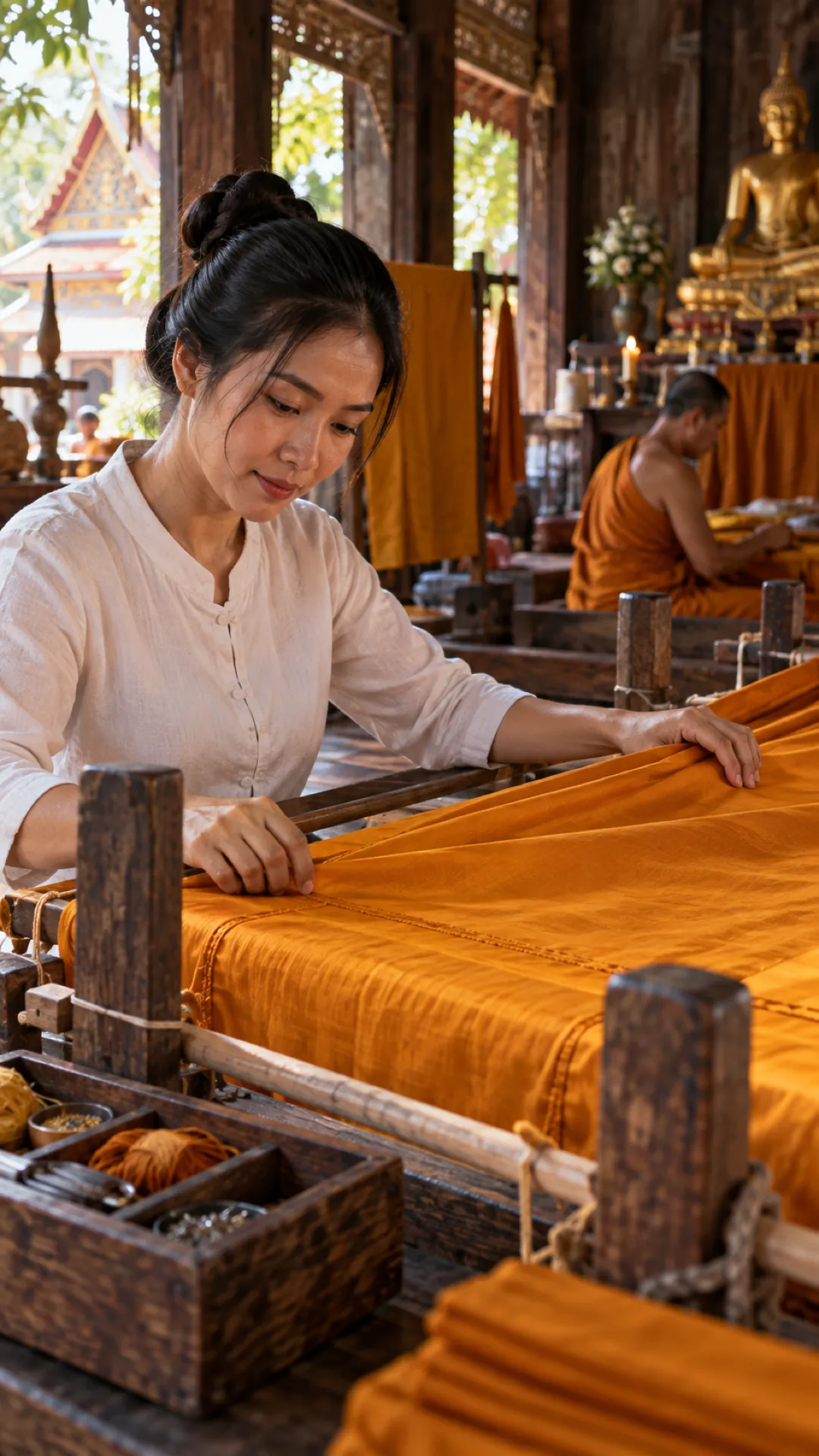
The word ทอด means to make an offering. กฐิน is an embroidery frame — the wooden frame on which pieces of cloth were once sewn together, dyed saffron, and presented as a robe. The object the ceremony is named after is a piece of sewing equipment.
And it operates under a restriction that English coverage almost never mentions:
Kathin can only be offered during one lunar month a year — from the first day of the eleventh lunar month to the fifteenth day of the twelfth. Outside that window it is not kathin.
ผ้าป่า — pha pa, “forest cloth” — is the year-round equivalent, offerable any time, with none of the restriction.
That single difference is the mechanism, and it is why kathin raises what it raises.
What a deadline does
Consider what the restriction creates.
A fixed annual window. Every temple’s kathin happens inside the same month, and then the opportunity is gone for a year.
Scarcity in the sponsorship itself, because a temple receives kathin once in that window, so being the sponsor is a position, not merely a contribution.
And a comparable figure. Every temple produces one kathin total, once a year, at the same time as every other temple.
A time-limited, once-per-recipient, publicly-totalled giving event is structurally a fundraising drive with a deadline and a scoreboard, and it has been running annually for centuries, since at least the Sukhothai period, without anyone needing to design it that way.
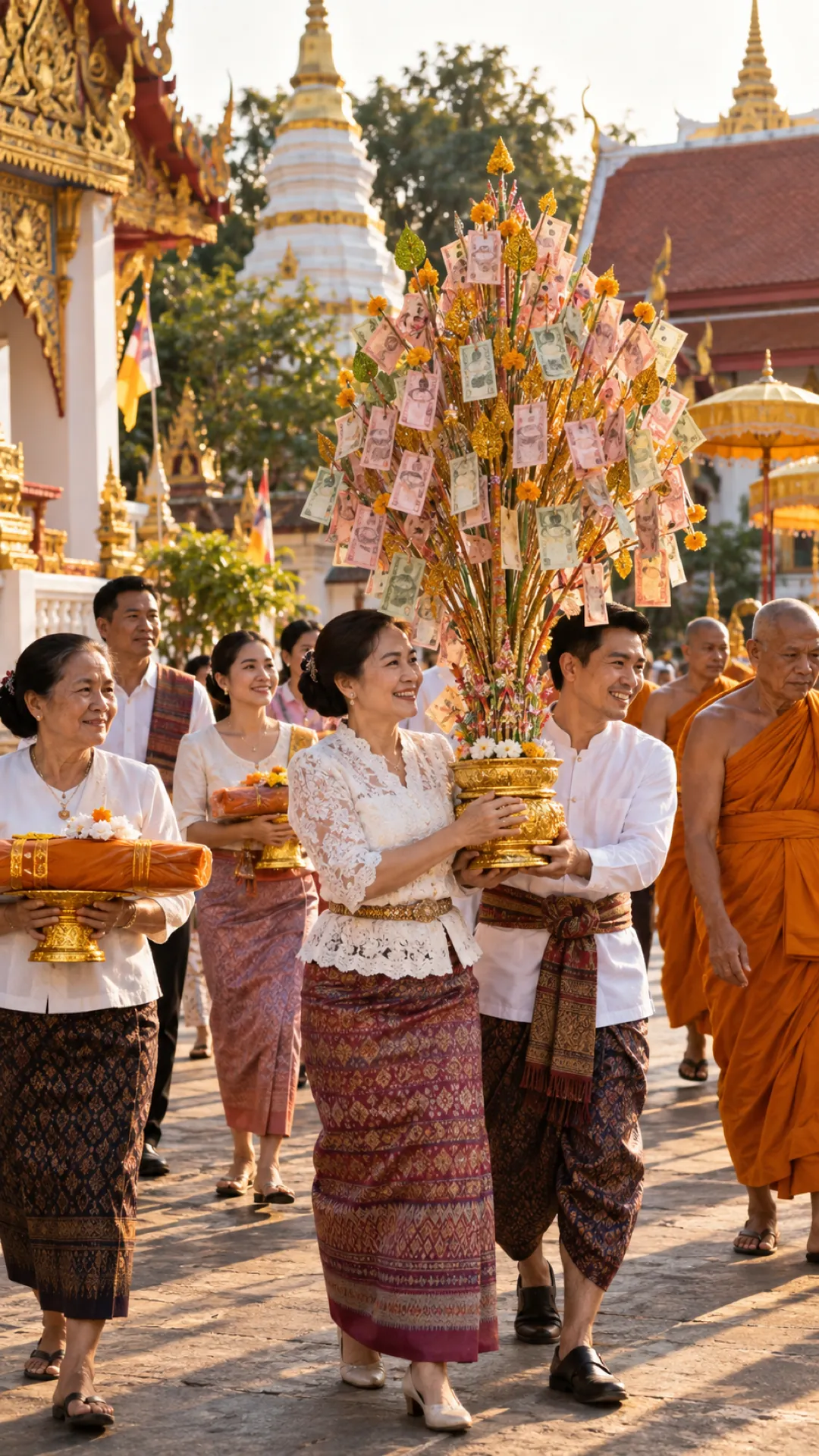
The totals are genuinely large. One temple’s kathin was reported at over ฿90 million, plus seven kilograms of gold. Money trees — ต้นเงิน, banknotes fixed to a frame and carried in procession — make the sum physically visible before it is ever counted.
Where the ฿120 billion arrives
Article 79 What the temple used to do established that Thailand’s 44,195 registered temples receive an estimated ฿120 billion a year in donations, and held roughly ฿410 billion in bank deposits across about 39,000 accounts at the first quarter of 2025.
Two qualifications travel with those numbers and this article previously carried neither. The ฿120 billion is an estimate — there is no audited national total, because most temples do not file financial reports on time. And the ฿410 billion is deposits, not wealth: it is what temples hold with banks and excludes land and buildings, which are the larger part.
This is one of the main doors that money comes through.
And here is the thing I did not expect to find, which is the reason this is an article rather than a description of a festival:
The inflow is published. The holdings are not.
A kathin total goes on a banner. It gets announced from a stage, printed in the local paper, posted online, quoted to the satang. Thai temples are extremely public about what arrives on the day.
What is subsequently held, and how it is spent, is the thing article 79 What the temple used to do found nobody can see.
That is not an accusation and it is not a contradiction — announcing a gift and publishing annual accounts are different practices with different histories. But it is a strange shape. Almost every institution that struggles with financial transparency is opaque at both ends. This one is loud at the entrance and quiet everywhere after it.
The criticism, which comes from inside
I want to be careful here, and the easiest way is to let the tradition speak for itself.
Thai Buddhist scholarship has been making this point for decades. Buddhadasa Indapanno’s archive carries material explicitly on kathin’s origins and how its original purpose has become distorted in modern practice. Thai commentary notes plainly that many people now understand kathin as a competition to collect the largest sum, when the money was always meant to be secondary to the robe.
That is not an outsider’s complaint. It is the tradition’s own scholarship, and it has been saying so since long before anybody was posting totals online.
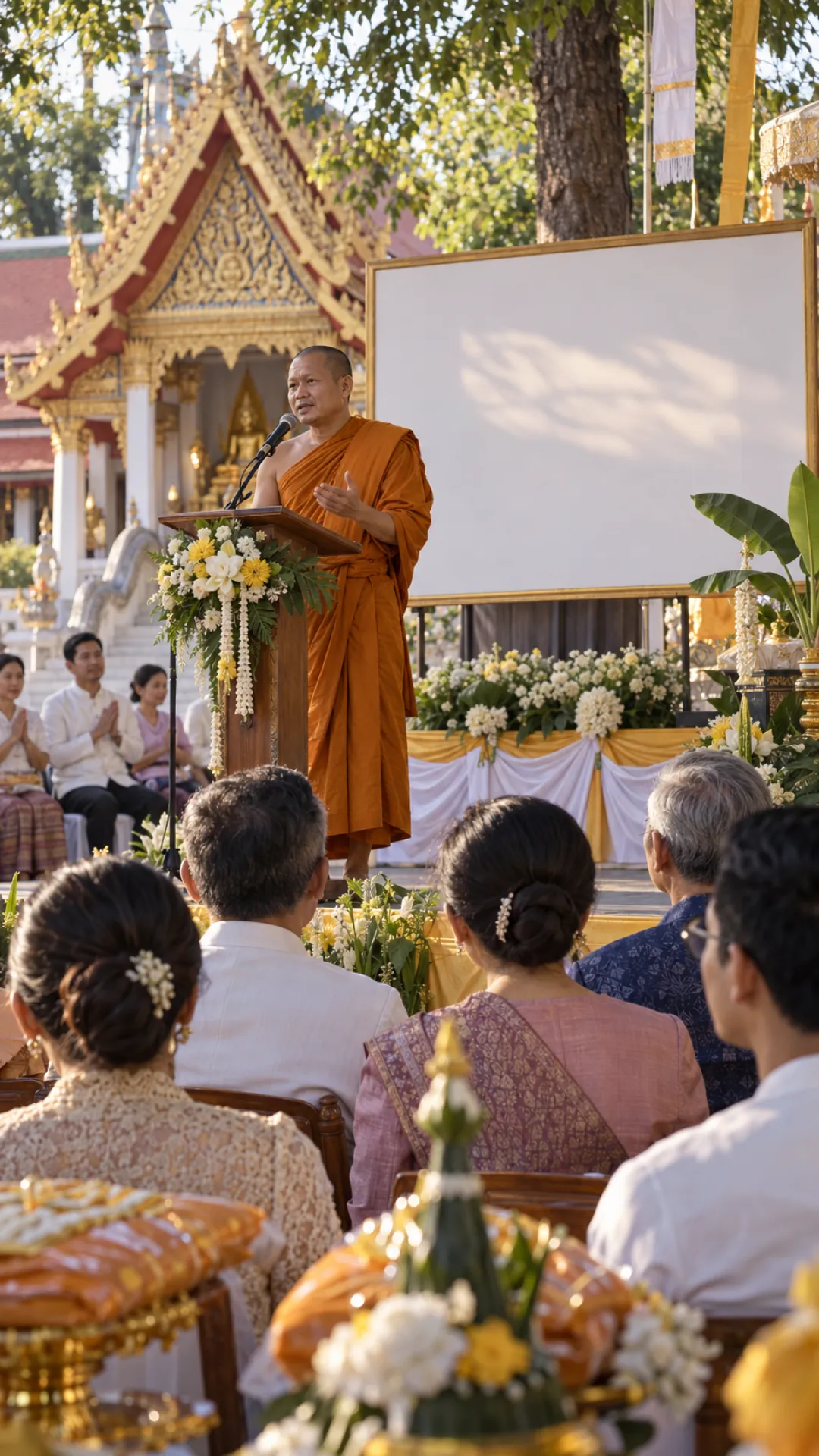
The original object was a robe. The rule about the one-month window exists because of the robe — it marks a specific moment in the monastic calendar, not a fundraising season. The money grew around it because a gathering with a deadline is a very effective place to raise money, which is a fact about crowds rather than about Buddhism.
I’d add only this: the totals are announced because announcing them works. A published figure creates the comparison, the comparison creates the effort, and the effort builds the school hall. Nobody involved is confused about what is happening, which is why the scholarly criticism has changed the practice so little.
What the money does
Worth stating plainly, because it is easy to lose in the size of the numbers.
Kathin money builds things. Monks’ and novices’ living quarters — the ฿14.4 million above was specifically for that. Utility bills. Refurbishment. School buildings. Article 79 What the temple used to do argued the temple was Thailand’s original welfare state and that the state has since taken over almost all of its functions.
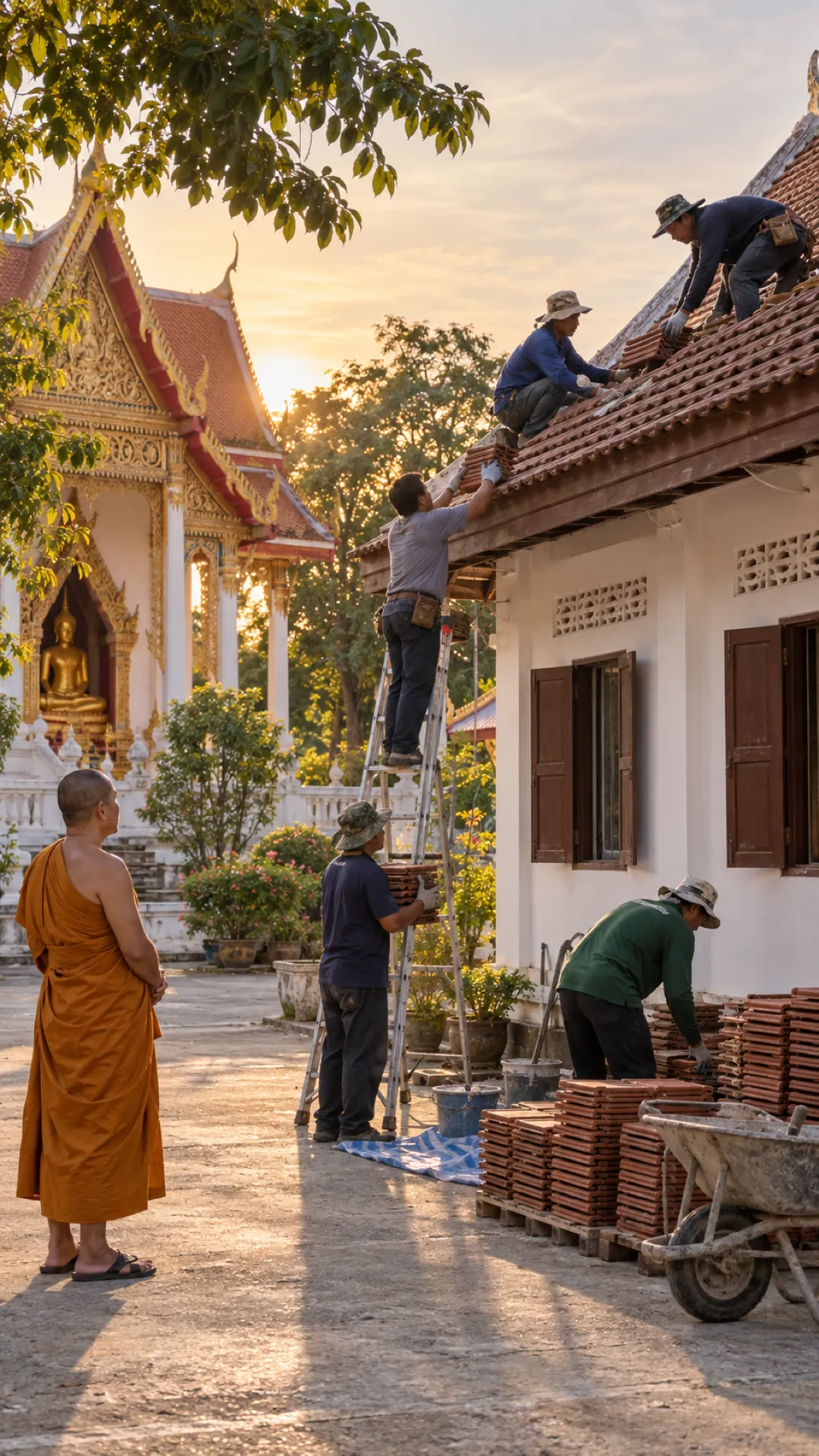
The buildings still need roofs, and this is where the roof money comes from.
What I’d want to know
Aggregate the kathin totals. They are announced publicly, temple by temple, inside a single one-month window every year. Somebody could assemble a national figure from banners and local press — and it would be the only bottom-up estimate of Thai temple income in existence, against article 79’s ฿120 billion top-down one.
Compare the two. If the kathin total is a large share of the annual ฿120 billion, then Thai temple finance is far more seasonal and far more visible than anyone has said. If it’s small, the interesting money is arriving some other way entirely, and nobody has asked which.
And publish the accounts, not just the arrivals. The institution already demonstrates, every October, that it is perfectly capable of announcing a precise financial figure in public.
Common misconceptions
“Kathin and pha pa are the same thing.” Kathin is restricted to one lunar month a year. Pha pa can be offered at any time.
“It’s a general temple donation event.” It is a robe offering. The money grew around it, and Thai Buddhist scholarship has long noted the shift.
“The competition over totals is a modern corruption.” The scholarly criticism is decades old. Whether it is a corruption or an adaptation is a live argument inside the tradition, not one imported from outside.
“The amounts are exaggerated.” One temple’s kathin was reported at over ฿90 million plus seven kilograms of gold, and corporate donations are published to the satang.
“Nobody knows what temples receive.” The arrivals are announced loudly. It is the holdings and the spending that aren’t visible.
Common questions
- What is kathin?
- The Thai Buddhist robe-offering ceremony held after the end of the rains retreat, in which robes and donations are presented to a temple.
- When can it be held?
- Only during one lunar month a year — from the first day of the eleventh lunar month to the fifteenth day of the twelfth.
- How is it different from pha pa?
- ผ้าป่า can be offered at any time of year and carries none of kathin's timing restriction.
- How much money is involved?
- Totals are announced publicly. One reported temple ceremony exceeded ฿90 million plus seven kilograms of gold, and corporate donations are published to the satang.
- What is the money used for?
- Building and refurbishment — monks' and novices' quarters, school buildings, utility bills.
- Is the focus on money criticised?
- Yes, and the criticism comes from within Thai Buddhist scholarship, which holds that the money was always secondary to the robe.