You cannot buy it for yourself
ฝาก means to entrust to somebody. So ของฝาก is, grammatically, for another person — and the roadside shops on the way home exist because of it.
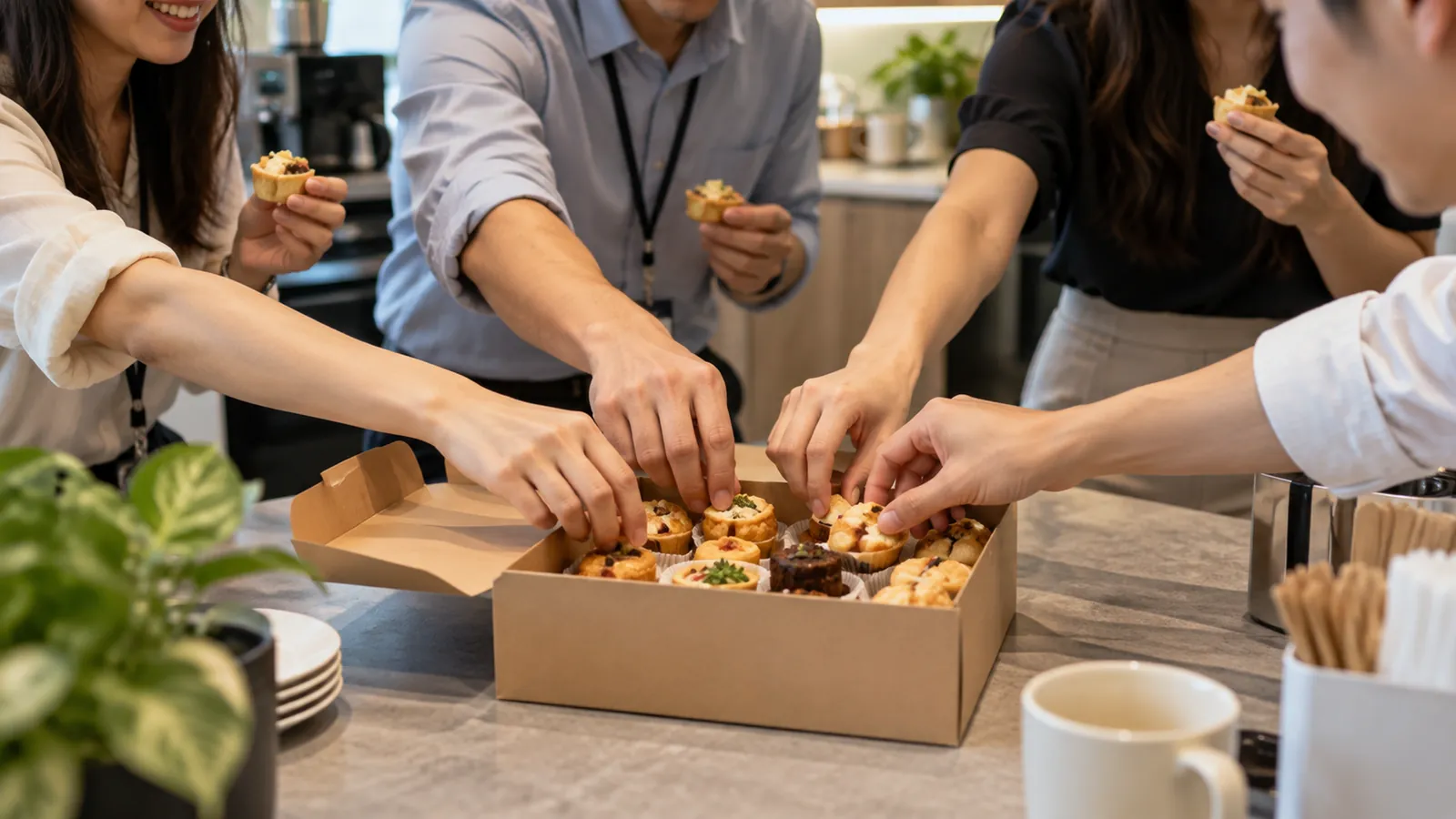
ฝาก means to entrust something to somebody — to leave it with them, to send it by their hand, to place it in their care.
So ของฝาก is, grammatically, a thing for another person. The recipient is inside the word. You cannot buy ของฝาก for yourself; the phrase will not do it. If you buy sweets in Phetchaburi and eat them, they were not ของฝาก. They were sweets.
English has no equivalent, and the English word points the other way. Souvenir comes from remembering — it is about the traveller, their trip, their memory. A souvenir is for you.
Two words for objects bought on a journey, encoding opposite social facts. And everything else in this article follows from that one.
It is not a memento. It is a debt.
If the object is for somebody else by definition, then buying it is not shopping. It is settling an obligation.
You went away. Other people did not. The trip created a small asymmetry and ของฝาก closes it — for colleagues who covered your desk, the neighbour who watched the house, your mother, the office, the team.
And this archive has a whole run on Thai obligatory giving. Article 28 The envelope: what a Thai funeral actually costs, and who pays on the funeral envelope, where the amount is known and the giving is recorded. Article 29 Life insurance with no insurer on mutual funeral societies. Article 109 Announced to the satang on kathin, announced to the last satang. Article 110 on the banquet where the seating plan is the ledger.
ของฝาก is the smallest and by far the most frequent instrument in that family. A ฿100 box, several times a year, from almost everybody.
Which is why it is not really about the sweets. Nobody in the office is short of snacks. The box says: I was away, I thought about you, here is the evidence. Article 122 Gone back to the planet found that Thai builds vocabulary for things it wants to say without saying them. This is the same instinct in a carrier bag.
Which explains where the shops are
Now the part that is genuinely economic, and it is why you see them where you see them.
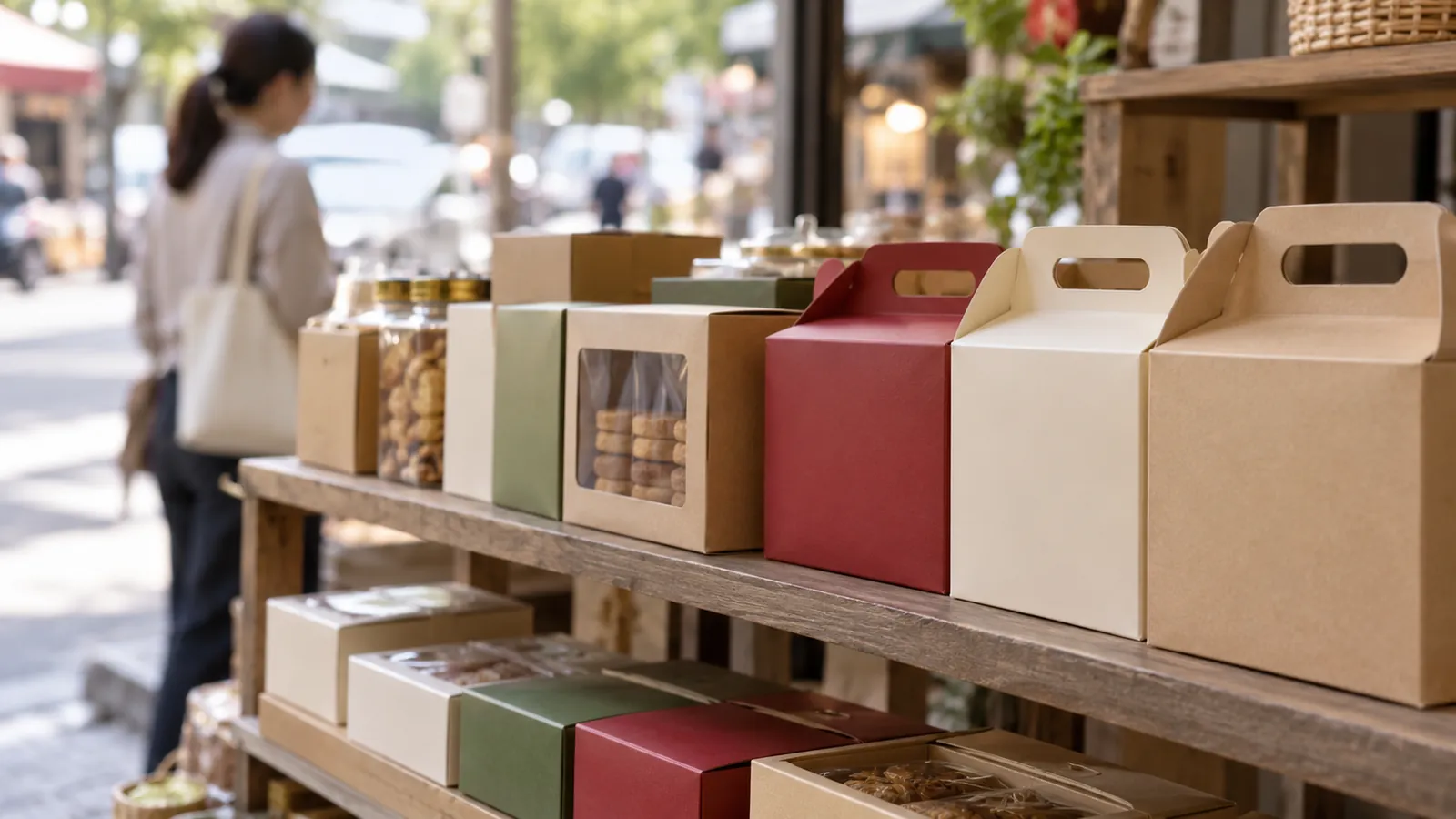
The roadside ของฝาก shops are on the way home. Cluster on the inbound carriageway. Thin on the outbound. Nobody buys ของฝาก at the start of a trip, because it would have to be carried for a week and because the obligation is not yet urgent.
The obligation becomes urgent in the last couple of hours of the journey.
So there is an entire retail geography organised around the direction of travel and the moment somebody remembers the office.
Article 135 You are renting footfall found that a machine business is really a business of renting somebody else’s footfall. This is the same insight with a twist: the footfall here is directional and time-bound. A site is not valuable because a road is busy. It is valuable because of where cars are in their journey when they pass it — far enough from home that stopping is still convenient, close enough that the thought has arrived.
The most valuable roadside pitch in Thailand is probably ninety minutes from a large city, on the inbound side. Nobody publishes that as a rule and everybody who runs one of these shops knows it.

And now the problem the product has
Here is where it gets structurally interesting.
The entire value of ของฝาก is provenance.
It is not enough for the sweets to be good. They have to be from the place. ขนมหม้อแกง from Phetchaburi. Sausage from Chiang Mai. Salted fish from a particular district. The place is the product, and the box’s whole job is to say I was there.
And provenance is the one attribute you cannot inspect.
Article 128 You can see the gearbox corrected this site’s founding finding. Article 80 Money you can wear had said informal markets work when they have a product standard and a published price; 128 found that the underlying property is verification at the point of sale, and that a standard is only one route to it. Gold can be assayed. Scrap can be weighed. A used gearbox can be put on a bench and examined.
You cannot look at a box of sweets and see where it came from. You can taste it, judge the quality, check the packaging — and none of that answers the question the purchase actually turns on. Quality is inspectable. Origin is not.
Thailand built the standard
And this is the part nobody has written in English.
Thailand has a registered geographical indication system — สิ่งบ่งชี้ทางภูมิศาสตร์ — administered by the Department of Intellectual Property. A GI registration ties a product name to a defined place and a defined method, and it is exactly the instrument article 80 Money you can wear says a market like this needs.
Reported coverage: over 240 registered products, across all 77 provinces, with market value reported at around ฿82 billion. Registrations continue annually — and I should note that the figures for 2026 disagree between sources, with both 26 and 13 new registrations reported, presumably at different points in the year. The count moves and the shape is not in doubt.
So the provenance standard exists. Somebody built the thing this archive keeps saying is missing.

And the transaction ignores it
Almost nobody stopping at a roadside shop on a Sunday evening is checking for a GI mark.
They are buying the box with the province’s name on it, from a shop on the right road, at a price that seems normal. The standard is real and the purchase does not reach for it.
Which is the archive’s finding in its most recent form. Article 131 The rule was abolished found a health entitlement that had been formally abolished as a requirement and still bound in practice, because the mechanism underneath had not changed. This is the mirror: a mechanism that exists and does not bind, because nothing connects it to the moment of decision.
A standard only protects you if it is present where you transact. Gold’s does — the purity is stamped, the price is on a screen behind the counter, and the buyer cannot avoid encountering it. A GI registration sits in a database in Bangkok.
That is not a criticism of the scheme, which does real work in export markets and in protecting producers. It is an observation about where the standard is and where the customer is, and they are not in the same place.
Practically
Buy on the way home, not on the way out. Everybody knows this and it is still worth saying: most of it is food, and most of it has a short life.
Ask what travels. The good shops will tell you honestly what will and will not survive four hours in a hot car, and the answer is often not the thing you were about to buy.
Look for the GI mark if provenance matters to you — it is the only verification available, and it exists precisely for this.
And do not over-think the object. The ฿100 box that everybody knows costs ฿100 is doing social work rather than culinary work. That is not a failure of the gift. It is the entire function, and a more expensive box would embarrass everybody.
Common misconceptions
“ของฝาก is the Thai word for souvenir.” It is closer to the opposite. Souvenir is about remembering, and is for the traveller. ฝาก means to entrust to somebody, so ของฝาก is for another person by construction.
“It’s a tourist thing.” It is overwhelmingly domestic, and the strongest expectation is between colleagues, neighbours and family.
“The shops are randomly placed.” They cluster on the inbound side of routes home, at the point in a journey where the obligation becomes urgent.
“Expensive is better.” The convention is a modest, recognisable, correctly-priced item. Overspending changes what the gift means.
“There’s no way to check where it’s from.” There is a registered geographical indication scheme covering products in all 77 provinces. Almost nobody consults it at the point of sale.
Common questions
- What does ของฝาก mean?
- Literally an item entrusted to somebody. ฝาก means to leave something in another person's care, so ของฝาก is bought for someone else rather than as a memento for yourself.
- Is it the same as a souvenir?
- No. *Souvenir* derives from remembering and is about the traveller. ของฝาก has the recipient built into the word.
- Who do you have to buy for?
- Conventionally colleagues, neighbours and family — anyone whose ordinary week continued while you were away.
- Why are the shops always on the way back?
- Because the obligation becomes pressing near the end of a journey, and because most of the goods are perishable.
- How can I tell if something is really from the province?
- Thailand's geographical indication scheme registers products by place and method, covering all 77 provinces. It is the only formal verification available.
- How much should I spend?
- Modestly. The convention is a recognisable, correctly-priced item; overspending changes the meaning of the gift.