The standard they set for themselves
Thailand's occupational safety Act does not apply to government at all. The same section requires state bodies to set equivalent standards themselves — which raises a different question about Bangkok's 2022 prison drain-clearing programme.
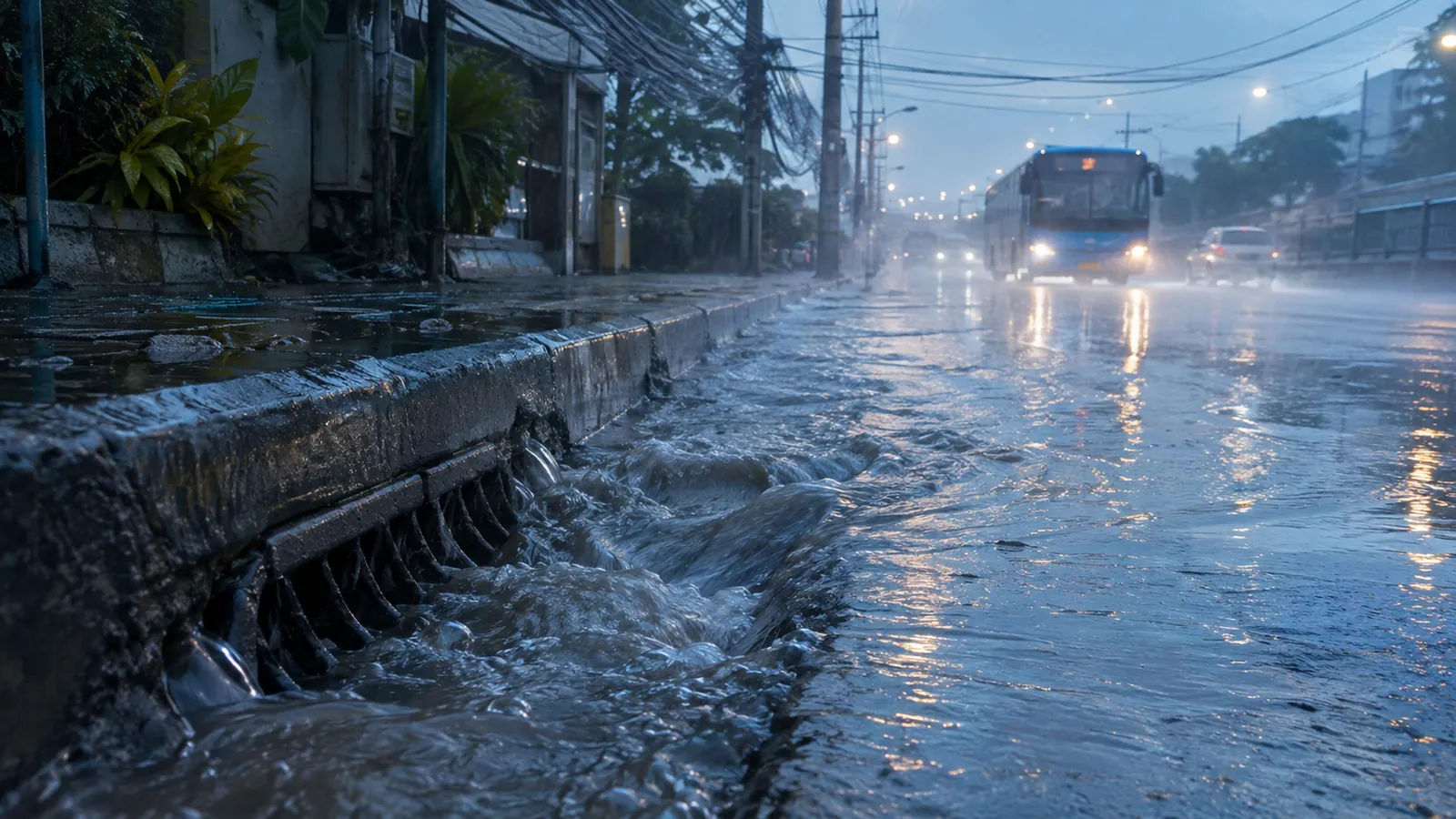
On 1 July 2022, around 300 prisoners from eleven prisons and correctional institutions began clearing Bangkok’s drains before the wet season.
It was a hiring arrangement between two state bodies. The BMA engaged the Department of Corrections, with a budget reported at ฿15 million by Thai PBS and ฿10 million by Isranews, and prisoners worked under the hiring contract Corrections agreed with the city. The initial phase was reported at 100 kilometres, within a wider programme whose headline figure was 530 kilometres across fifteen districts, targeted for three months.
⚠️ The 530-kilometre figure describes the programme, not the prison-operated portion, and the two have been conflated — including in the earlier version of this article. Contemporary reporting distinguishes the Corrections work from district work carried out by contractors.
The compensation terms were stated openly. Under the Prisons Act B.E. 2560 (2017), section 50, a prisoner has no right to wages for work assigned by the prison. What is payable instead is รางวัลตอบแทน — reward compensation — and the Department of Corrections stated that 70% of the profit from the hiring would go to the prisoners. Participants also received one day of sentence remission for each day worked outside.
“No right to wages” is a statement about legal entitlement, not about whether money changed hands. Money was reported to have changed hands. Any version of this story that uses section 50 to imply the men worked unpaid is misusing it, and the earlier version of this article came close to doing exactly that.
The fact that governs everything, and almost nobody knows it
Thailand’s Occupational Safety, Health and Environment Act B.E. 2554 (2011) does not apply to the government.
Section 3 has two limbs and a second paragraph, and I have now read all three in the Gazette text. The Act shall not apply to (1) central government administration, provincial administration and local administration — ราชการส่วนกลาง ราชการส่วนภูมิภาค และราชการส่วนท้องถิ่น — and (2) other undertakings, wholly or in part, as prescribed by ministerial regulation.
The Bangkok Metropolitan Administration is local administration. The Department of Corrections is central administration. Both are outside the Act.
And the same section does not leave a void — and it does not leave the content open either. Paragraph two requires those bodies to arrange standards for the administration and management of occupational safety, health and working environment in their own units ไม่ต่ำกว่ามาตรฐาน…ตามพระราชบัญญัตินี้ — not lower than the standards under this Act.
That clause matters and this article previously omitted it. The benchmark is not discretionary. A state body may not set itself an easier standard than a private employer is held to; it is required to match the Act’s.
One further thing paragraph two does, which this article also missed. It binds not only the three tiers of government but the ministerially-excluded undertakings in limb (2) as well. The substituted self-standard is the Act’s general answer to being outside its scope — it is not a special arrangement for the state.
Verified 5 September 2026 in the primary text — the Office of the Council of State’s copy of the Act, footnoted to ราชกิจจานุเบกษา เล่ม ๑๒๘ ตอนที่ ๔ ก หน้า ๕, 17 มกราคม ๒๕๕๔ — and against the Ministry of Labour’s own English translation, which renders the clause as “of not lower than the standards on occupational safety, health and environment under this act.” The earlier version of this article claimed to have read this section. This time it was read, and the citation it gave is correct.
So the obligation exists. It simply is not the Act’s obligation, and it does not run from an employer to an employee.
Which means the question the earlier version of this article spent its length on — does an employer’s duty reach someone who cannot be an employee? — was the wrong question. For a state programme, employment was never the operative test. Section 3 routes around it entirely.
And that is where the real problem is
Read section 3 again and notice what it does not create.
It imposes a duty on state bodies to arrange standards no lower than the Act’s. That is the benchmark, and it is not weak. What it does not do is say who checks. It does not say who audits them. It does not create an inspectorate for the public sector. It does not attach the Act’s penalties — up to a year’s imprisonment or ฿400,000 — to a failure to meet the standard the body is required to hold itself to.
The private sector gets the same standard plus an external regulator with inspectors and offences. The state sector gets the standard. The difference is not the standard. It is that nobody outside the body is charged with finding out whether it was met.
And there is one sentence in the confined-space regulation that shows this is not a theoretical gap. Clause 5 requires an employer who finds a hazardous condition to put controls in place and to keep the evidence of having done so at the workplace — เพื่อให้พนักงานตรวจความปลอดภัยตรวจสอบได้, “so that a safety inspector can check.”
The regulation is drafted around an inspector. Section 3 is what withholds one from the public sector. The paperwork requirement and the person who would read it were written into the same regime, and the state gets the first without the second.
I looked for the missing half and did not find it. No external audit or inspection function for state-sector occupational safety under section 3 paragraph two could be located — not in the Act, not in the confined-space regulation, and not in the Department of Labour Protection and Welfare’s published material. An earlier version of this article said the department had published a compliance manual for government units. I could not verify that and it has been removed. If such an audit function exists, it is not where somebody looking for it would look, and that is worth saying plainly rather than concluding it does not exist at all.
That is not a scandal and it is not unusual internationally — many jurisdictions treat Crown or state bodies differently. But it has a specific consequence, and it is the same consequence this publication identified yesterday in a much smaller setting.
Article 172 Ownership stops at the fence found a parking rule that is clear, breached visibly, and unenforced — because the injury is distributed and no complainant exists. This is the same structure with the stakes raised: a duty that is real and binding, with nobody outside the duty-holder positioned to verify it.
A standard you set for yourself, assess yourself, and are not inspected on, is a standard whose observance the public has to take on trust.
What can and cannot be said about the drains
Two corrections to the earlier version, both of which cut against its argument.
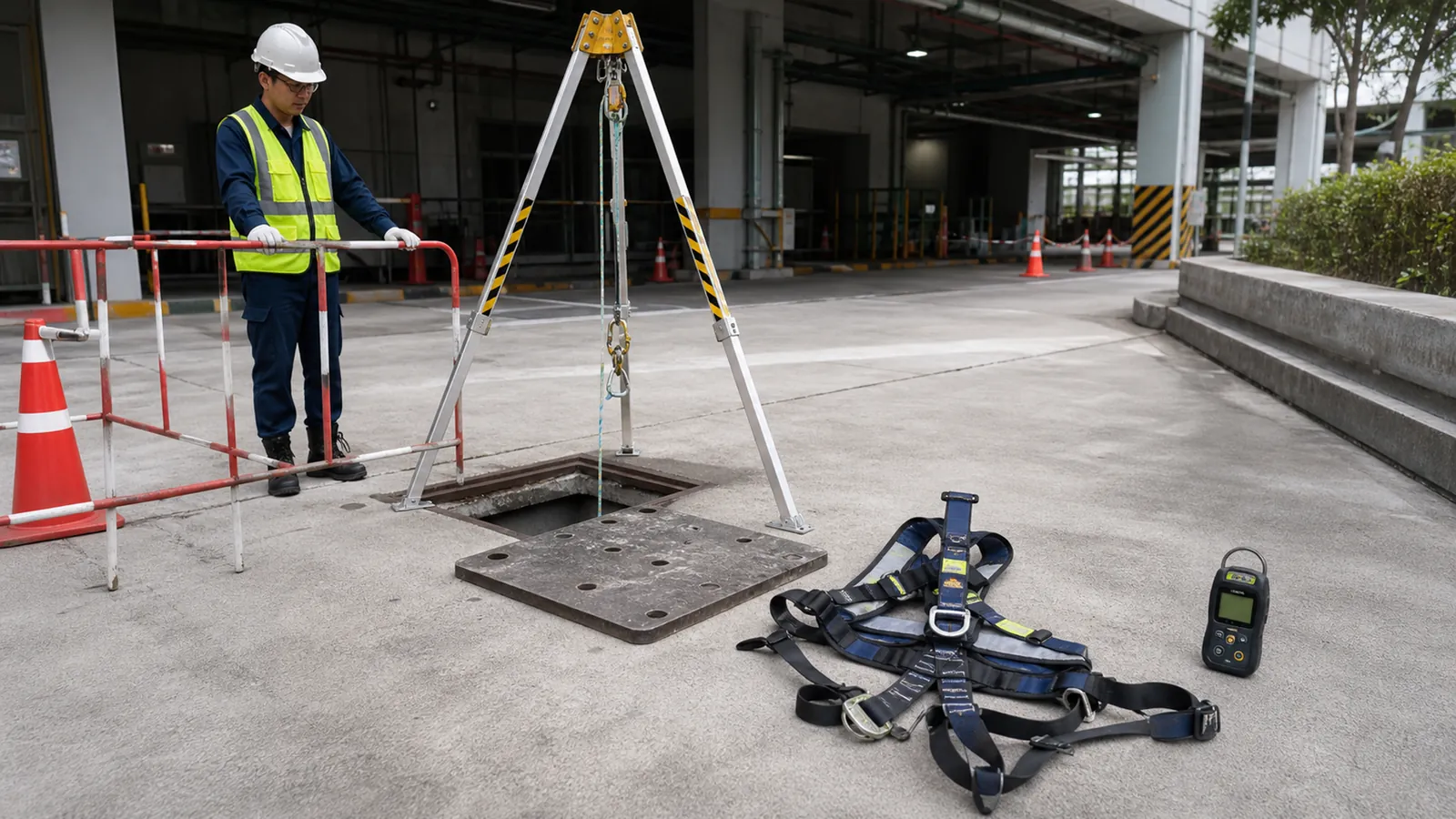
First: not every drain is a legal confined space, and the test is now quoted rather than characterised. The 2019 ministerial regulation — Royal Gazette เล่ม ๑๓๖ ตอนที่ ๑๘ ก หน้า ๑๒, 15 February 2019, read on 5 September 2026 — defines ที่อับอากาศ as a place that satisfies three conditions together: it has limited means of entry and exit, it is not designed as a place for continuous regular work, and it has a hazardous condition or a hazardous atmosphere.
A pipe or duct — ท่อ — is one of the named examples in that definition, alongside tunnels, pits, tanks, silos and furnaces. So a drain is expressly contemplated. It is not automatically included, because all three conditions must be met, and roadside drainage cleared from above may involve no entry at all.
“Hazardous atmosphere” is defined numerically, which is why the classification is a measurement rather than an opinion: oxygen below 19.5% or above 23.5% by volume, or flammable gas, vapour or mist above 10% of its lower explosive limit, among others. The earlier article said flatly that clearing a drain is confined-space work. That was too strong. This article has inspected nothing and is not going to classify work it did not see.
Second: where the regime does apply, what it requires is specific, and it is worth listing because the specificity is the point. Hazard assessment with the records kept at the site. Atmospheric measurement, recorded, before entry and continuously during the work — and if a hazardous atmosphere is found, nobody enters and anyone inside comes out immediately. A trained supervisor present in the work area throughout, who must prepare a work and hazard-prevention plan. A trained rescuer standing by with rescue and life-saving equipment. A written permit for every entry, naming the space, the times, the work, the workers, the supervisor and the rescuer. And no entry at all for anyone the employer knows or should know has a respiratory or cardiac condition.
It requires all of that because hydrogen sulphide and oxygen deficiency kill quickly and without warning, and characteristically kill the second person — the one who goes in to help.
The question that is actually left
It is narrower than the original article’s and it is answerable, which is what makes it worth asking.
Not “was anybody covered”. They were: section 3 obliged both agencies to hold standards no lower than the Act’s.
The question is what those standards were, whether they were applied to this work, and who verified it.
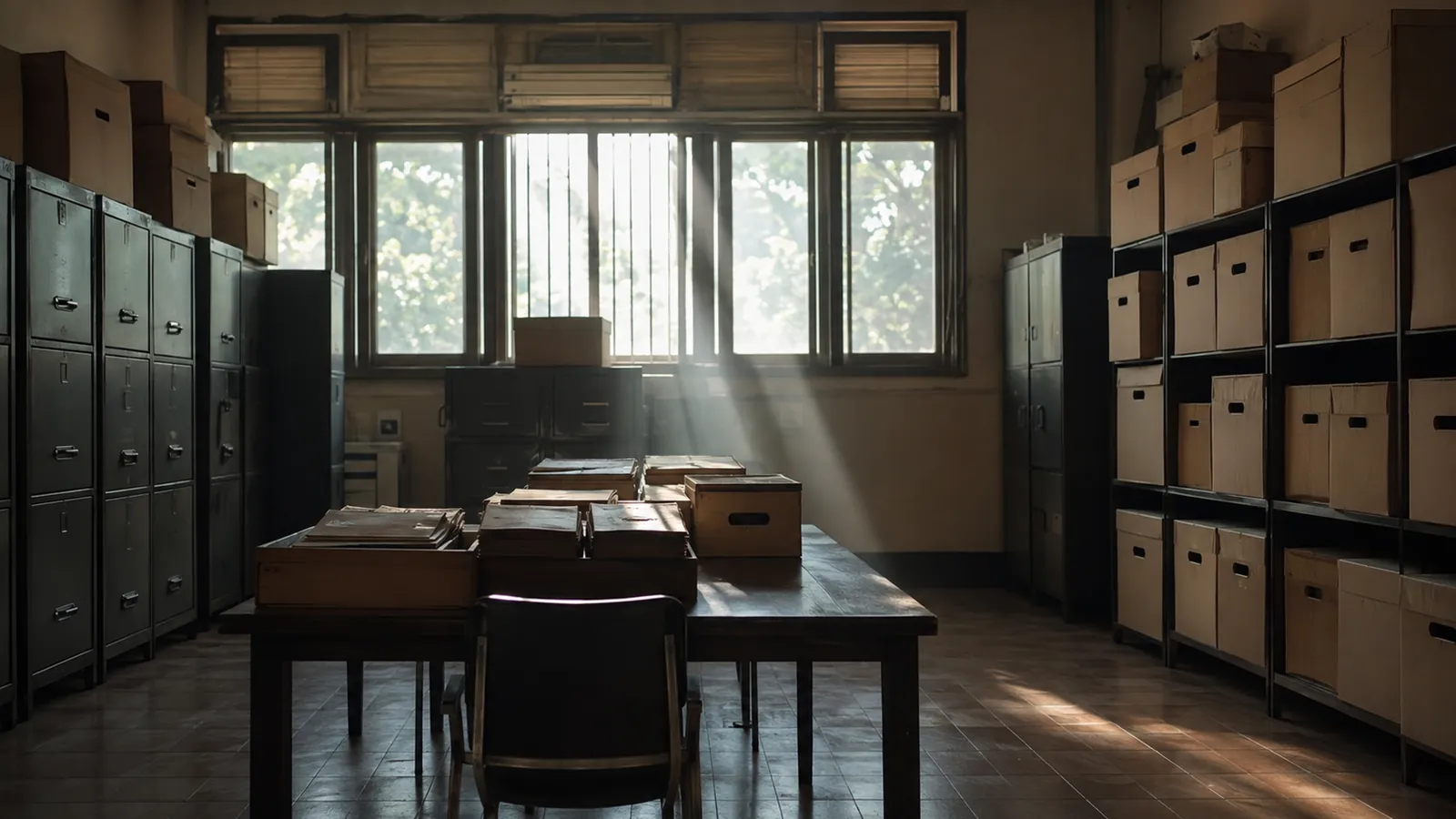
No published task-specific safety plan for the 2022 works was found. No atmospheric testing logs, no entry permits, no rescue plan, no inspection record. And no reliable public report of any injury was found either. Neither absence establishes anything. A programme can be run properly and leave no public trace, because nothing requires it to leave one.
That is precisely the point. Where the duty is self-administered and unaudited, the only thing that can make it visible is the agency choosing to publish — and for work of this kind, performed by people in state custody, that choice should not be optional.
If the standards were applied, the record would be a credit to both agencies and they should want it out.
Why this is worth more than the original article
The earlier version claimed to have found a gap in the law and had not. This one has found something more consequential and entirely verifiable: Thailand’s principal occupational safety statute excludes the whole of government from its scope, and substitutes an unaudited self-standard.
That governs every state workplace in the country — not one drain programme in one summer. Hospital workers, road crews, refuse collection, municipal maintenance, every public-sector confined-space entry in Thailand. All of it sits under a duty with no external inspector.
And the prison drain programme is not the scandal. It is the illustration.
Common misconceptions
“The prisoners worked unpaid.” They had no right to wages under Prisons Act s.50. Reward compensation was payable, a 70% profit share was stated, and remission was granted. Payment was reported.
“The city didn’t hire the prison service.” It did. Contemporary reporting describes a hiring arrangement with a stated budget and a hiring contract.
“Thailand has no confined-space law.” It does. A 2019 ministerial regulation, in force from 15 February 2019, defines a confined space as one with limited entry and exit, not designed for continuous work, and having a hazardous condition or atmosphere — and it requires assessment, atmospheric measurement before and during work, a trained supervisor, a standby rescuer and a written permit for every entry.
“But the regulation covers the prisoners.” It is made under the Act, and the Act does not apply to government. What binds a state body is the section 3 duty to hold a standard not lower than the Act’s — the same content, without the inspector.
“Thai safety law didn’t cover them.” The Act excludes all government bodies from its scope and requires them to maintain equivalent standards instead. The duty exists; the external inspector does not.
“All drain clearing is confined-space work.” The classification depends on configuration and atmosphere. Some is; some is not.
“No reported injuries means it was safe.” It means nothing was reported.
Common questions
- Did prisoners clear Bangkok's drains?
- Yes. From 1 July 2022, around 300 prisoners from eleven institutions worked under a hiring arrangement between the BMA and the Department of Corrections.
- Was it a contract?
- Yes. Contemporary reporting describes the BMA hiring Corrections, with a budget reported at ฿10–15 million.
- Were they paid?
- Not wages — Prisons Act s.50 gives no right to any. Reward compensation was payable, a 70% profit share was stated, and one day of remission was granted per day worked.
- Does Thai occupational safety law cover them?
- The Act excludes all government administration from its scope. The same section requires those bodies to arrange equivalent standards themselves.
- So who inspects?
- That is the question this article raises. The Act's inspectorate and penalties attach to employers within its scope, and state bodies are outside it.
- Is drain clearing confined-space work?
- Sometimes. It depends on physical configuration and whether a hazardous condition or atmosphere is present.
- Was anyone hurt?
- No reliable public report of injury was found. That is not a record showing none occurred.