Ownership stops at the fence
Your property ends at your fence. The road outside is under a servitude for every plot, parking on it is not a right, and the law to stop it is complete. Nobody uses it.
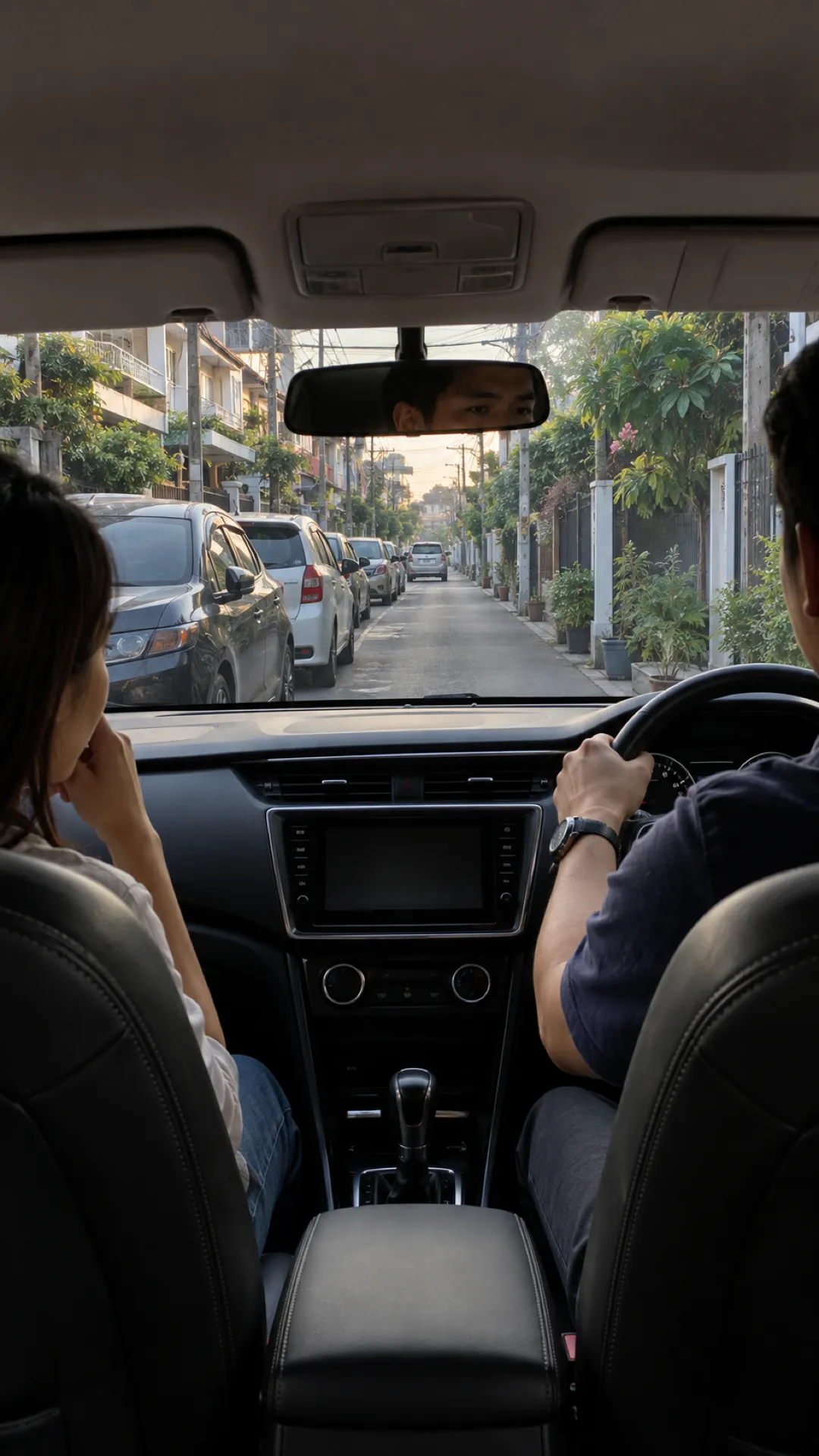
Thai property publishers call this ปัญหาโลกแตกประจำหมู่บ้าน — the village’s unsolvable problem. It is not, as it turns out, legally unsolved at all. It is legally finished.
Your ownership ends at your fence line.
And the road beyond it, inside a housing estate, is not simply “common property”. Under the Land Allocation Act B.E. 2543 (2000), section 43, the infrastructure a developer lays out under an approved plan — the Act names roads, gardens and playgrounds — falls under a servitude for the benefit of the allocated land, which the developer must maintain, and:
and no act may be done which causes the benefit of the servitude to be reduced or its convenience to be impaired
Section 43/1 adds that the land under it may not be transferred at all.
So the road outside your house is not unowned, not unassigned, and not lightly encumbered. Every plot in the estate holds a legal right over it, and the statute prohibits, in terms, doing anything that makes it less convenient to use.
A car narrowing it to one lane is a reasonable candidate for exactly that.
The two boundaries
Two boundaries exist and they are not in the same place.
The legal boundary is the fence. It is on a title deed, it does not move, and everybody could look it up.
The felt boundary is หน้าบ้านเรา — the front of our house — and it extends as far as a household has habitually used. It is written nowhere. It is established entirely by occupation.
Every dispute of this kind is one household’s second boundary meeting another household’s second boundary. The first is usually not in the argument at all, because neither party knows where it is.
What the traffic law actually says, and where this article had it wrong
An earlier version of this piece said section 55 of the Land Traffic Act makes it an offence to park across a driveway. That is wrong twice over, and the correction is useful rather than pedantic.
Section 55 is about stopping, not parking. It prohibits a driver from หยุดรถ — halting — in eight places: in a traffic lane except close to the left kerb, on the footway, on a bridge or in a tunnel, at a junction, in a no-stopping zone, at the entrance or exit of a building or carriageway, in a safety zone, and in a manner obstructing traffic. It exempts a driver who has to stop because of an obstruction, a breakdown, or a signal.
Parking is section 57, and it is a much longer list. Fifteen prohibitions, of which four matter here:
- (10) at the entrance or exit of a building or a carriageway, or within five metres of the entrance to a carriageway
- (12) in a constricted place
- (15) in a manner obstructing traffic
- (9) alongside a vehicle already parked
Note what (12) and (15) do not require. They do not require a victim. A car that narrows a soi to a single lane obstructs traffic whether or not anybody in particular has been inconvenienced yet. The offence is complete on the facts.
And section 59 is the provision nobody quotes. A traffic officer or competent official may order the driver to move a vehicle stopped or parked in breach of the Act, and may move it themselves or immobilise it. They are not liable for damage arising, except from wilful or negligent conduct. The owner or driver must pay the cost of removal or clamping and of storage, at rates fixed by ministerial regulation which must be not less than ฿500 for the removal and not less than ฿200 a day for keeping it.
So the tow truck and the clamp are already in the statute, and no complainant is needed to send them.

And the estate has its own machinery
The Land Allocation Act does not stop at the servitude.
Section 44 provides how the developer’s maintenance duty ends: the buyers form a นิติบุคคลหมู่บ้านจัดสรร, a juristic person, which takes the common infrastructure over and manages it.
Section 48 gives that body its powers, and the second and fourth of them are the ones that matter.
(1) make rules on the use of the common infrastructure (2) make rules on residence and traffic within the allocated land (3) collect maintenance and management charges from members (4) lodge a complaint, or bring an action as plaintiff, on behalf of members in a matter affecting the rights or interests of ten or more members (5) provide public services for members’ welfare
Read (4) again. The legislature saw the problem this article thought it had discovered — an injury spread across everybody and pressed by nobody — and solved it by aggregating. Ten members’ interests affected, and the juristic person may complain or sue on their behalf. The complainant exists. It is written into the Act.
Section 49 funds all of it: a maintenance charge levied monthly on every plot in the estate.
So the inventory is complete. A servitude for every plot. A prohibition on impairing it. A traffic offence that needs no victim. A police power to tow and clamp without being asked. A body corporate with rule-making power over parking. A statutory right for that body to sue. And a monthly levy to pay for it.
Nothing is missing. Nothing happens.
Because none of it starts by itself
Here is the finding, and it is not the one this article set out with.
Every mechanism above requires somebody to initiate. The officer has to arrive. The committee has to convene. The general meeting has to vote — because section 48 makes the rule-making powers under (1), (2) and (5) conditional on a resolution of the general meeting of members.
Which means that to make a parking rule, you must assemble the people currently parked outside and ask them to vote for it.
And the reason they will not is article 142’s finding, running underneath all of this.
That piece looked at a small Thai market in which people are paid to sit in a queue, and found that presence establishes priority where no allocation system exists. Somebody has to be in the chair, and the chair is worth money precisely because occupying it is the only way to hold the place.
A car parked in front of a house is doing that job.
In a soi with no allocated parking, the space outside your house is unassigned. The only way to hold it is to occupy it. The moment you move the car inside, the claim lapses — the space becomes available to the neighbour with three cars, and you will not get it back.
So every resident wants the rule to exist and no resident wants to be the first bound by it. The cost of complying is not one inconvenient evening; it is the permanent surrender of a space you have been using for years, to a neighbour who has not surrendered theirs.
That is the shape, and it is a new one for this archive. Article 170 The card is not the licence found obligation attaching to whoever could be located. This is different: a remedy that requires collective initiation will not be initiated by people who each individually lose by initiating it. The law is not weak. It is inert, and it is inert for a reason that has nothing to do with law.

Why the car is outside in the first place
Four reasons, and only the last is about attitude.
The plot’s parking was sized for the plot, not for the household — and now there is a number for that. As at 28 February 2026 the Department of Land Transport recorded 5,894,114 private cars and 1,461,095 private pickups registered in Bangkok, against 3,197,865 registered houses on the BMA’s own published count. That is more than two four-wheeled vehicles per registered house, before the 4,480,200 motorcycles. Thai estates and townhouses are typically built with space for one or two.
⚠️ Those are two figures four years apart measuring different things. Registered vehicles include company fleets and vehicles kept outside Bangkok; registered houses include empty property and count condominium units. Project the house series forward at its own growth rate and the ratio falls to about 2.2 rather than 2.3. The direction does not move.
The front area is frequently in use for something else — storage, a shop, an extension of the living space, a workshop. The car is displaced because the space is occupied.
The soi was never designed to be parked in. Article 164 Nobody built the connections established that Bangkok’s secondary road network was built by landowners to give access to their own plots, under land acquisition and budget constraints that left the connecting network unfinished. Those roads were sized for a car to pass, not for a car to pass a parked car.
And the space outside is free. It costs nothing, it is allocated to nobody, and occupying it is the only way to hold it.
What you can actually do
This is not legal advice and anyone in a live dispute should take some.
Know where your boundary is. It is the fence. The strip outside it is not yours, which also means the neighbour parking there is not trespassing on you — a distinction that resolves a great many arguments before they start. What they may be doing is impairing a servitude that belongs to every plot including yours, which is a different claim with a different route.
If a vehicle blocks your gate, that is section 57(10), and there is an identifiable complainant: you. The provision also covers the five metres in front of a carriageway entrance.
If a vehicle is obstructing the road generally, that is section 57(15) and needs no victim — and section 59 gives the officer power to order it moved, move it, or clamp it, at the owner’s cost.
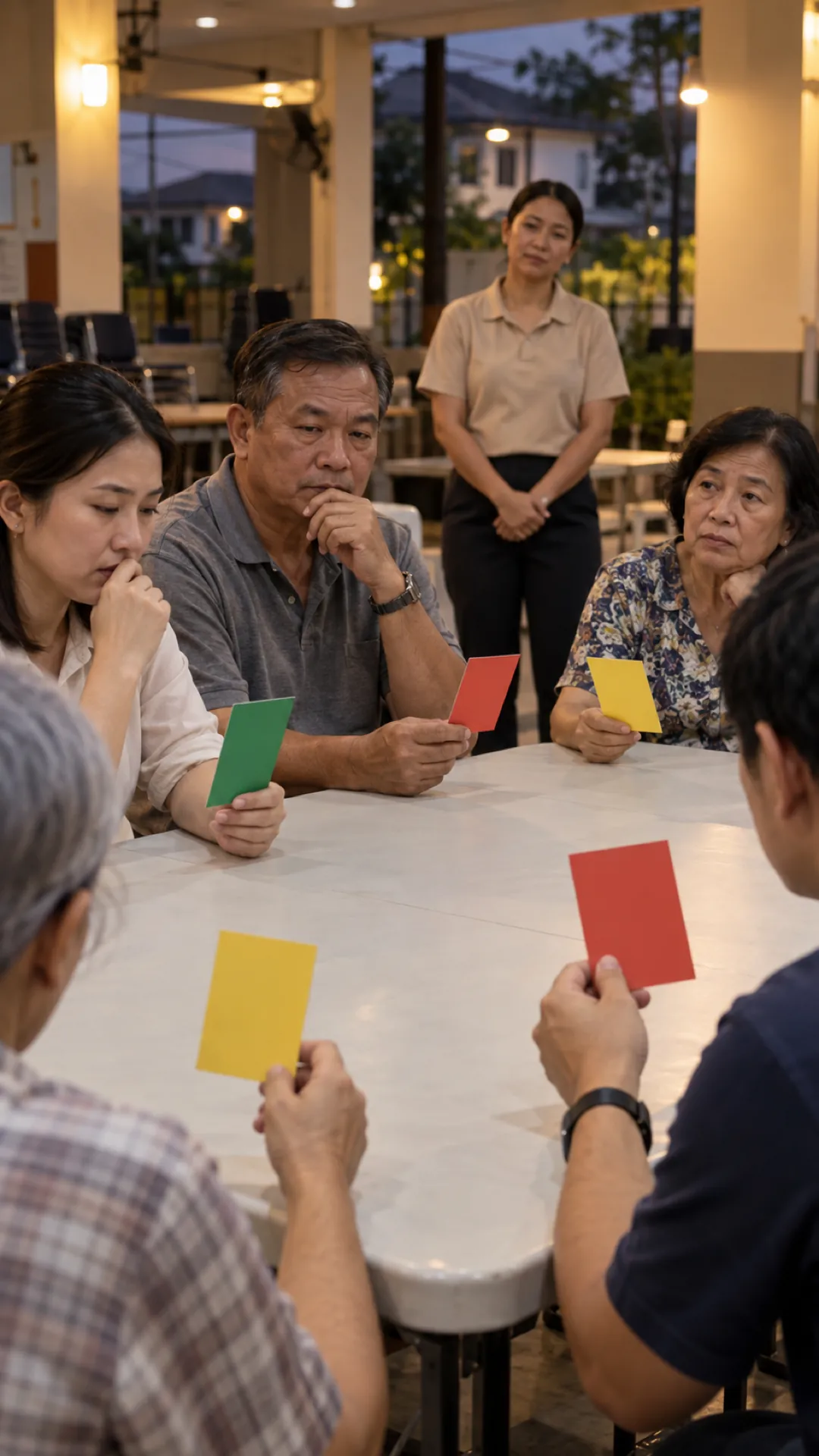
Inside an estate, the juristic person is the first route, not the police. It has statutory power to make traffic rules and to complain or sue on behalf of ten or more members. A rule that allocates parking is the only thing that actually solves this, because the problem is an absent allocation, not an absent law — and making that rule requires a general meeting, which is where the difficulty really lives.
And do not move, block or interfere with somebody else’s vehicle. It converts a parking dispute into something else entirely, with you on the wrong side of it.
Common misconceptions
“The road outside my house is mine.” Ownership ends at the fence. Beyond it, inside an estate, the road is under a servitude for the benefit of every plot.
“It’s a private estate, so traffic law doesn’t apply.” Land Traffic Act offences can still arise, and the Land Allocation Act separately forbids impairing the servitude.
“Section 55 covers blocking a driveway.” Section 55 is about stopping. Parking is section 57, and blocking an entrance is 57(10).
“Nobody can do anything about it.” A traffic officer may order the vehicle moved, move it, or clamp it, at the owner’s cost, without anybody complaining.
“There’s no one to complain.” Section 48(4) of the Land Allocation Act lets the juristic person complain or sue on behalf of ten or more members.
“People do it because they’re inconsiderate.” Some are. But the space is unallocated and occupying it is the only way to hold it, which makes it rational.
“A rule would fix it.” The rules exist. What is missing is anybody with an incentive to start them — and making an estate parking rule requires a vote by the people currently parked outside.
Common questions
- Is parking in front of my own house illegal in Thailand?
- The land outside your fence is not yours. Inside an estate it is under a servitude for the benefit of every plot, and the Land Allocation Act forbids acts that impair its convenience.
- Does that apply inside a private housing estate?
- Yes. Section 43 of the Land Allocation Act names roads explicitly, and section 43/1 forbids transferring the land under them.
- What if someone blocks my gate?
- That is section 57(10) of the Land Traffic Act, which covers the entrance or exit of a building or carriageway and five metres in front of a carriageway entrance.
- Which section covers parking — 55 or 57?
- 57. Section 55 is about stopping. It is a common error and this article made it.
- Can anything be done if nobody in particular is blocked?
- Yes. Section 57(15) covers obstructing traffic and needs no victim, and section 59 lets an officer order the vehicle moved, move it, or clamp it, at the owner's cost.
- Who sets the rules inside an estate?
- The juristic person, under section 48. Making a traffic rule requires a resolution of the general meeting of members.
- Why does nobody enforce any of it?
- Because every mechanism needs somebody to start it, and the space is unallocated — so the first person to comply loses a space permanently while everyone else keeps theirs.
- What actually solves it?
- An allocation with somebody empowered to enforce it. Not another rule; the rules are already there.