Paid by weight
Thailand's recycling system is an estimated 1.5 million people on motorbikes, paid by weight, employed by nobody. Across Asia they recover over 95% of recycled plastic.
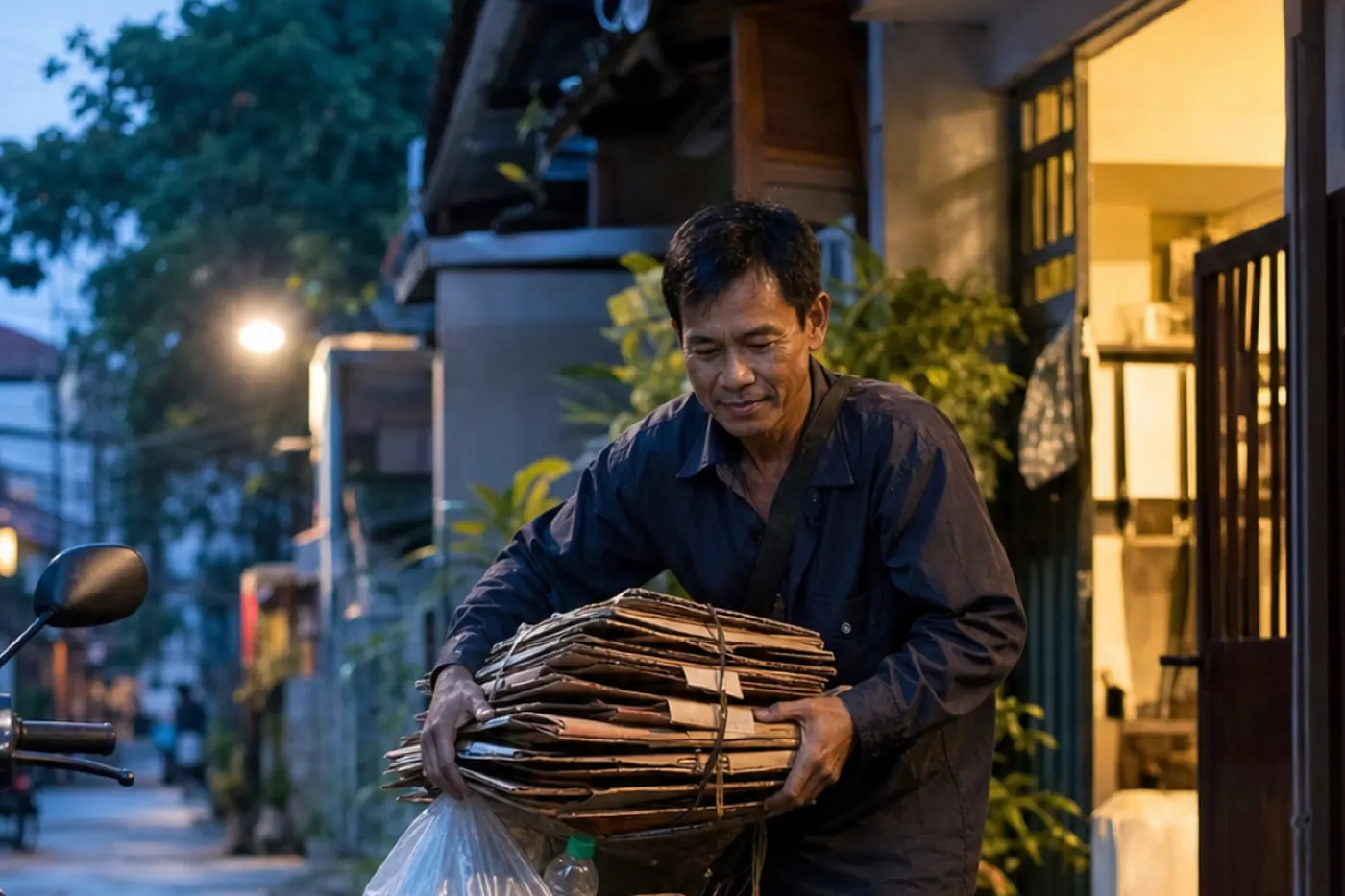
ซาเล้ง — saleng — is a motorcycle with a sidecar.
It is also the person riding it. The machine and the occupation share a word, which tells you most of what you need to know about how completely the two are the same thing.
They come down your soi in the early morning, before the bins go out properly, and they take the cardboard, the bottles, the cans and the plastic. Then they sell it, by weight, to a junk shop, which sells it on to a recycling plant.
That is Thailand’s recycling system.
Not part of it. Substantially the whole of it.
The numbers
An estimated 1.5 million people in Thailand collect, sort and transport recyclable material. The Saleng and Recycle Trader Association has over 30,000 members.
Across Asia, informal waste workers are estimated to recover over 95% of the plastic that gets recycled.
Read that against the national totals. Thailand generated 27.2 million tonnes of municipal solid waste in 2024, around 12% of it plastic, with roughly 0.55 million tonnes of plastic reused or recycled per year and an estimated 428,000 tonnes a year mismanaged.
So when Thailand reports a recycling figure, it is largely reporting the output of a workforce that no ministry manages, no company employs and no payroll records.
(A figure of 88.8% circulates as Thailand’s “collection and recycling rate.” I think that is being misread — it appears to describe waste collection rather than recycling, and a genuine 88.8% recycling rate would be world-leading by an enormous margin. Treat it with caution and don’t repeat it as a recycling rate, which several sources do.)
The purest version of a pattern
Article 61 The country that outsourced its public space argued that Thailand delivers a striking number of public functions through private hands — bill payment at 7-Eleven, food distribution through two wholesale markets, civic space in shopping malls, government messaging on a Japanese app.
This is the purest case I have found, and it is purer than any of them, because there is no company.
7-Eleven is at least a corporation with a board, accounts and a name you can put in a headline. The malls have owners. LINE has a head office.
Material recovery in Thailand is 1.5 million individuals with no employer, no contract, no company and no collective anything except a trade association covering 2% of them.
There is no procurement, no service level, no tender, no accountability route and no fallback. If it stopped tomorrow, nobody would be in breach of anything.
And it works well enough that the country reports respectable recovery figures and almost nobody wonders how.
What they’re actually paid
By weight. That’s the whole compensation structure.
Which means the saleng’s income is a function of two things they do not control: how much material is out there, and the scrap price. Both move. Neither is announced.
Article 80 Money you can wear argued that the systems in Thailand that work have a standard and a published price — gold has both, and it protects the poorest participant. Scrap has a standard of sorts and no published price, and a saleng arrives at a junk shop to be told what today’s rate is.
Documented vulnerabilities: unstable income, no protective equipment, limited access to institutional support. That is the standard list and it is short because there isn’t much to list.
Undercut by other countries’ rubbish
Here is the connection I hadn’t expected and think matters most.
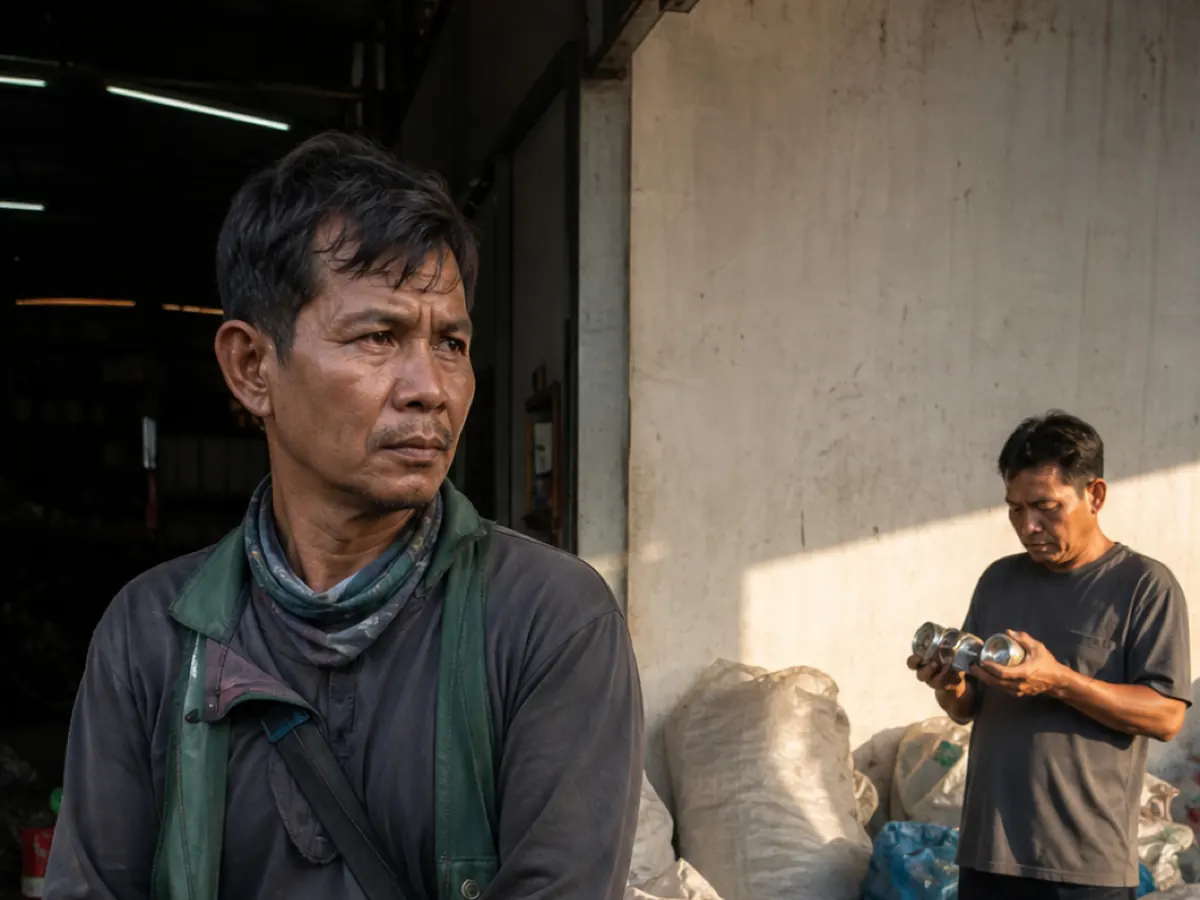
Waste imports have damaged saleng livelihoods.
Imported scrap competes with domestically collected material. More supply into the same junk shops means a lower price per kilo for the person who spent nine hours on a motorbike collecting it.
Which means Thailand importing other countries’ recyclable waste undercuts the income of Thailand’s own recycling workforce.
I don’t think that trade-off has ever been stated in an English-language article, and it is a straightforward policy question with a measurable answer: what does an import tonne do to the domestic scrap price, and therefore to 1.5 million incomes? Somebody should calculate it.
The blood test
And here is article 89’s inverse law, with evidence rather than inference.
Peer-reviewed research has measured lead in the urine and blood of informal electronic waste recyclers in Thailand.
That is the finding I want on the page without commentary attached, because it doesn’t need any. The workers handling the most hazardous end of this material are the ones with no protective equipment, no occupational health surveillance and no employer with a duty of care.
Article 86 Outside is not a workplace established that Thailand’s occupational heat standard is written around workplaces and may not reach outdoor work, and that the self-employed sit outside the statute it lives in anyway. A saleng is outdoors, self-employed, handling hazardous material, and is outside every one of those frameworks simultaneously.
Protection varies inversely with exposure. Again. This is the ninth system.
What would help, and it isn’t complicated
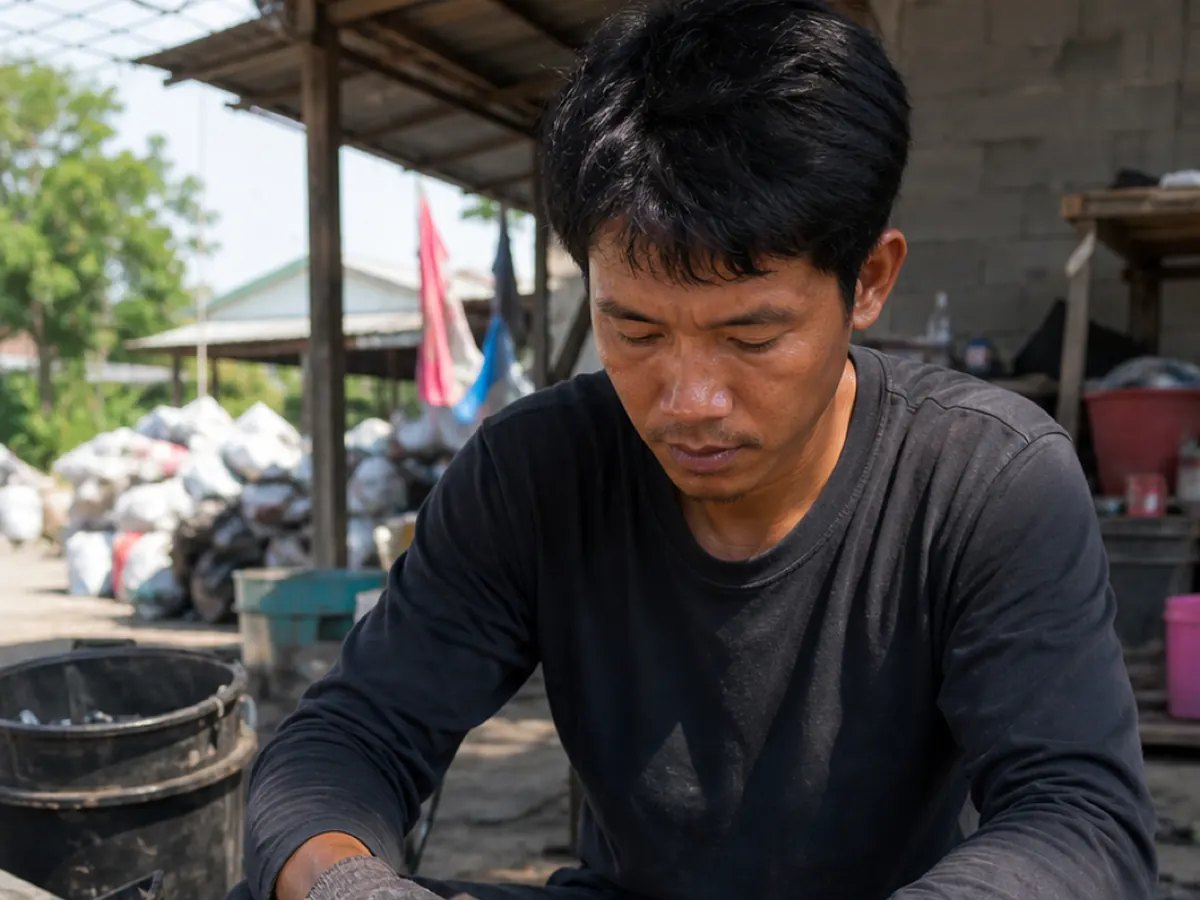
Publish the scrap price. The single cheapest intervention available. Gold does it 38 times a day. A daily published price per material would remove the one information asymmetry that costs a saleng money on every transaction, and it would cost the state almost nothing.
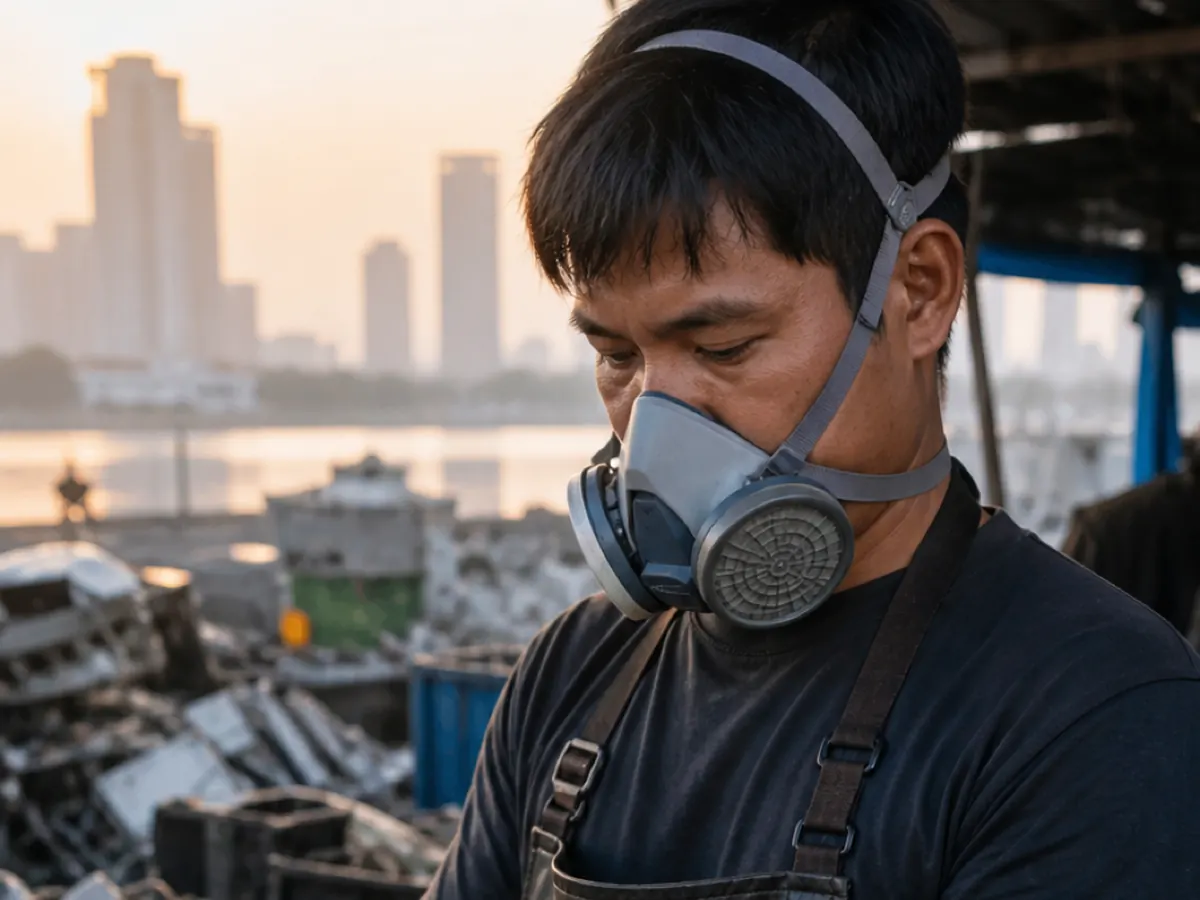
Protective equipment for e-waste handling. Gloves and respirators against measured lead exposure is not an expensive programme.
Count them. 1.5 million is an estimate, and a workforce delivering a national environmental function should not be an estimate.
And decide about imports deliberately. If imported scrap suppresses the domestic price, that is a choice being made without anyone stating it as one.
Practically, if you live here
Separate your recyclables and put them beside the bin, not in it. The saleng will take them and it saves them opening bags.
Rinse the bottles. Contaminated material is worth less, and the reduction comes out of their income.
Flatten the cardboard. Volume is their constraint; a sidecar only holds so much.
And the ones who come to your building know exactly what has value and what doesn’t. They are, in the most literal sense, the country’s material recovery experts. Nobody trained them and nobody pays them a wage.
Common misconceptions
“Thailand doesn’t recycle.” It recovers a substantial share of its recyclable material, overwhelmingly through informal collectors rather than municipal systems.
“Recycling here is done by the council.” Municipal collection exists. Material recovery is done substantially by an estimated 1.5 million informal workers.
“Thailand recycles 88.8% of its waste.” That figure appears to describe collection rather than recycling and is widely misquoted.
“Saleng are scavengers.” They are the operational layer of a national recycling industry, paid by weight, with sorting expertise nobody taught them.
“Importing waste helps Thailand’s recycling.” It also increases supply into the same buyers, which reduces what domestic collectors are paid.
Common questions
- What is a saleng?
- ซาเล้ง — both the sidecar motorcycle and the informal waste collector who rides it, buying and collecting recyclable material to sell on by weight.
- How does recycling work in Thailand?
- Substantially through informal collectors who gather material and sell it to junk shops, which supply recycling plants. An estimated 1.5 million people work in this chain.
- How much of Thailand's recycling is informal?
- Across Asia, informal waste workers are estimated to recover over 95% of recycled plastic. Thailand-specific shares vary by material.
- How are saleng paid?
- By weight, at whatever price the junk shop is offering that day. There is no published scrap price.
- Is it dangerous work?
- Peer-reviewed research has measured lead in the blood and urine of informal e-waste recyclers in Thailand. Protective equipment is generally absent.
- How can I help?
- Separate recyclables and leave them beside the bin, rinse containers, and flatten cardboard. All three directly increase what the collector earns.