Why Thai addresses make no sense (and why they actually do)
Soi 20 can be a mile from Soi 21. House 150/1 sits next to 89. Thai addresses aren't a map — they're a chronology, which explains everything.
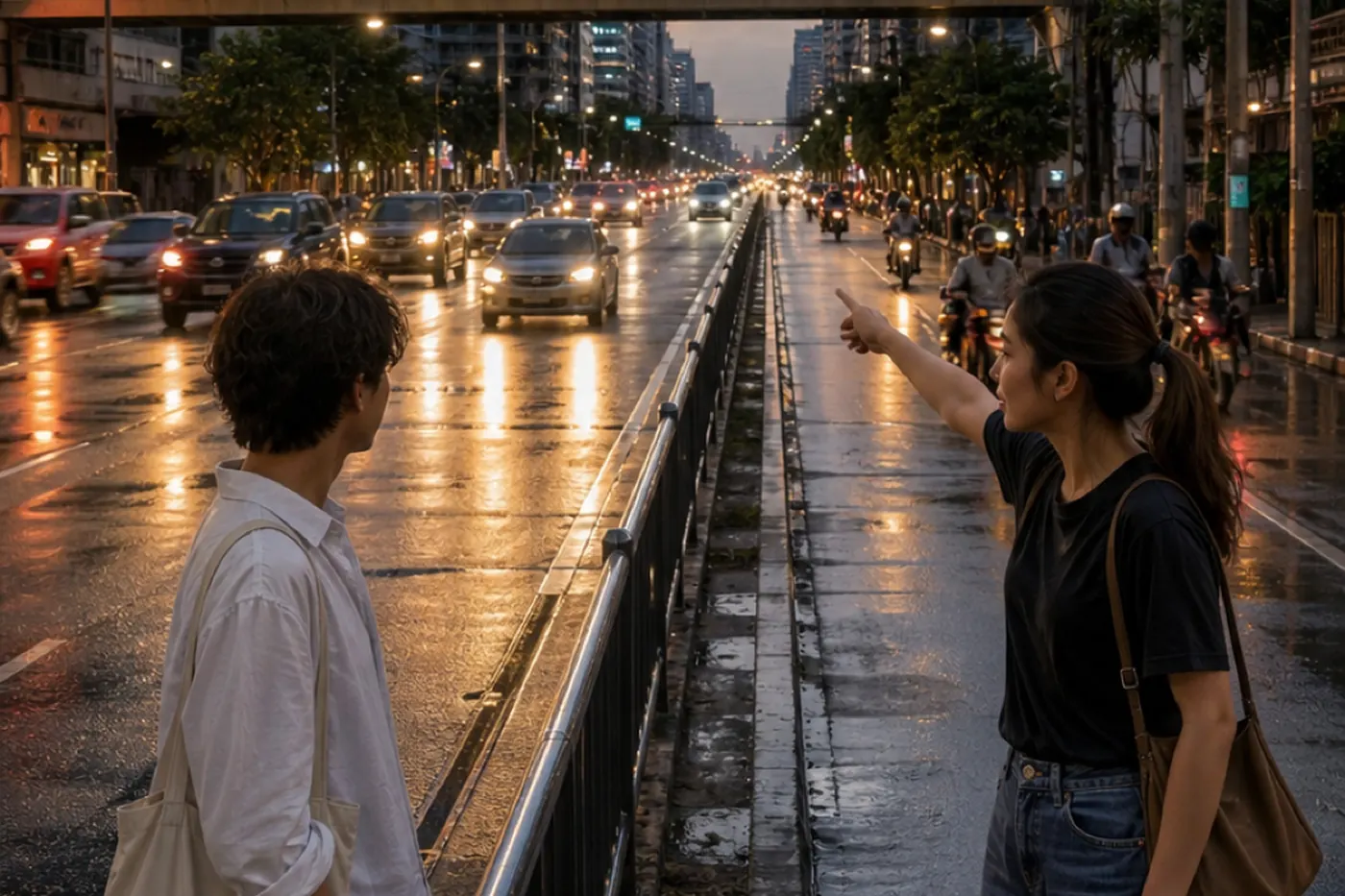
Everybody has the same moment.
You’re meeting someone on Sukhumvit Soi 39. You’re standing on Soi 38. You think: excellent, next one along.
It is not next one along. Soi 38 and Soi 39 are on opposite sides of a six-lane road and are not remotely opposite each other. Depending on where you’re standing, Soi 39 could be a fifteen-minute walk away, and there’s no obvious pattern telling you which direction.
Then a taxi driver asks for your address, you give him 88/17, and he asks which landmark it’s near, and you slowly realise the number you just gave him wasn’t much help.
None of this is broken. It’s a completely coherent system. It just isn’t the system you assume it is.
The one thing that explains everything
Thai addresses are chronological, not spatial.
Numbers were assigned in the order things were registered, not in the order you’d encounter them walking down a street. The number tells you when, not where.
I was well into my twenties before anyone said this to me. I’d grown up with the system, navigated it perfectly well, and simply never asked why the numbers did what they did, which is how most people relate to most infrastructure, and why it took a foreigner’s baffled question to make me look it up.
Western addresses are a map — sequential, spatial, designed for a stranger to navigate. Thai addresses are a registry — a record of the order in which houses were registered with the district office, subsequently pressed into service as directions.
That’s it. Every irritating feature below follows from that single fact, and once you’ve absorbed it the whole thing stops being annoying and starts being quite interesting.
Feature one: odd and even sois are on opposite sides
Sois, the side streets off a main road, are numbered in ascending order. But odd numbers run down one side of the main road and even numbers down the other.
Walking in the direction of increasing numbers, even sois are on your right and odd sois on your left.
Which means Soi 20 and Soi 21 are on opposite sides. Fine so far. The problem is that the two sides don’t have the same number of sois, so they fall out of step almost immediately.
If one side of Sukhumvit has more side streets than the other, and it does, then by the time you reach the twenties, the odd and even numbers are describing completely different distances along the road. Soi 20 might sit opposite Soi 15. Soi 39 might be nowhere near Soi 38.
They’re not two halves of one sequence. They’re two separate sequences that happen to share a road, and expecting them to line up is like expecting page 20 of one book to match page 21 of another.
Feature two: sois grew extra sois
When a new soi appeared between two existing ones, renumbering everything after it was obviously impossible. So it got an annexe.
Soi 7/1 sits between Soi 7 and Soi 9.
Perfectly logical, and it means the sequence 7, 7/1, 9 is complete and correct with nothing missing. Sub-sois then acquire their own sub-sois, and you end up navigating a system with the branching structure of a family tree.
Feature three: house numbers don’t start at 1
This is the one that defeats people.
House numbers within a soi don’t restart. They continue from the numbering of the main street. So walking into a soi you might find the first building is number 89, followed by 112, followed by 33.
Because, again, these numbers were assigned as plots were registered, and the plots were registered in whatever order they happened to be registered in. Not in order along the street. Not in any order visible from the ground.
The numbers are a timeline. You’re trying to read them as a map.
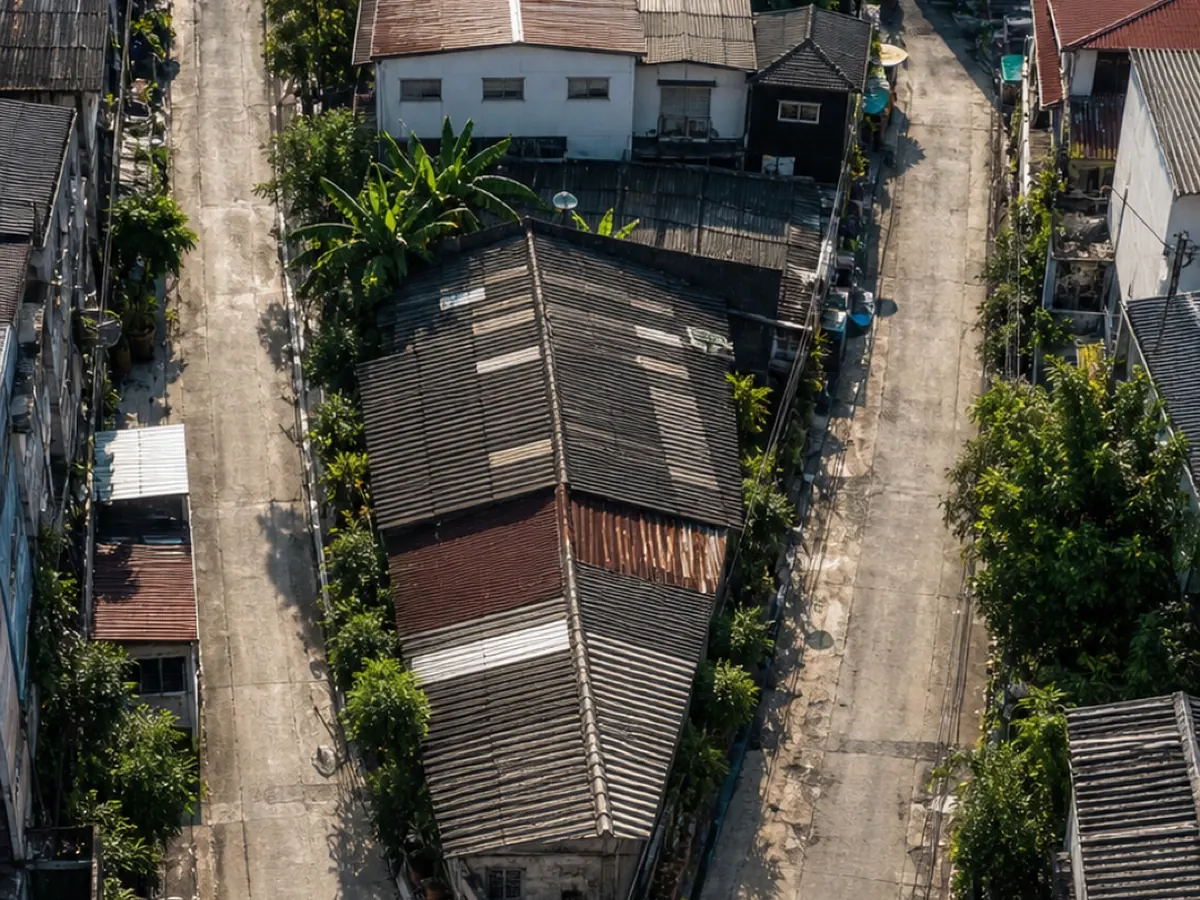
Feature four: the slash
A building appears next to number 150. It cannot be 151, because 151 is somewhere else entirely and belongs to somebody who registered in 1974.
So it becomes 150/1.
Then the plot is subdivided, and you get 150/1-4. Which is why Thai addresses eventually look less like locations and more like a fraction someone gave up simplifying — 88/17, 5/3-7, and the memorable ones that run to three slashes and appear to be describing a chemical compound.
Every one of those digits means something. It just means when it was registered and what it was subdivided from, which is genuinely useful information if you work in the district office’s registration section, and of very limited value if you’re trying to find a restaurant.
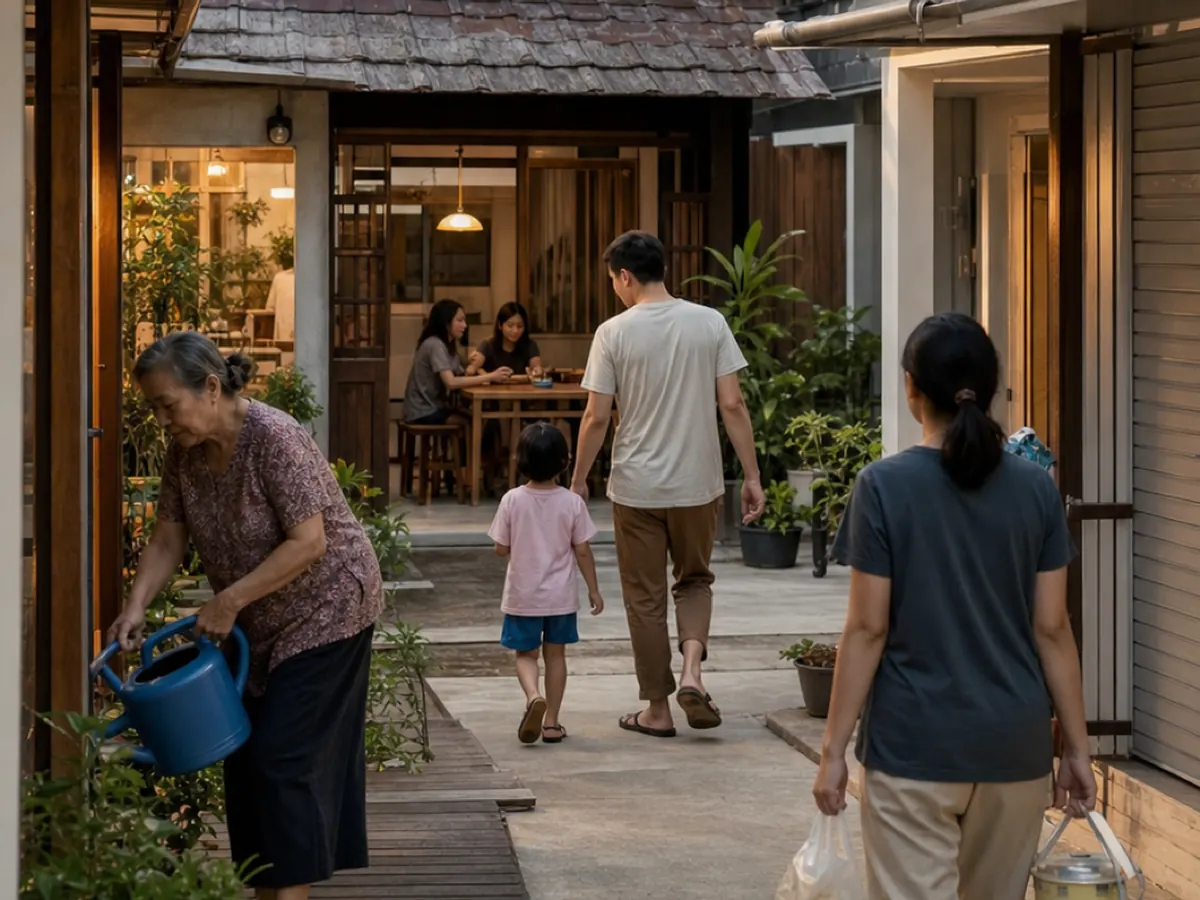
Feature five: sois also have names
Many well-known sois have names as well as numbers, and the two are used interchangeably by different people and different sources.
Sukhumvit Soi 55 is Thonglor. Soi 63 is Ekkamai. Sometimes your address is the number, sometimes the name, and sometimes a delivery driver knows one and not the other.
What looks like failure is a numbered administrative layer sitting underneath a named social layer, and both are real. It’s just that only one of them is on your rental contract.
So how does anyone find anything
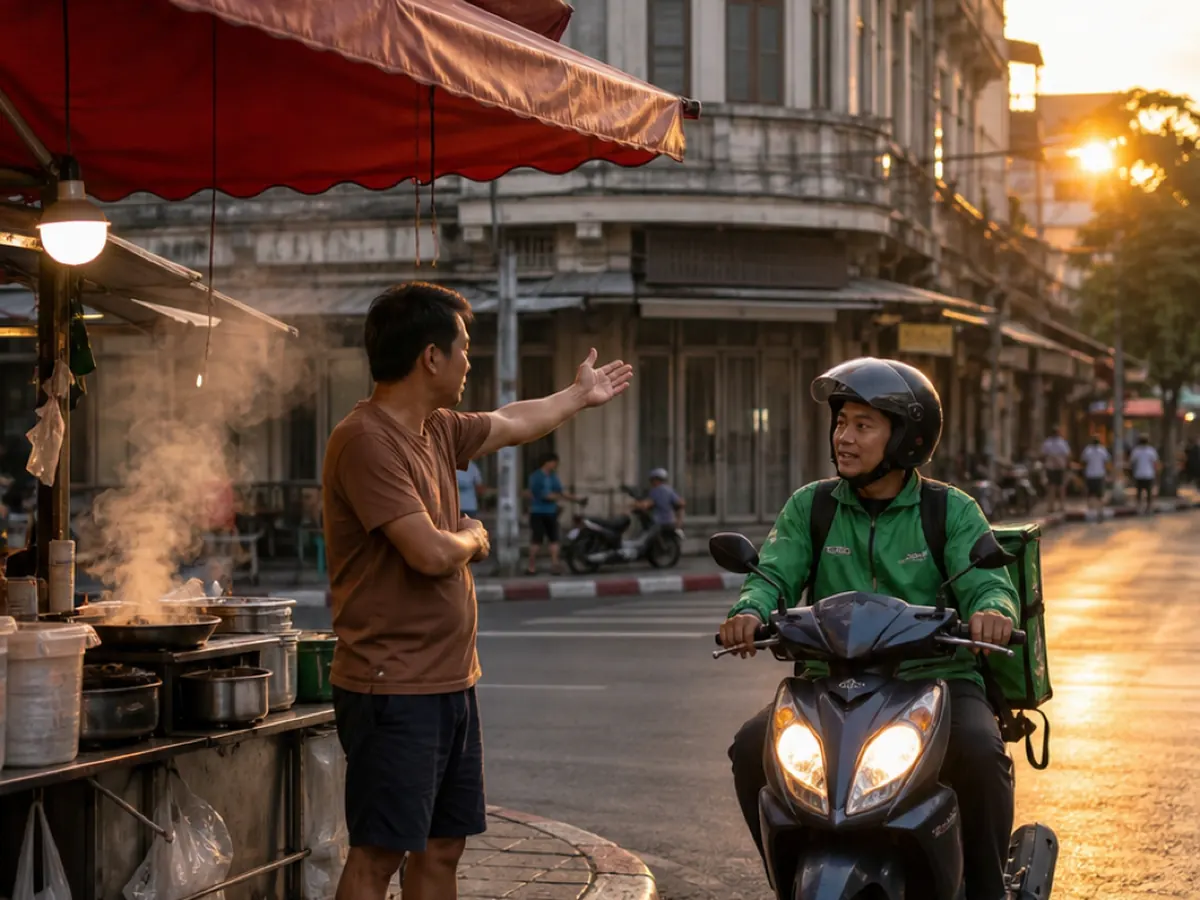
They don’t use the address. They use landmarks, and this is the actual skill.
When a delivery driver phones and asks where you are, he isn’t confused by your address. He is asking the correct question, because the address tells him which house the district registrar recorded and he needs to know which building he can see from the road.
The functional Bangkok address is: main road, soi number, nearest recognisable thing, then the number as a tiebreaker. “Sukhumvit 26, past the 7-Eleven, the grey building with the coffee shop, 88/17.”
Nobody is being vague. They’re supplying the information that actually works.
Common misconceptions
“The system is badly designed.” It’s well designed for house registration, which is what it’s for. Nobody sat down to design a navigation system and produced this.
“Higher soi numbers are further along.” Only relative to sois on the same side.
“Thais find it confusing too.” Mostly they don’t, because they navigate by landmark and never expected the numbers to be a map.
“Google Maps has solved it.” Google Maps handles main roads and sois well and is frequently defeated by the final hundred metres, which is precisely where the numbering stops being spatial.
“Odd and even are always opposite each other.” Only at the very start of a road, and only until the two sides fall out of step. Which happens quickly.
Final thoughts
The pleasing thing about Thai addresses is that the confusion is entirely a category error — ours, not theirs.
Western addresses were designed for strangers to find things. Thai addresses were designed for a state to record which houses exist and who lives in them. Both work perfectly for their actual purpose, and one of them has been pressed into a job it was never built for.
Which is why the answer isn’t to learn the system. It’s to stop expecting it to be a map, learn your nearest landmark, and accept that “past the 7-Eleven, grey building, opposite the noodle place” is not a failure of precision.
It’s the address. The number is the receipt.
Common questions
- Why is Soi 39 not next to Soi 38?
- Odd and even sois are on opposite sides of the main road and are numbered as two separate sequences. Because the sides have different numbers of sois, they fall out of alignment quickly.
- What does soi mean?
- A side street or lane running off a main road (*thanon*).
- Why do Thai house numbers have slashes?
- When a plot is subdivided or a new building is inserted, it takes the original number with a suffix — 150 becomes 150/1, then 150/1-4 on further subdivision.
- Why don't house numbers in a soi start at 1?
- They continue from the main street's numbering, and are assigned in order of land registration rather than position along the street.
- What is Soi 7/1?
- A soi that appeared between Soi 7 and Soi 9. The sequence 7, 7/1, 9 is complete.
- How do I give directions in Bangkok?
- Main road, soi number, nearest landmark, then the house number. The landmark does most of the work.