Your nickname is older than your name
Thai nicknames are what's left of the naming system Thailand had before 1913, which is why Kanchana is called Kai.
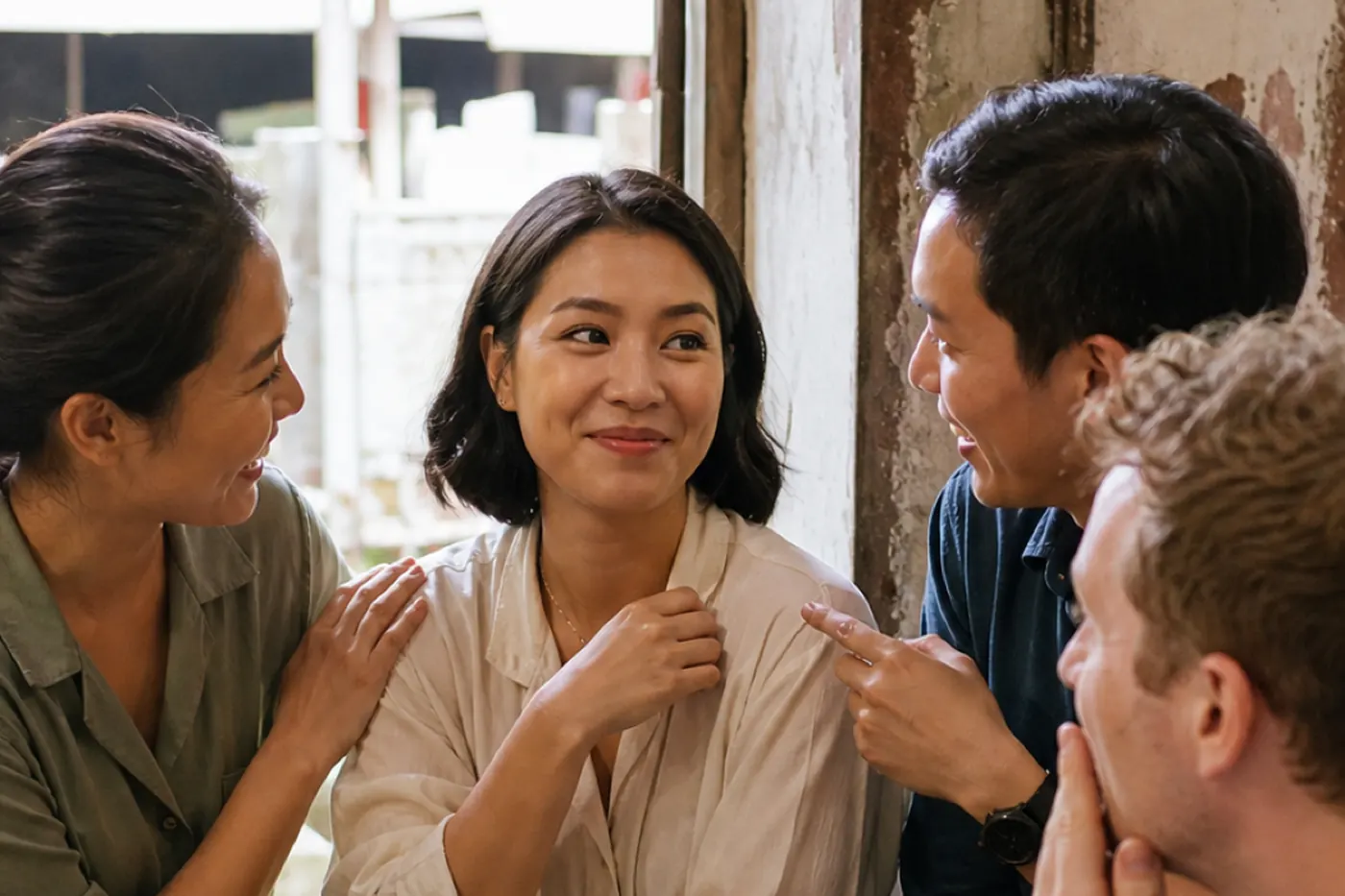
Every foreigner arrives at the same puzzle. You meet a woman whose name is Kanchana and everyone calls her Kai, which means chicken.
Not “Kan”. Not “Chana”. Chicken.
You conclude, reasonably, that Thai nicknames are affectionate inventions layered on top of proper names. They’re not. The nickname is the older name. The formal one was added later.
What happened in 1913
Before the twentieth century, Thais had one name.
Not a first name and a surname — one name, and it was usually short, plain and monosyllabic. ดำ (black). แดง (red). เขียว (green). หอม (fragrant). แปลก (strange, which was a real name and remains a wonderful one). Descriptive, direct, easy to say across a rice field.
Then, on 1 July 2456 BE, 1913, surnames were introduced by law. Every family had to have one, and the modern Thai naming structure came into existence essentially overnight.
At which point a problem appeared. The new formal system wanted names with weight: Sanskrit and Pali compounds, dignified, polysyllabic, appropriate to a document. Kanchana. Siriwan. Thanawat. Splendid on a birth certificate, exhausting across a room.
So the short names didn’t disappear. They survived alongside the new formal ones, doing the job they had always done, which is being what people actually call you.
Thai nicknames are not diminutives. They are the residue of the naming system Thailand had before it had surnames — preserved because the replacement was too long to shout.
Which is why Kanchana is Kai. Not a shortening. A different name, from a different system, doing an older job.
Where they come from
Broadly: physical characteristics, circumstance, and whatever the family fancied.
Appearance is the classic source — round face, dark skin, curly hair, a prominent nose. This produces the category of nickname that startles foreigners most, because Thai families are extremely comfortable naming a child after the most obvious thing about them and everyone involved finds it affectionate rather than cruel.
Animals, fruits and objects are common. Chicken, crab, pig, mango, apple, ball, bank, boat.
And, increasingly, English words, which is the generational shift you can hear if you meet enough people. The forty-year-olds are Kai and Nok and Lek. The five-year-olds are Bank and Beam and Prim and, occasionally, something that will require a conversation later.
You can date a Thai person to within about a decade by their nickname, and Thai media publishes annual statistics on the most common ones, which is exactly the sort of thing this country keeps excellent records of.

Why we actually use them
Three reasons, and only the first is the one foreigners guess.
Formal names are long. Genuinely, structurally long — a consequence of the Sanskrit and Pali borrowing that formal naming adopted. In daily use they’re impractical.
Formal names are formal. Using someone’s real name in Thailand carries a register. It’s for documents, for teachers reading a list, for being in trouble. If your mother uses your full name you have done something.
And nicknames are ours to give. Formal names are assigned with weight and ceremony. Nicknames come from the family, sideways, often accidentally, and frequently from something you did before you could talk. That’s why they stick and why they’re used with affection.
What this means when you meet Thai people
Practical, since you’ll get this wrong at least once:
Use the nickname. It’s not informal in a way that risks offence — it’s what the person is called. Insisting on the formal name is the odd move.
Don’t try to work out how they relate. They don’t. Kanchana and Kai have no linguistic connection whatsoever and looking for one will not help.
Don’t laugh at the meaning. Yes, someone is called Chicken. Someone else is called Fat. Someone in the office is called Pig and has been since 1994 and is a senior accountant. It is not funny to them, it’s their name, and the moment passed thirty years ago.
And expect duplication. Popular nicknames are extremely common, which is why offices run on Nok Big and Nok Small and everyone knows which is which.

A note on the ones that startle you
Every foreigner eventually meets a Thai person whose nickname is an English word that means something unfortunate, or whose formal name transliterates awkwardly.
The correct response is nothing. They know. Anyone who has been through an international school, an airport or a Zoom call with a foreign client has been through this and has a settled position on it. Bringing it up is not new information and it is not a joke they haven’t heard.
I’d add, from the other side: this cuts both ways and Thais are far too polite to mention it. A great many Western names sound peculiar in Thai, some of them memorably so. Nobody says anything, because it’s obviously not your fault and obviously not interesting.
Same courtesy, both directions.

Common misconceptions
“Nicknames are short forms of the real name.” They’re separate names from an older system. No connection required.
“It’s a modern casual thing.” It’s the residue of pre-1913 naming.
“Only children use them.” Adults use them at work, in the news, in politics. Nicknames appear in professional life constantly.
“They’re rude.” Naming someone after a physical characteristic is affectionate in this context. The register is different, not lesser.
“Every Thai has one.” Effectively yes, and most people’s colleagues don’t know their formal name.
Common questions
- Why do Thai people have nicknames?
- They're a survival of the pre-1913 system, when Thais had a single short name. When surnames and longer formal names were introduced by law in 1913, the short names persisted as everyday names.
- Are Thai nicknames related to formal names?
- Usually not at all. Kanchana being called Kai involves no linguistic connection.
- Where do nicknames come from?
- Physical characteristics, animals, fruits, objects, circumstances, and increasingly English words.
- Should I use someone's nickname or formal name?
- The nickname. It's what they're called, and using the formal name is the unusual choice.
- When were Thai surnames introduced?
- By law on 1 July 2456 BE (1913).
- Why do so many people share the same nickname?
- Popular nicknames are heavily reused, which is why workplaces distinguish between Big Nok and Small Nok.