Little ghosts
132,696 Thais work illegally in South Korea. They are about a third of every undocumented person in the country, and they call themselves ghosts.
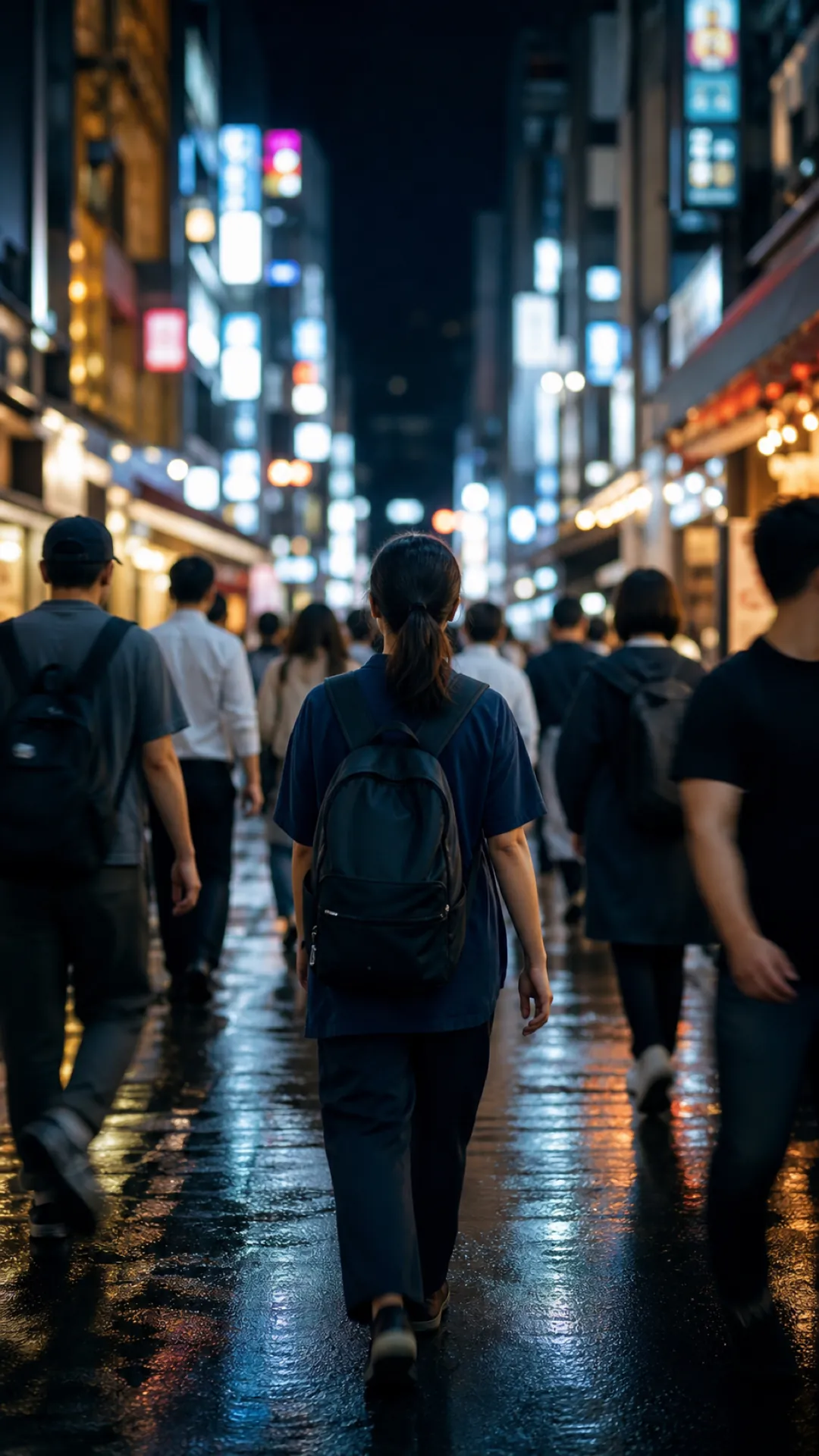
They call themselves ผีน้อย.
Little ghosts. Not undocumented workers, not overstayers, not any of the administrative words either government uses. Ghosts — present in a place, doing work in it, and invisible to every system that country runs.
It is the most precise piece of self-description I have come across in Thai, and it is the reason this article exists.
The numbers, which are extraordinary
As of May 2025, Thai Ministry of Labour figures put 181,842 Thai workers in South Korea.
49,146 of them are there legally. 132,696 are not.
Roughly seventy-three per cent of Thai workers in South Korea are working illegally.
And the figure that should stop anyone reading comfortably: Thai nationals make up around 35% of every undocumented foreign national in South Korea. In late 2023, Thais accounted for 76.3% of all people overstaying B-1 and B-2 visas — a little over 145,000 people.
One in three undocumented people in South Korea is Thai. From a country that is not a neighbour, does not share a language, and sits four and a half thousand kilometres away.
How, and it’s one document
The mechanism is not complicated and it is not smuggling.
Thais can enter South Korea visa-free as tourists. You arrive on a B-1 or B-2, and then you do not leave. There is no forged paperwork, no boat, no agent moving you across a border. The entire pipeline is a legitimate tourist arrival that stops.
Which is why the 76.3% figure sits where it does. The overstay statistic and the visa waiver are the same fact viewed twice.
Why anyone does it
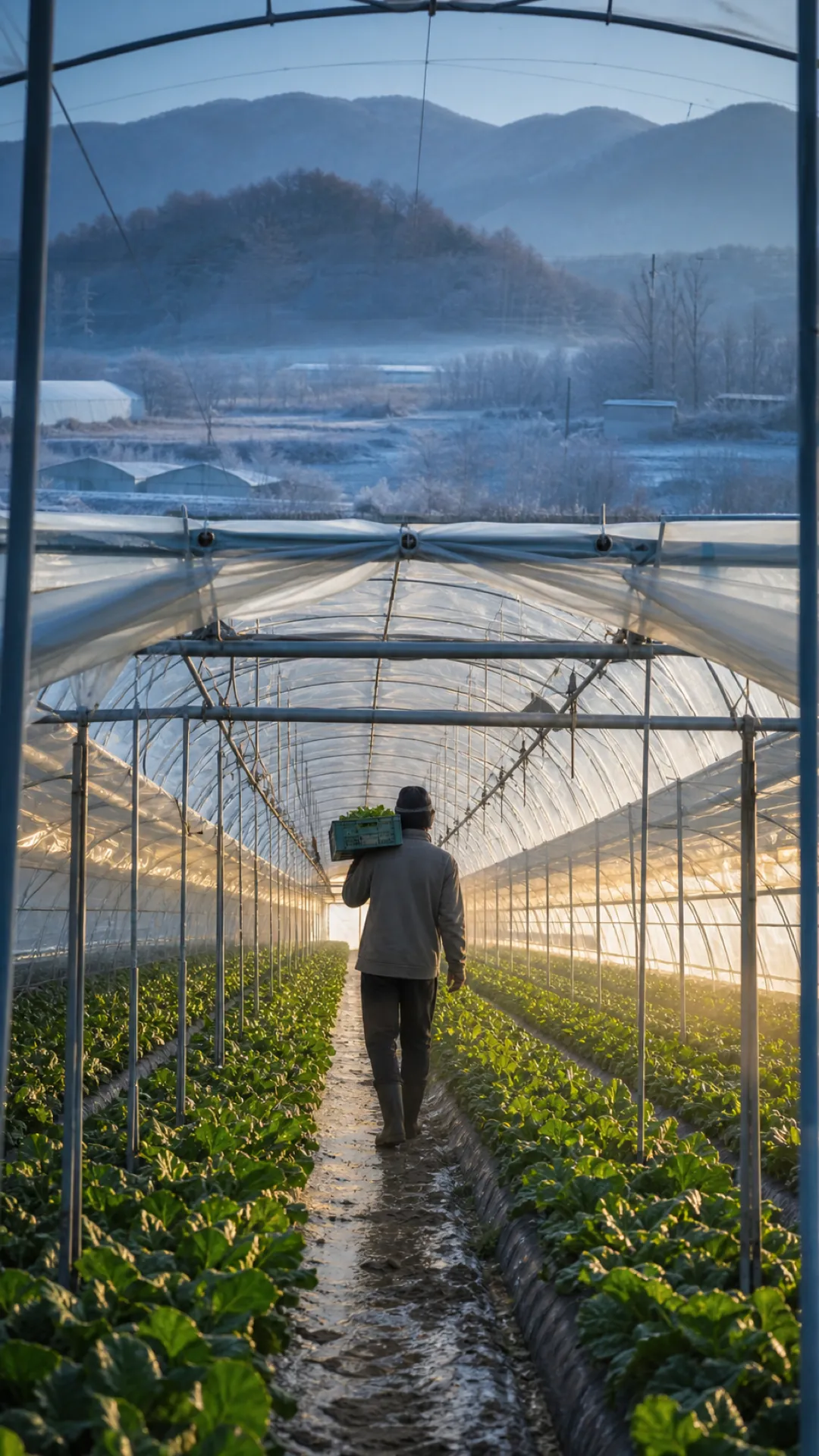
Article 74 Four hundred days put Thailand’s provincial minimum wage at ฿337 to ฿400 a day. Korean wages are a multiple of that, and the gap is the entire explanation.
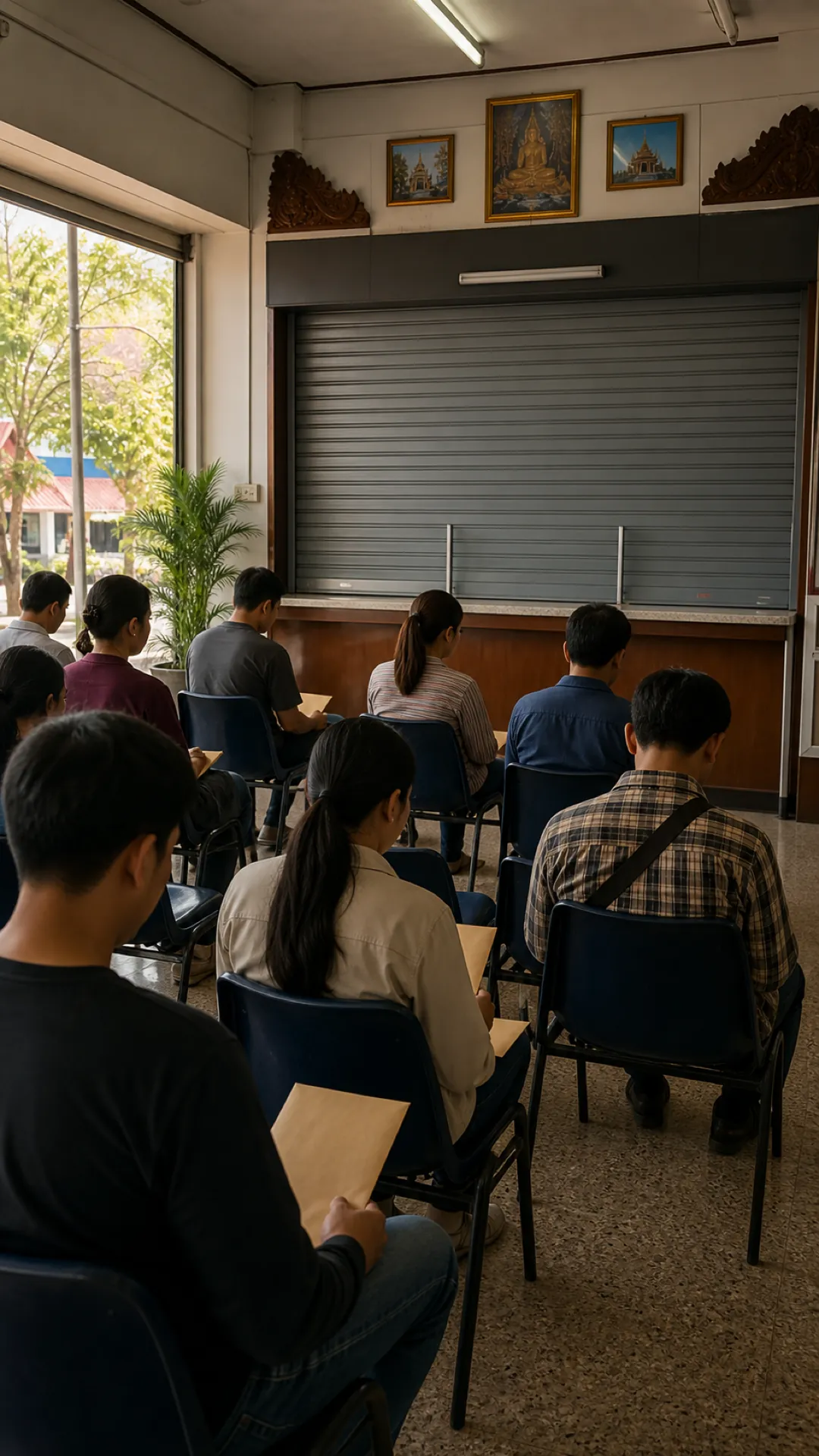
The legal route exists and it is narrow. Thailand’s Ministry of Labour has been opening quotas — one recent allocation was for 10,000 legal workers — against a demand measured in the low hundreds of thousands. The formal Employment Permit System is slower, capped, and costs money up front.
So the choice facing a worker in Nong Khai or Udon is not between legal and illegal work. It is between illegal work now and a place in a queue that may never reach him.
I want to be clear that this is a rational decision made by people with a good understanding of their own situation, exactly as article 84’s delivery riders were making a rational decision. It is also the decision that produces everything below.
What a ghost cannot do
Here is the finding, and it is the sharpest version of this site’s recurring pattern that I have found.
Foreign workers make up around 3.5% of South Korea’s workforce and account for over 10% of its annual workplace fatalities.
Roughly three times the rate.
Now ask why. Not the sentimental answer — the mechanical one.
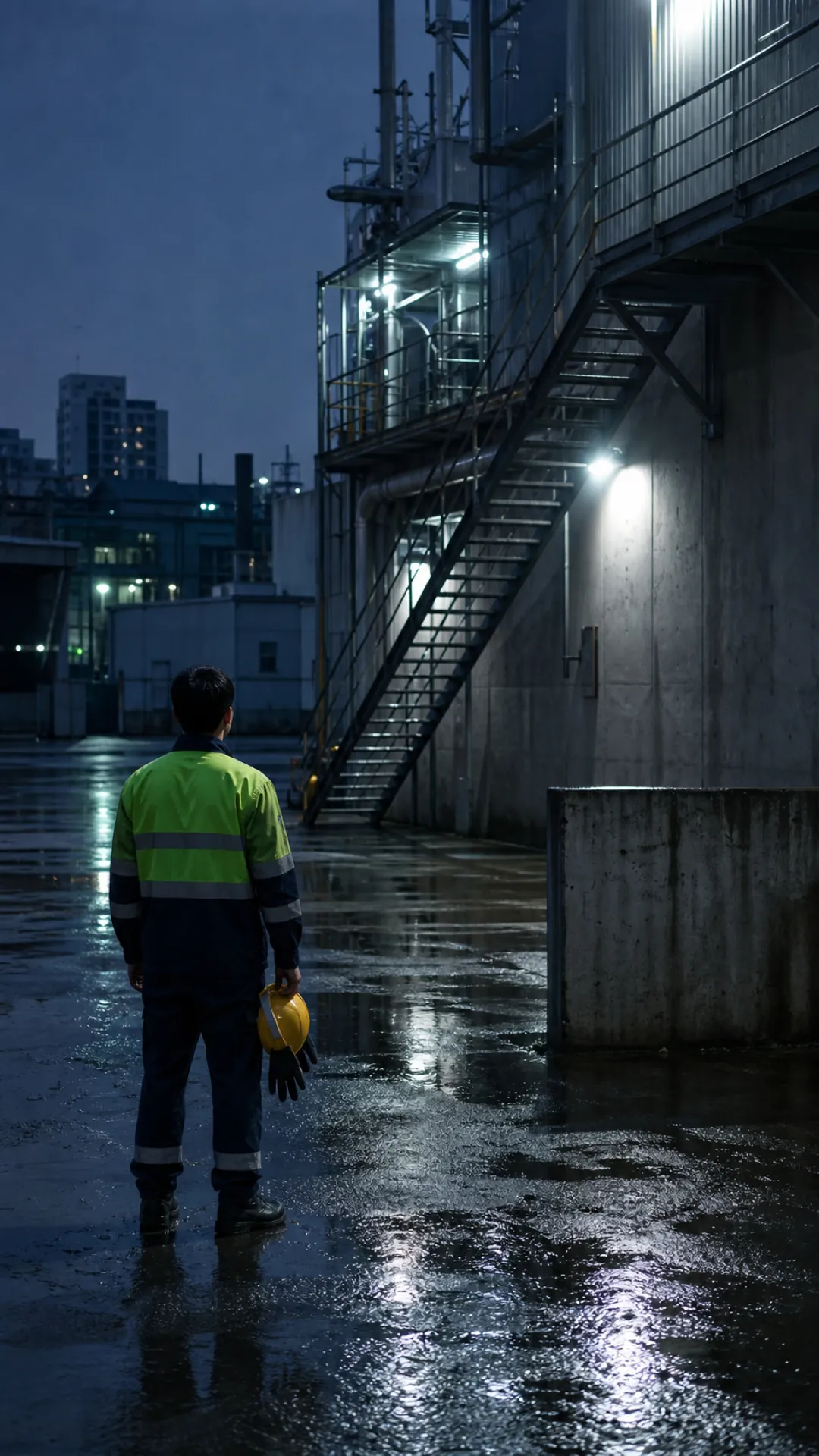
An undocumented worker cannot report an unsafe workplace, because the report identifies him. He cannot refuse a dangerous task and appeal it. He cannot claim injury compensation. He cannot testify. Every safety mechanism a modern industrial economy has built runs through a person being visible to the state, and he has organised his whole life around not being.
Korean reporting has described a young Thai man in his twenties dying of electrocution at a shrimp farm, having entered the water in cotton gloves rather than insulated gear. Somebody knew that was the wrong equipment. The question is who could have said so and to whom.
Article 89 The wrong way round argued that Thai protection varies inversely with exposure because the category is always drawn around people who already had options. This is that argument with the mechanism made explicit and the euphemism removed: a ghost cannot file a complaint.
Around 1,100 Thais die overseas each year across all causes and all countries. That figure is not broken down anywhere I could find in a way that would answer the obvious question, and somebody should break it down.
The trap that closed this year
And then the part that is genuinely difficult, because there is no good actor to point at.
South Korea suspended intake from four Thai provinces for the whole of 2026 — 1 January to 31 December. The four are Udon Thani, Khon Kaen, Maha Sarakham and Chaiyaphum, all in the northeast, and the stated reason is workers from those provinces leaving their employers in large numbers.
One point of precision this article previously blurred. The suspension applies to the E-8 seasonal worker visa — short-term agricultural and fisheries labour, arranged through local Korean governments. It is not the Employment Permit System, the E-9 route that covers longer-term work in factories and construction. Two schemes, two visas, and the ban falls on the seasonal one.
So the legal route has been closed by the behaviour of the illegal one.
The people that suspension falls on are, precisely, the seasonal workers from those provinces who were doing it properly — applying through the official channel, waiting, paying the fees. They are now barred for a year because of what their neighbours did.
Thai officials have acknowledged that the country’s negotiating position here is weak, for the straightforward reason that the absconding is Thai workers’ own doing. That is an unusually honest thing for a government to say and it is correct.
It is also article 89 The wrong way round arriving one more time. A collective penalty, landing on the compliant, in a system where the non-compliant are by definition harder to reach.
What’s actually working
The direction of travel is better than the headline figures suggest, and a piece that only reports the crisis misdescribes it.
The numbers are falling. Voluntary return programmes have run with amnesty windows. Korean enforcement has tightened. And there is now a pathway from the E-9 visa to E-7-4, allowing skilled workers with clean records to move to longer-term status — which is the single most important structural change, because it gives a legal worker something to lose.
That is the correct lever. A system where the legal route leads somewhere is a system where absconding costs you a future, and the undocumented figure has been declining year on year since.
And ผีน้อย is not only Korea. Thai reporting has identified the same pattern in several other countries. Korea is the largest instance, not the only one.
What I’d want measured
Break down the 1,100 overseas deaths. By country, by cause, by legal status. It is published as a single number and it should not be.
Publish what the legal route actually costs and how long it takes. If the queue is the reason people go as ghosts, the queue’s length is the policy variable, and it is not visible to the people making the decision.
And count the money. Article 37 The pension system is called your children established that remittances are around 30% of rural household income. Nobody has separated what arrives from Korea specifically, which means the fiscal significance of 132,696 people is genuinely unknown to the country receiving it.
Common misconceptions
“Thailand receives migrant workers, it doesn’t send them.” Both. Roughly four million migrant workers here on IOM’s estimate, and 132,696 Thais working illegally in South Korea alone.
“They’re trafficked.” Overwhelmingly not. They enter legally, visa-free, as tourists, and stay. The route is a lapsed tourist entry, not smuggling.
“It’s a small community.” Thai nationals are roughly 35% of all undocumented foreign nationals in South Korea, and were 76.3% of B-1 and B-2 overstayers.
“Nothing is being done.” Numbers are falling, voluntary return schemes have run, and the E-9 to E-7-4 pathway gives legal workers a long-term future for the first time.
“The 2026 suspension punishes the wrongdoers.” It falls on legal applicants from four provinces, who were using the proper route.
Common questions
- What does ผีน้อย mean?
- "Little ghost" — the term Thai workers in South Korea use for themselves when working without legal status.
- How many Thais work illegally in South Korea?
- 132,696 as of May 2025, against 49,146 working legally — roughly 73% of the total.
- How do they get there?
- Legally. Thais can enter South Korea visa-free as tourists on B-1 or B-2 entries, and then remain.
- Why not go legally?
- The Employment Permit System is capped, slow and costly. One recent Thai quota was 10,000 places against demand in the hundreds of thousands.
- Is it dangerous?
- Foreign workers are around 3.5% of South Korea's workforce and over 10% of workplace fatalities. An undocumented worker cannot report an unsafe site without exposing himself.
- What changed in 2026?
- South Korea suspended intake from four Thai provinces for the full year after assessing absconding rates up to 20% — a measure that falls on legal applicants from those provinces.