Shared gratitude
Two donation-funded foundations run much of Bangkok's emergency response, splitting the city on a twelve-hour rota. Unpaid volunteers deliver basic life support in around 65% of cases.
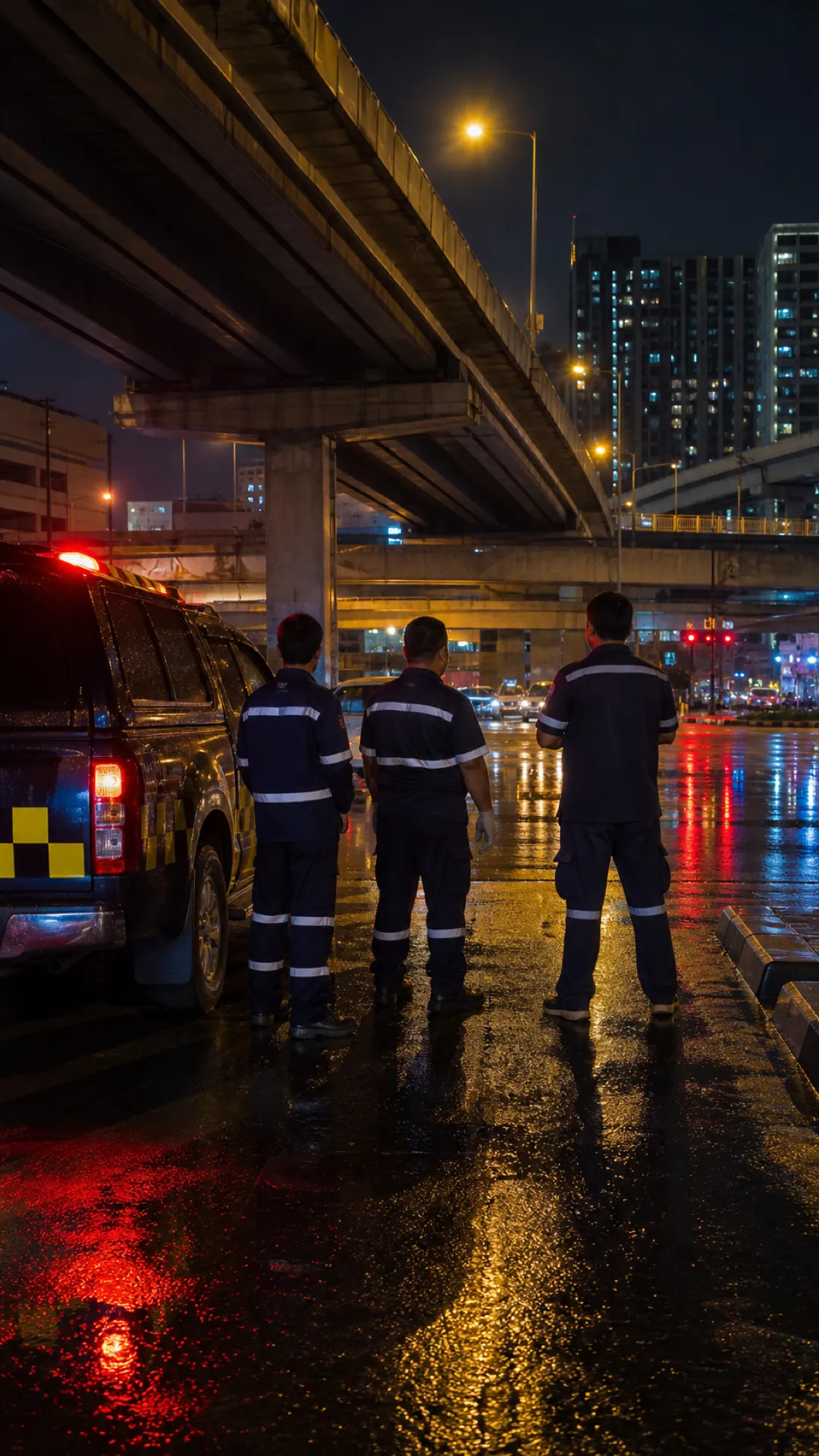
ร่วมกตัญญู translates as shared gratitude, or gratitude held in common.
กตัญญู is article 67’s word — the lifelong obligation to those who raised you, the thing that makes a Thai pension system out of adult children. A foundation named after it collects the dead from Thai roads.
I don’t think that pairing is accidental and I don’t think it needs explaining. But it is the reason I wanted to write this piece rather than another one about privatised infrastructure, because the English-language record of this subject is a decade of photo essays calling these people body snatchers, and that is not what they are.
What they actually are
Two foundations, both originating in Bangkok’s Chinese-Thai community.
ป่อเต็กตึ๊ง — Poh Teck Tung — began transporting the unclaimed dead in 1937, and later added the transport of the injured.
ร่วมกตัญญู — Ruamkatanyu — was founded on 22 June 1970, using the same method, and now runs body collection, disaster response, a radio communications centre and educational work.
They are charities. Funded by donation. Staffed by a mix of paid employees and a large volunteer body — Ruamkatanyu alone has around 2,000 unpaid volunteers and a fleet of roughly 25 ambulances.
And here is the number that should reframe the entire subject:
In Bangkok, volunteers provide basic life support in around 65% of the emergency cases occurring in a year.
Two-thirds of the hands that reach an injured person first in this city belong to somebody nobody is paying.
That sentence used to say “in this country” and the geography was wrong. The 65% is a Bangkok figure. Whether anything comparable holds nationally is not established anywhere this article could find, and the two are very different claims: Bangkok has a dense, negotiated, two-foundation system that most of Thailand does not.
And “basic life support” is doing precise work. Bangkok’s emergency network runs hospital-based advanced life support alongside the two foundations as basic life support providers. Volunteers are trained in first aid rather than as paramedics, and the role is to reach someone fast and move them, not to deliver advanced treatment on the way. That is not a criticism of the volunteers. It is what the system asks of them, and it is why the 65% is a statement about who arrives rather than about what care is given.
The rota
The detail I find hardest to get past is administrative.
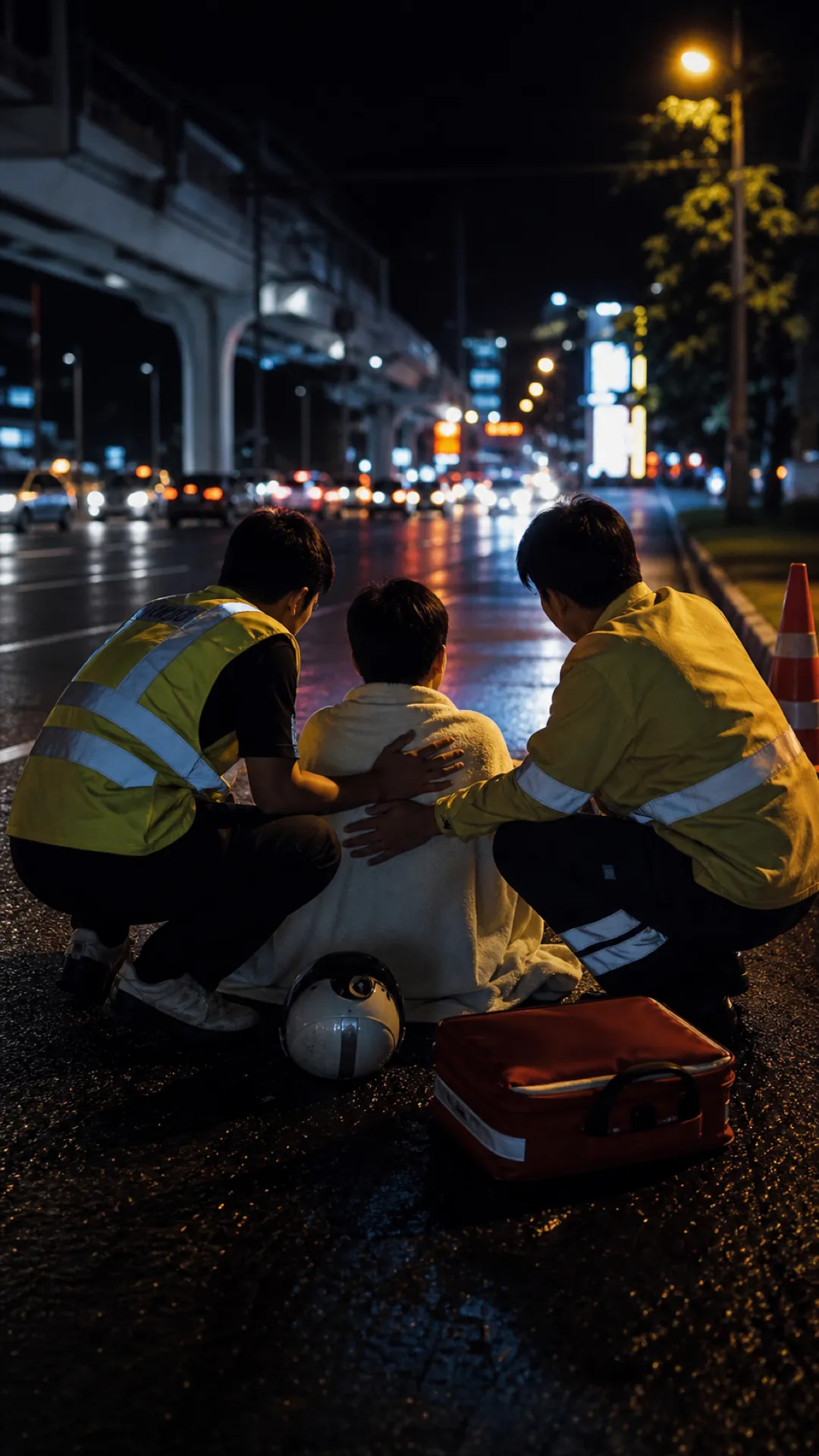
The two foundations have divided Bangkok between them. One works the north of the city, the other the south. They swap at 8am and 8pm, in twelve-hour shifts, every day.
That is a negotiated territorial arrangement between two private charities, covering emergency response across a metropolitan area of more than ten million people, operating on a rota that nobody legislated.
It exists because the alternative was worse. Competition between rescue foundations over accident scenes has been reported over many years, and the rota is the settlement rather than the problem. Two organisations working out between themselves who covers which half of a capital city on which shift is not chaos. It is governance, arrived at privately, because nobody else was going to do it.
The licence nobody talks about
And then the part that makes this more than an arrangement.
In Bangkok, only Ruamkatanyu and Poh Teck Tung are permitted to transport bodies for forensic examination.
Two charitable foundations hold what functions as an exclusive licence for a step in the criminal justice process. A body going to autopsy in this city goes in a vehicle belonging to one of two private organisations.
I want to be careful here, because that arrangement has an obvious justification: these are the organisations with the vehicles, the trained people, the radio network and eighty years of practice. Nobody handed them a monopoly. They built the capability and the state recognised it.
But it is still a private body, funded by donations, performing a non-delegable-looking function in a homicide investigation, and I have not found anywhere in English where that is stated plainly.
Where this breaks my own argument
Article 61 The country that outsourced its public space listed Thailand’s privatised public functions — bill payment at 7-Eleven, food distribution through two wholesale markets, civic space in shopping malls, government communication on a Japanese app — and concluded that these systems work well and are simply unaccounted for.
This is the most extreme case on that list, and it breaks the pattern in a way I should have anticipated.
Every other example is commercial. 7-Eleven profits from being the bill counter. The malls profit from being the town square. The wholesale markets turn ฿500–600 million a day. The private provision persists because somebody is making money from it, and a thing somebody is making money from will be defended.
This one has no revenue model at all.
Donations, volunteers, and petrol paid for out of people’s own pockets. There is no shareholder to lobby for it, no earnings call, no commercial interest whose survival depends on it continuing.
Which makes it, simultaneously, the most admirable arrangement in that entire list and by far the most fragile. A privatised function nobody profits from is a privatised function nobody has an institutional reason to maintain — and the fact that it has run since 1937 on gratitude and donation is not a guarantee about 2046.
Who was at the crash
Article 78 The seven dangerous days counted 242 deaths in seven days during Songkran 2026, out of 1,242 accidents, with 64.55% of crashes involving motorcycles.
That article asked what would reduce the toll and settled on helmets and alcohol enforcement. It never once asked who arrived.
Substantially, these people did. Volunteers, unpaid, on the roads where article 86 Outside is not a workplace recorded a 59.5°C heat index and article 88 The sticker is not insurance established that compulsory insurance pays ฿35,000 for a death where fault is undetermined.
The archive has spent a hundred articles on who is exposed and who is protected. It had not looked at who turns up.
What I’d want to know
How much of national emergency response is volunteer-delivered, and where. Half answered, 4 September 2026: the geography is Bangkok, and the article now says so. ⚠️ The basis is still unestablished — what counts as an “emergency case”, who compiled the figure and over what period are all unknown here, and it remains a line in reporting rather than a published statistic.
What the national picture looks like is still completely open, and it is now the more interesting question: Bangkok’s arrangement is unusual even within Thailand.
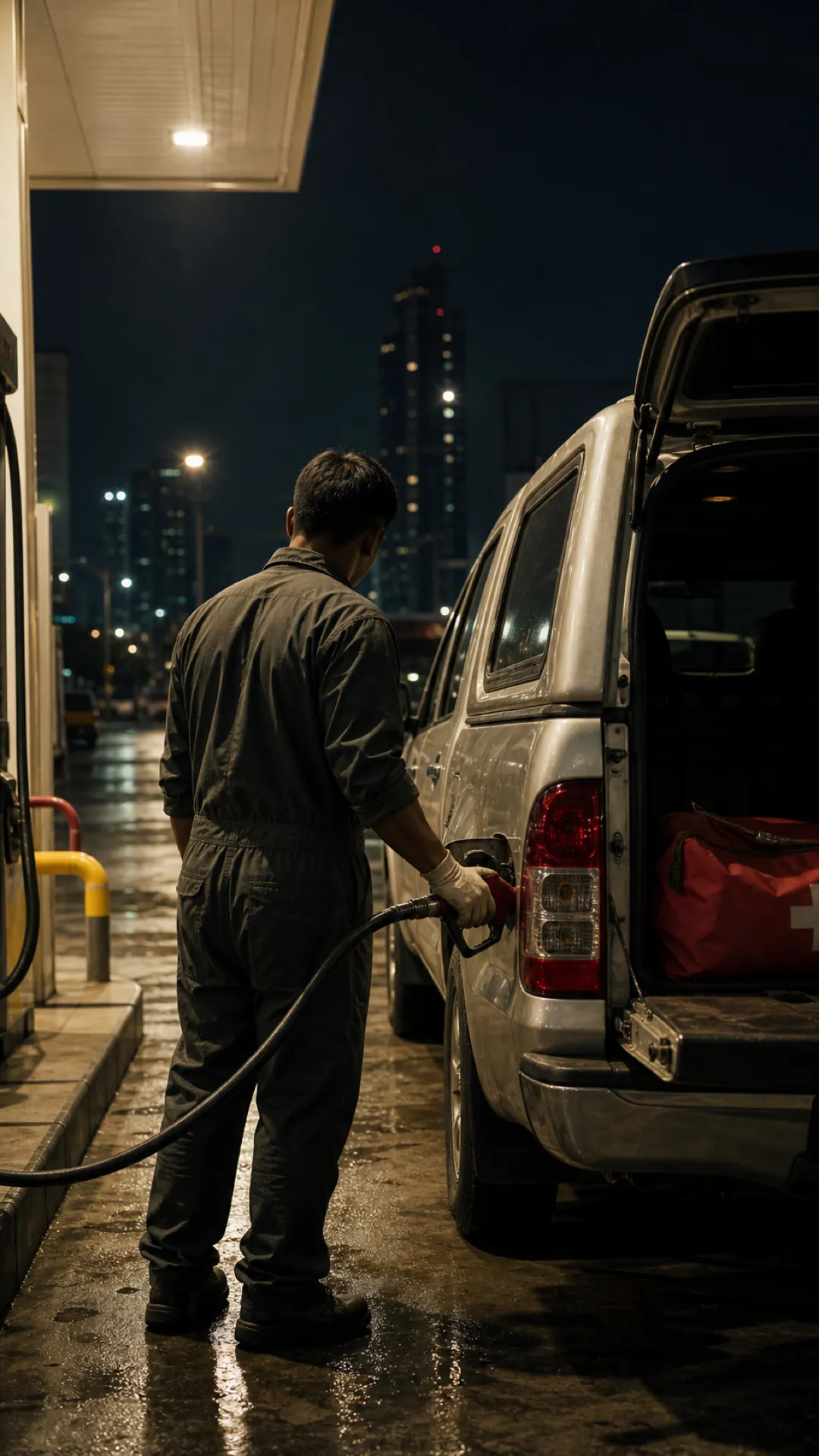
What it costs, and who pays it. Donation-funded means somebody is buying diesel, and I could find no financial picture at all.
Whether the state system is displacing it or depending on it. Thailand has a national emergency medicine institute and a coordinated response system. Whether the foundations are being absorbed, superseded or quietly relied upon is the central question about the next twenty years of this, and I don’t know the answer.
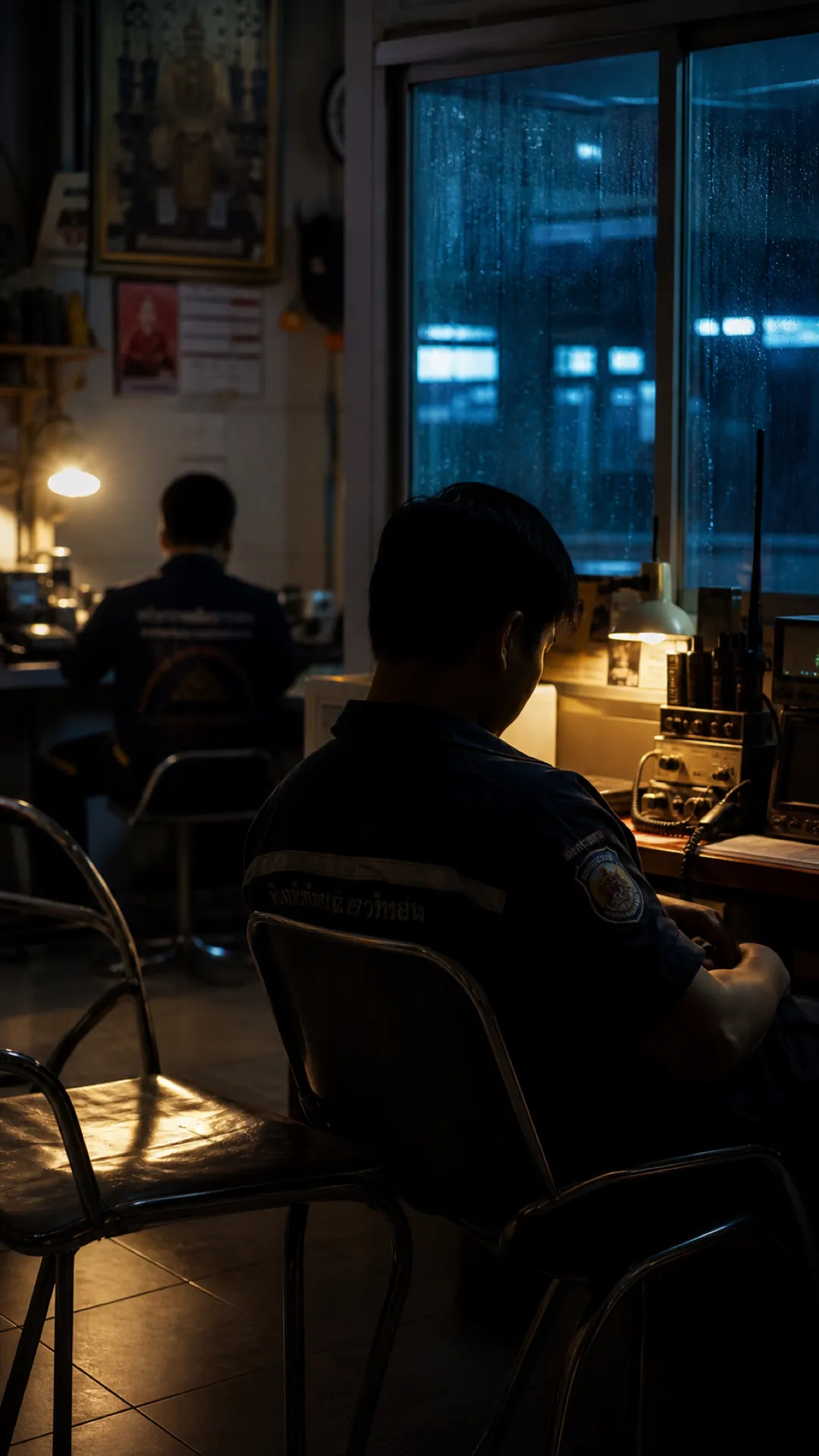
And what happens to the volunteers. Article 89’s argument has one more instance in it if these people have no insurance, no compensation and no occupational protection — and everything I know about this archive suggests they don’t. I could not confirm that and I’m not going to assert it.
On the phrase “body snatchers”
The English-language coverage of this subject, going back years, has largely used that phrase.
It is wrong and it is worth saying so. A body snatcher steals corpses. These are volunteers doing unpaid night shifts at road accidents, arriving before anyone else, delivering basic life support in around two-thirds of cases, and taking the dead somewhere they can be examined and identified.
The phrase survives because it is exciting and because the people it describes were never the intended readership. Both foundations insist their work is rescue, because they also reach people who are alive.
That is not a public relations position. In a country recording 242 road deaths in a single week, arriving first is the whole job.
Common misconceptions
“They’re body snatchers.” They are charitable foundations running rescue and emergency medical response, and they reach living casualties as well as dead ones.
“They’re a government service.” They are donation-funded charities, one operating since 1937, staffed substantially by unpaid volunteers.
“They compete chaotically over accident scenes.” Competition has been reported historically. The two now split Bangkok geographically and swap on twelve-hour shifts at 8am and 8pm.
“They just do transport.” In Bangkok, volunteers deliver basic life support in around 65% of annual emergency cases — though basic life support is what the system asks of them, with advanced care coming from the hospital-based side.
“It’s a small operation.” Ruamkatanyu alone has roughly 2,000 unpaid volunteers and around 25 ambulances, and holds — with Poh Teck Tung — permission to transport bodies for forensic examination in Bangkok.
Common questions
- What are Thailand's rescue foundations?
- Donation-funded charities running emergency response, rescue and body collection — principally Poh Teck Tung, operating since 1937, and Ruamkatanyu, founded in 1970.
- Are they government services?
- No. They are charitable foundations funded by donation and staffed substantially by unpaid volunteers.
- How large are they?
- Ruamkatanyu alone has around 2,000 unpaid volunteers and roughly 25 ambulances.
- How much of emergency response do they handle?
- In Bangkok, volunteers provide basic life support in around 65% of emergency cases occurring in a year. The equivalent national figure is not published.
- Do they compete over accident scenes?
- Competition has been reported historically. The two foundations now divide Bangkok geographically and swap on twelve-hour shifts at 8am and 8pm.
- Why are they called body snatchers in English coverage?
- They shouldn't be. They run rescue and emergency medical work, reach living casualties, and transport the dead for forensic examination.