Something lasted long enough to build
Thailand beat China in Tianjin to reach a first Olympics. The answer to why the women's game holds the country is twenty years of continuity — a length of run this archive has rarely found anywhere else.

On Saturday night in Tianjin, in front of a Chinese crowd, Thailand went 1–2 down and won.
25-20. 11-25. 23-25. 25-18. 15-10.
A fourth Asian title, and the first Olympic qualification in the history of Thai volleyball. Not the first in a while. The first.
Three things the governing body’s own account adds to that. It was a title defence — Thailand won the same championship in 2023 and kept it. The Olympic place is a direct qualification for Los Angeles 2028. And both finalists also qualified for the 2027 FIVB Volleyball World Cup, so the fortnight produced two tickets, not one.
The defence is the part that belongs in this article. A single win is a result. Winning it and then holding it is the thing the rest of the piece is about.
And the question Thais have asked for fifteen years — why does this team hold the country in a way the men’s team does not — has an answer that is sitting in plain sight, and it is not the one usually given.
First, the explanation that does not work
The folk answer, offered constantly, is that people watch because the players are attractive.
It fails on two tests and it is worth disposing of properly rather than politely.
It fails on timing. If appearance were the driver, interest would be roughly constant. It was not. Thai attention to the women’s team is datable — it rose with results from 2009 onwards, when Thailand beat China 3–1 to take a first Asian title, and again around the second in 2013.
And it fails on transfer, which is the decisive one. The team that beat China on Saturday is not the team people fell in love with. The 7 เซียน — Nootsara Tomkom, Pleumjit Thinkaow, Onuma Sittirak, Wilavan Apinyapong, Malika Kanthong, Wanna Buakaew and Amporn Yaphaha — are not who was on court in Tianjin. Saturday’s individual awards went to Pornpun, Thatdao and Sasipaporn.
The audience transferred to a different set of people and stayed. An explanation based on who the players are cannot account for an attachment that survived replacing all of them.
Something else is being followed, and it is not the individuals.
What actually happened is that something was allowed to continue
Look at the shape of the record rather than its highlights.
A first Asian title in 2009. Sixth at the World Grand Champions Cup in Japan the same year. A second Asian title in 2013, beating Japan 3–0, and fifth at the Grand Champions Cup. A golden generation that played together, as a recognisable unit, for over a decade. A successor generation that has now gone further than the golden one ever did.
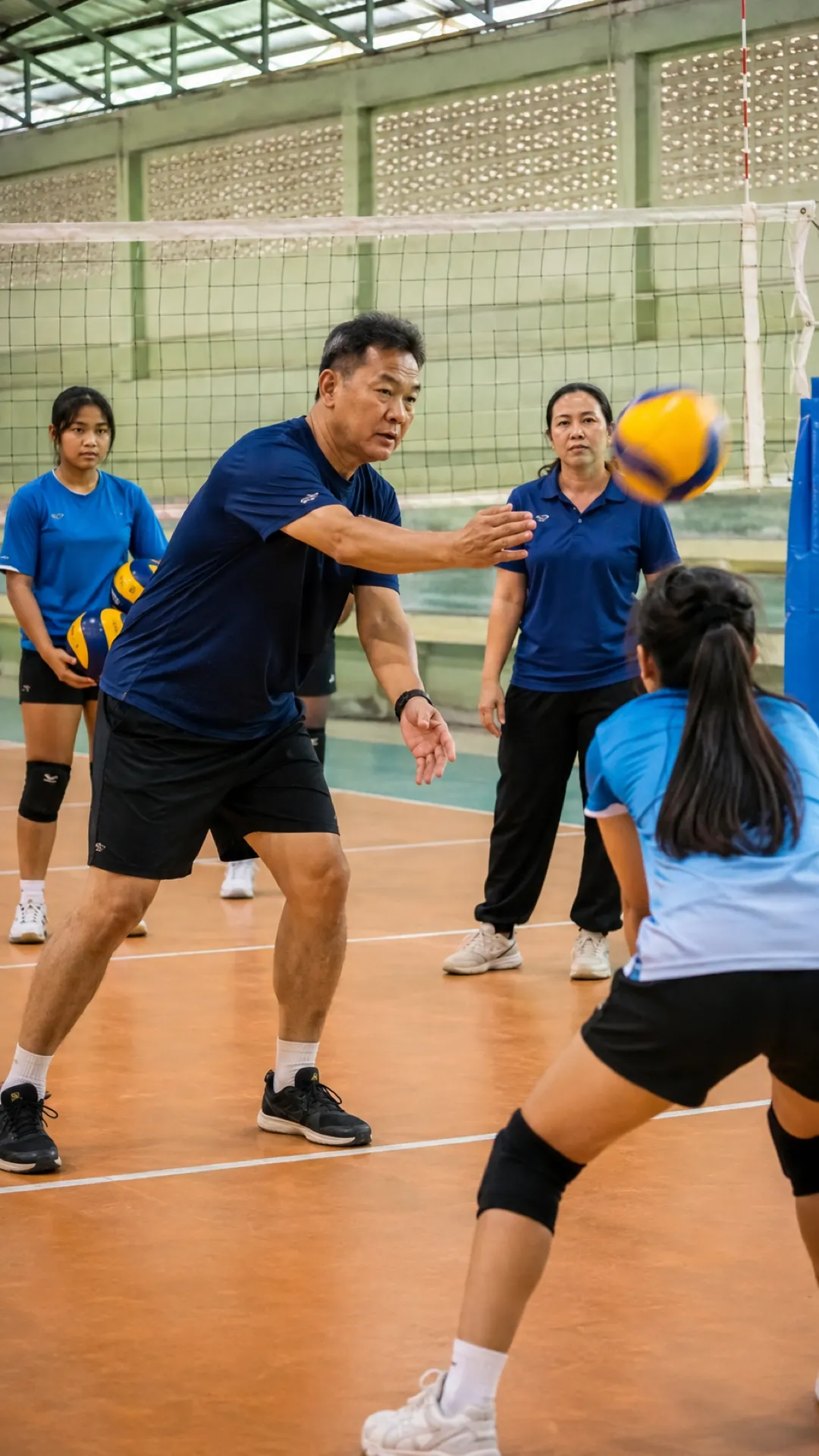
And running through all of it, the same coach: Kiattipong Radchatagriengkai — “โค้ชอ๊อต”.
That is twenty years of continuity in coaching, in squad identity, and in a development pipeline that produced a replacement generation good enough to beat China away from home.
Now hold that next to almost anything else in Thai institutional life.
The comparison this site cannot avoid making
This archive keeps finding the same thing. Parties dissolve. Governments change and the plan is renamed. Budget lines are restructured. A ministerial regulation is amended five times in thirty years and nobody has read the consolidated text. The recurring Thai institutional finding, across dozens of articles, is that nothing is allowed to run long enough to compound.
Thai women’s volleyball is the counterexample, and it is worth being precise about why.
A team is not a plan. It cannot be renamed by an incoming administration. Its budget is small enough not to be worth fighting over. Its output is unambiguous — you won or you did not, on a specific night, in front of everybody — so it cannot be declared successful in a report.
And crucially, its personnel change on a schedule nobody controls. Athletes age out. A programme that survives that has to have built the thing underneath: the coaching, the selection, the youth competition, the habit of playing together. The 7 เซียน retiring and Thailand still beating China is the proof that what was built was a system and not a group of friends.
That is what twenty years of not being interfered with buys. It is not glamorous and it is not a policy anyone announced. It is simply what happens when something is left alone to accumulate.
And then the word
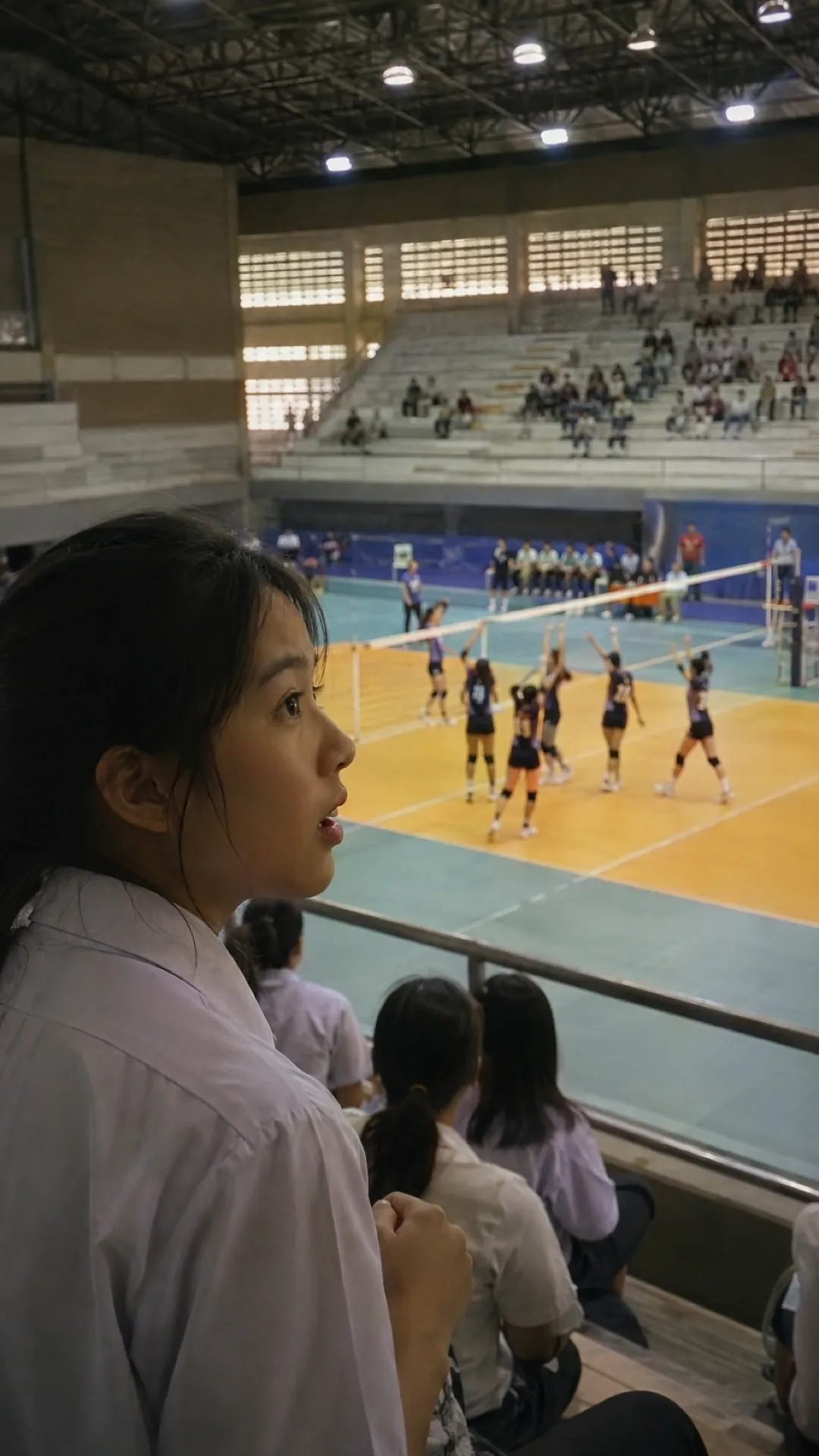
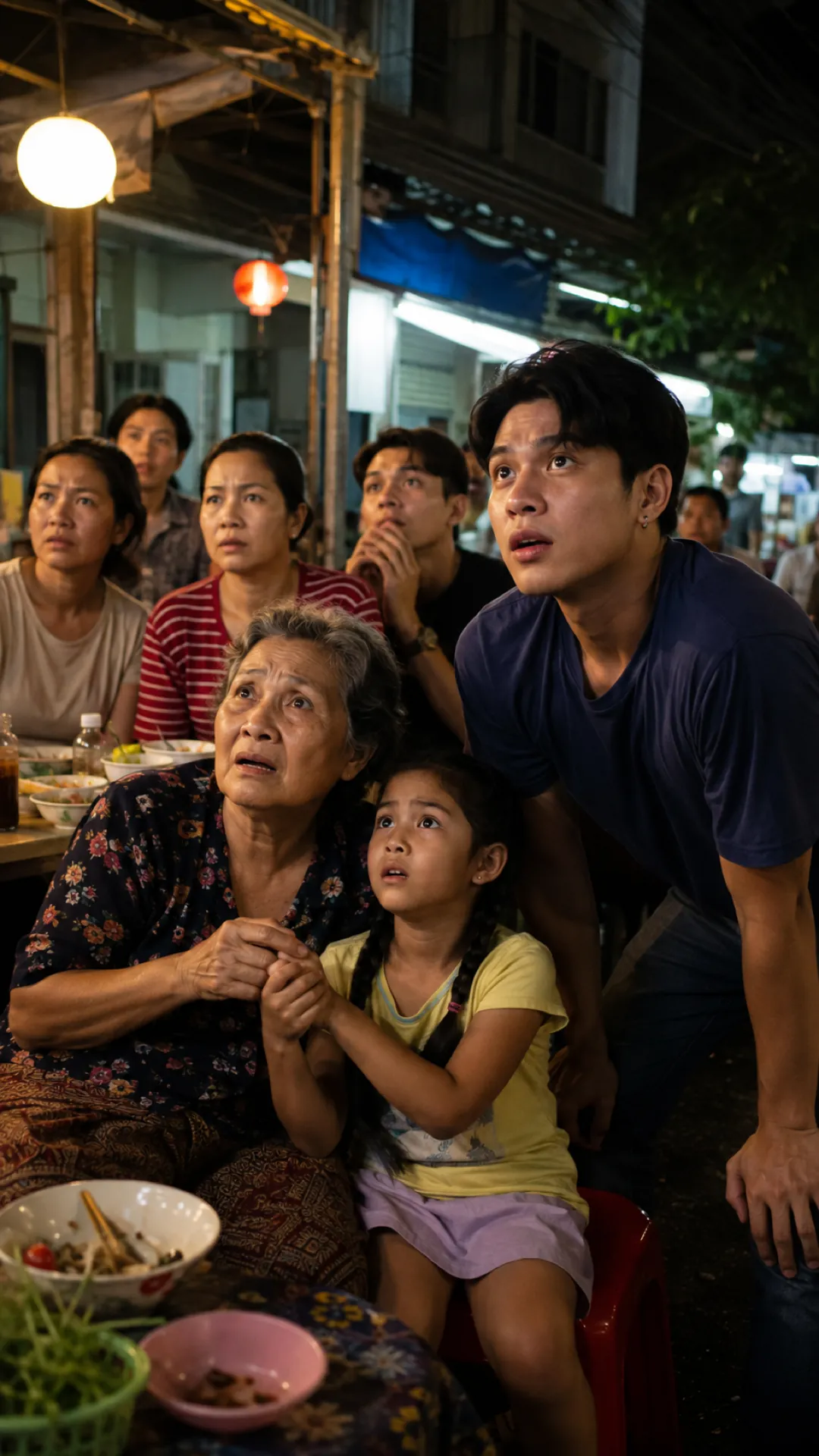
A Thai columnist writing on Sunday morning, still turning the match over in his head, noticed something about how he and six or seven friends had watched it.
Nobody in the room knew how the others voted. He writes about politics daily and did not know, and did not need to. What he noticed was the pronoun.
“เรา ได้แล้ว” — we scored. “เรา เสมอแล้ว” — we’re level. “เฮ้ย เราจะชนะแล้ว” — we’re going to win.
Not one of them had touched a ball. By the fifth set they were all “we”.
His point, and it is a good one, is that in a country sorted into orange and red and blue and yellow — where a statement is often assessed by which side the speaker is on before anyone considers what it says — the unforced “we” has become genuinely scarce.
This site would add only that the “we” is downstream of the continuity, not separate from it.
You cannot identify with a team you have not followed. Identification is built the same way institutional capability is: by the same thing being there, repeatedly, long enough for people to learn the names, the positions, the rotation, and what it feels like to lose to China and come back. The columnist’s own account describes exactly that arc — from a sport he watched occasionally to checking the schedule, the channel, the opponent.
Twenty years of continuity produced a team that could beat China. The same twenty years produced an audience that says “we” without being asked. They are the same fact.
What this article cannot tell you
The commission asked why Thais follow the women’s game more than the men’s, and this article has answered half of it.
The other half needs data that was not obtained, and rather than reason from assumption, here is what is missing.
No men’s team ranking series. No comparative height or anthropometric data — the standard argument is that elite men’s volleyball is more strongly height-selected and that Thai players are therefore further from the physical baseline, which is plausible and is not established here. No broadcast or viewing figures, so the very reasonable hypothesis that free-to-air scheduling created the audience is untested. No participation numbers for boys and girls playing the sport at school level.
The hypothesis this site would put forward, clearly labelled as one, is that the direction of causation runs from result to attention rather than the other way. The women’s team won things first. Attention followed, then money followed attention, then the pipeline improved. If that is right, the men’s question is not about audience taste at all — it is a question about why an equivalent programme did not run for twenty years on the other side.
That would be a better article than this one, and it needs the numbers above.
Common misconceptions
“People watch because the players are pretty.” The audience transferred intact to an entirely different squad. An explanation based on individuals cannot survive that.
“Thailand has been to the Olympics before in volleyball.” Saturday was the first qualification.
“The 7 เซียน were the team that qualified.” They are the generation that built the audience. The team in Tianjin is their successors.
“It’s a women’s sport in Thailand.” Both are played. The question is why one programme compounded.
“Success came from investment.” The record suggests the order was results first, attention second, money third.
Common questions
- What happened on 30 August 2026?
- Thailand beat China 3–2 in Tianjin to retain the Asian Championship and qualify directly for the Los Angeles 2028 Olympic Games — the first Olympic appearance in the history of Thai volleyball. Both finalists also qualified for the 2027 FIVB Volleyball World Cup.
- Has Thailand been to the Olympics in volleyball before?
- No. This is the first qualification.
- Who were the 7 เซียน?
- Nootsara Tomkom, Pleumjit Thinkaow, Onuma Sittirak, Wilavan Apinyapong, Malika Kanthong, Wanna Buakaew and Amporn Yaphaha — the generation that built the modern audience.
- When did Thailand first win the Asian Championship?
- 2009, beating China 3–1. A second title followed in 2013 against Japan.
- Why do Thais follow the women's team so closely?
- Twenty years of continuity — same coach, a recognisable squad, and a pipeline that produced successors — gave people something to follow long enough to identify with.
- Is it because the players are attractive?
- The audience transferred to an entirely different squad and stayed. That explanation does not survive it.
- Why not the men's team?
- This article does not know, and says so. Answering it needs ranking, broadcast and participation data.