The polite person finishes last
มนุษย์ป้า is Thai for the person who cuts the queue. The Department of Mental Health's own explanation is that in an unenforced queue, this is the behaviour that works.
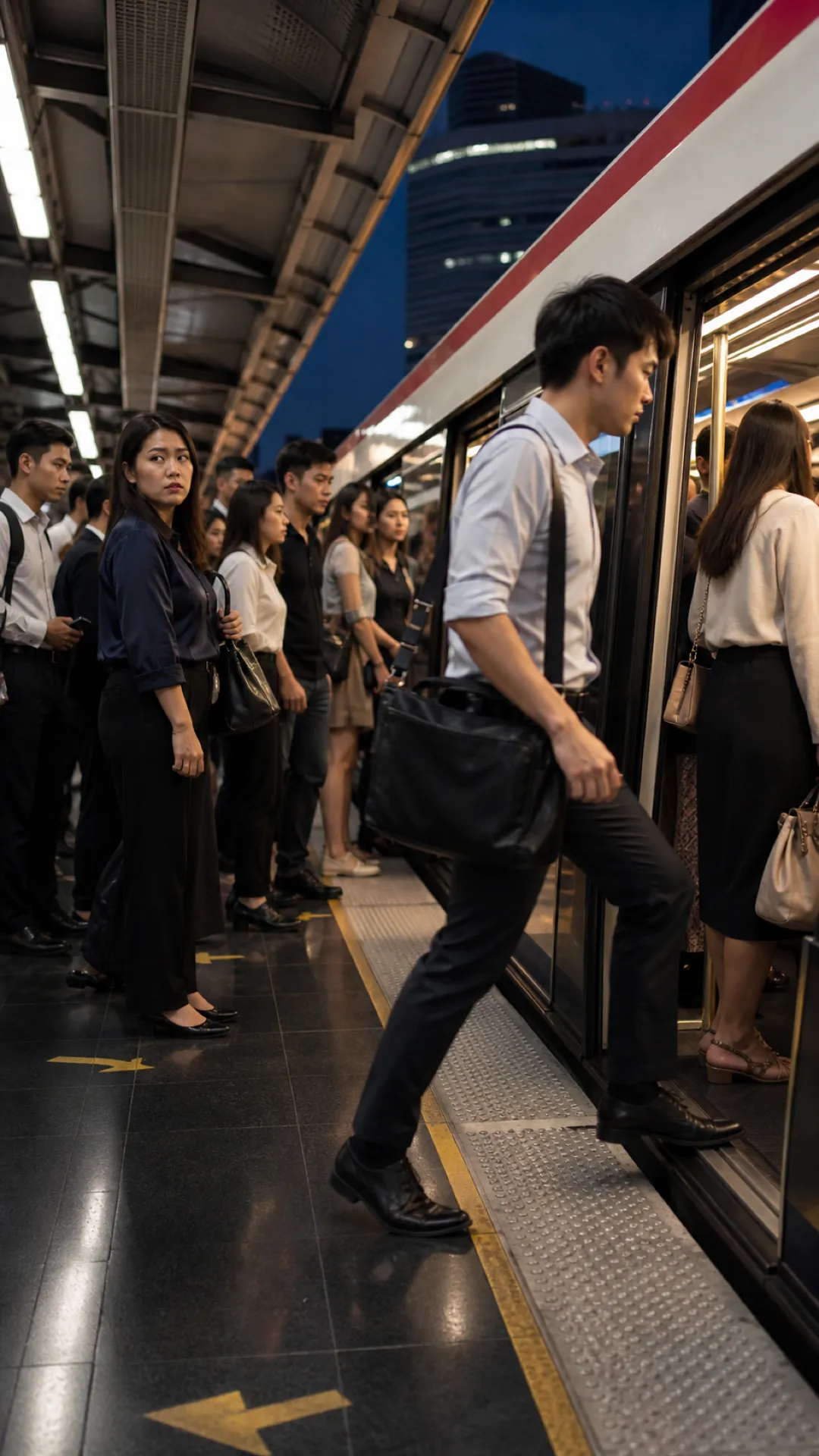
มนุษย์ป้า — manut pa, literally “auntie-human” — is the Thai word for the person who cuts in front of you.
It arrived around 2013 and 2014, out of Bangkok public transport specifically: the buses, the boats, the ticket queues. It describes someone who pushes onto a vehicle before anyone has got off, takes a seat that was being saved, treats a queue as a suggestion, and is entirely unbothered that you noticed.
Everyone in Thailand knows exactly what it means, and it is funny until you look at it properly.
There is a masculine version — มนุษย์ลุง, “uncle-human” — and almost nobody uses it. Hold onto that; it is the second half of this article.
What the health ministry actually says
Here is the part that surprised me, and it is a matter of public record on a Department of Mental Health website rather than anything I have worked out.
Their position is that the behaviour is a survival adaptation, not a character flaw.
A deputy director at the Rajanukul Institute, quoted in the department’s own material, describes it plainly: people behave this way because they live in an environment where, if you don’t, you get taken advantage of. She uses driving as the example (you stay in your lane while somebody cuts left and right and gets there first) and then puts the general case:
If you are somewhere with no order, where everyone is grabbing for the same thing, behaving like a gentleman makes it hard to get anything at all.
And the sharpest line in the material, which I want to state carefully because it is the whole argument: if society learns that being good means being cut in front of, and being good means finishing last, then people conclude it is better not to bother. Cutting the queue costs nothing. You get the seat, the item, the earlier bus home.
That is not a description of rudeness. It is a description of an incentive.
Which is article 81 again
The site has a recurring finding and this is it in an unexpected place.
Article 81 The fine nobody paid examined why Thai traffic fines went overwhelmingly unpaid, and found the cause was not corruption or indifference. Two government databases were not connected, so an unpaid ticket never surfaced anywhere. The rule was real. Nothing was attached to it. A rule you can ignore isn’t a weak rule — it’s a suggestion with an official font.
A queue is a rule with no enforcement mechanism at all.
There is no fine, no registrar, no database. The only sanction available is that other people in the queue object, and in an environment where they mostly don’t, the arithmetic is simple and it runs one way. The person who queues pays a cost. The person who doesn’t collects a benefit. Repeat that a few thousand times a day across a city and you do not have a culture problem. You have an equilibrium.
And equilibria are not fixed by disapproving of the people in them.
The department’s own recommendation, incidentally, is the obvious one and it is worth noticing what it asks of you. Say something. Factually, politely, immediately — we were here first, the queue is here — rather than commenting on the person’s character, which starts a fight.
Which is exactly the thing article 49 Kreng jai: the one rule underneath all the others spent a whole piece explaining why Thais find almost impossible. Direct correction of a stranger, in public, carries a social cost that lands on the person doing the correcting. The official advice is the single hardest available action. That is not a criticism of the advice. It is the reason the advice hasn’t worked.
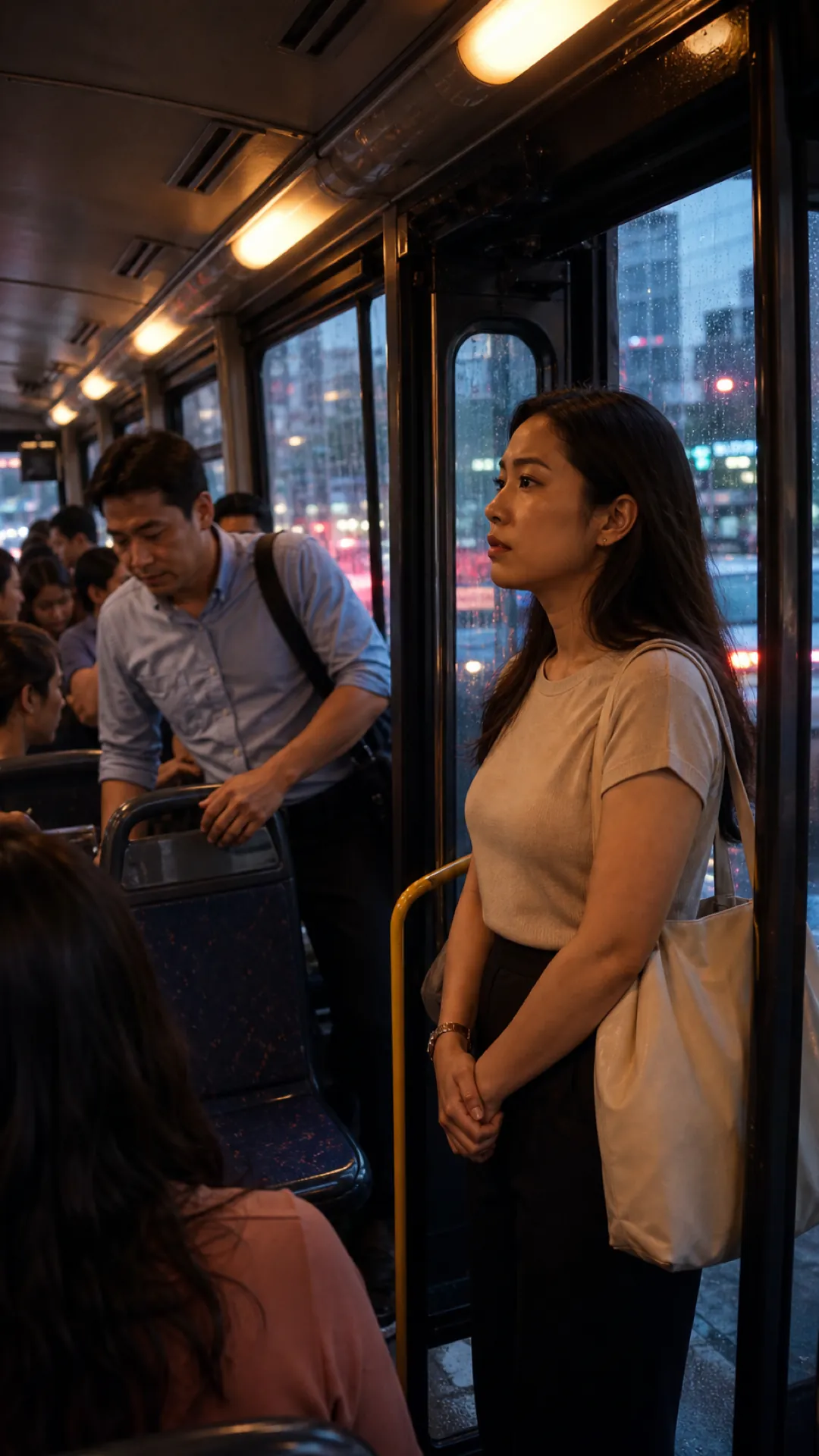
Now the part that isn’t funny
Both psychiatrists quoted in that material say the same thing, unprompted, and it is the most important sentence in either of their contributions:
It is not only women, and it is not only older people. Every age and every gender behaves this way. A deputy director-general of the Department of Mental Health puts it as a question about citizenship in general — everyone has wants, and the question is whether what sits above the wants is a set of rules everyone accepts.
And yet the word is ป้า.
Not exclusively — มนุษย์ลุง exists, and gets used, and is a real phrase. But it is not the phrase that entered the language. If you ask a Thai person to complete “มนุษย์—”, you will not get ลุง.
Thai commentary on this has been direct about what is happening. The term is described as carrying both วยาคติ — age prejudice — and a gendered stigma, and as landing on middle-aged women twice: once for being older, once for being women, in a language that already requires women to select a pronoun that positions them relative to whoever they are speaking to while men can use one word in every situation.
So a society that could not correct the behaviour to its face invented a word to do it from a distance, and the word settled on the people least able to object to being called it.
That is the shape this site keeps finding. Article 89 The wrong way round argued that a protection you must qualify for will be missing for whoever most needs it, because the category is always drawn around people who already had options. This is the same drawing, done in the other direction. A sanction that cannot be applied directly gets applied indirectly, and an indirect sanction attaches to whoever is cheapest to name.
The queue-jumper in a suit is a man in a hurry. The queue-jumper with a shopping bag is a category.
What I am not saying
I am not saying the behaviour is fine. It isn’t, it makes cities worse, and the person who has been standing in line for twenty minutes is entitled to be annoyed.
I am not saying nobody should ever use the word. It is a useful word and Thai is better for having it.
What I am saying is that it does two jobs and only one of them is the one people think. It names a behaviour, which is fair. And it assigns that behaviour to a demographic, which is not, and which the country’s own health ministry has said is not accurate.
A word that describes a queue-jumper would be a good word. A word that describes a queue-jumper as an older woman is a worse one, and the difference is invisible precisely because it is funny.
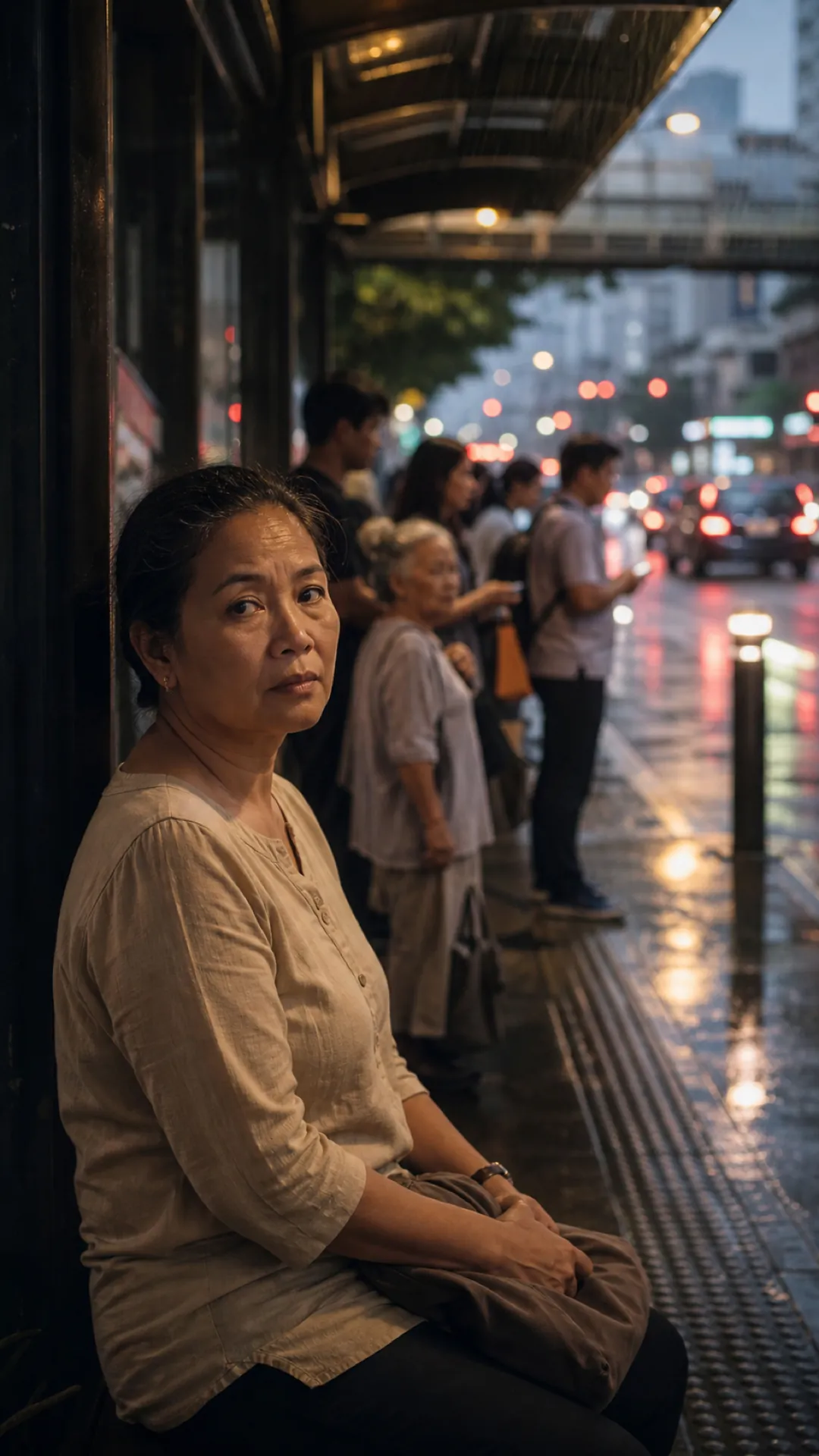
Practically
If you are new to Thailand: the behaviour is real and you will meet it, most likely at a ticket counter or getting onto a boat. It is not personal and it is not aimed at you as a foreigner — this is a domestic complaint long before it is anybody’s cultural observation.
If you want to do something about it in the moment: the health ministry’s advice is state the fact, keep it short, don’t comment on the person. There’s a queue, we’ve been waiting here. It works more often than Thai social convention suggests it will, and the reason it works is that the defector’s entire advantage rests on nobody saying anything.
And if you were going to use the word: it is worth knowing that the joke is thirteen years old, that the Department of Mental Health thinks the behaviour is an incentive problem rather than a personality, and that the ministry has published a piece explicitly saying this is not a thing older women do.

Common misconceptions
“It means an old woman.” It names a behaviour — queue-jumping, seat-taking, ignoring others in shared space. Health ministry material states plainly that all ages and genders do it.
“It’s about rudeness.” The Department of Mental Health’s own framing is that it is survival behaviour learned in environments where following the rule loses.
“There’s no male equivalent.” There is — มนุษย์ลุง. It is used far less, which is the interesting part.
“It’s an old word.” It emerged around 2013–14, out of Bangkok public transport.
“Nothing can be done about it.” The health ministry’s position is the opposite: it is behaviour, behaviour responds to enforced rules, and someone has to be first in the queue for a queue to exist.
Common questions
- What does มนุษย์ป้า mean?
- Literally "auntie-human". Thai slang for someone who cuts queues, pushes onto transport, takes seats or otherwise ignores others in shared space.
- Where did the word come from?
- It emerged around 2013–14, out of frustration with behaviour on Bangkok public transport — buses, boats and ticket queues.
- Is there a male version?
- Yes, มนุษย์ลุง — "uncle-human". It exists and is used, but far less often, which Thai commentators have noted as evidence of gendered stigma in the term.
- Is it only older women who behave this way?
- No. Department of Mental Health material states explicitly that people of all ages and genders do, and frames the behaviour as a response to environments where rules are not enforced.
- What should you do if someone cuts in front of you in Thailand?
- The health ministry's advice is to state the fact politely and briefly — that there is a queue and you were there first — rather than commenting on the person's character.
- Is มนุษย์ป้า offensive?
- Thai commentary describes it as a stigmatising label combining age and gender prejudice. It is widely used and widely understood as a joke, and those two things are both true at once.