The hole in the ice
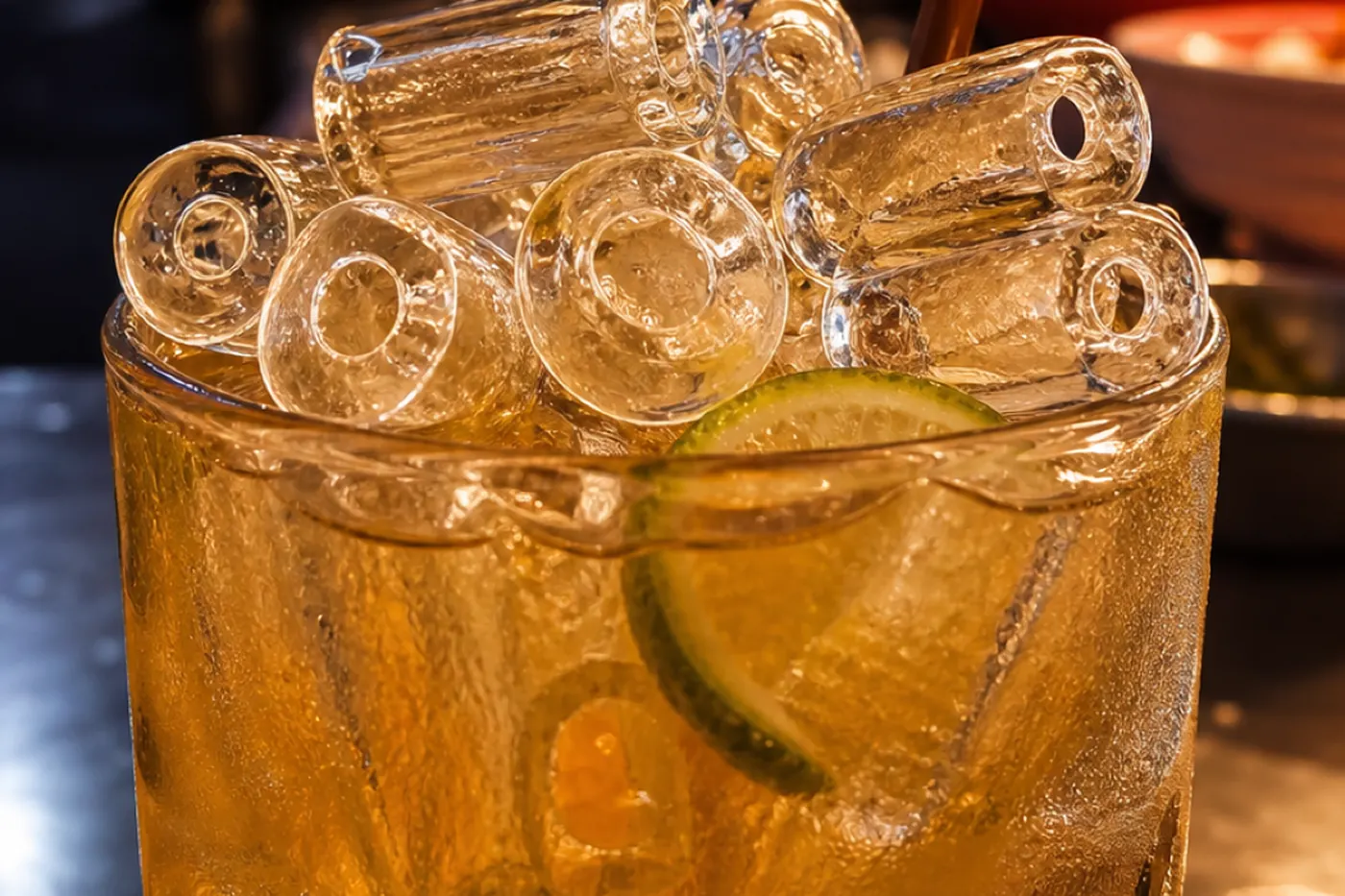
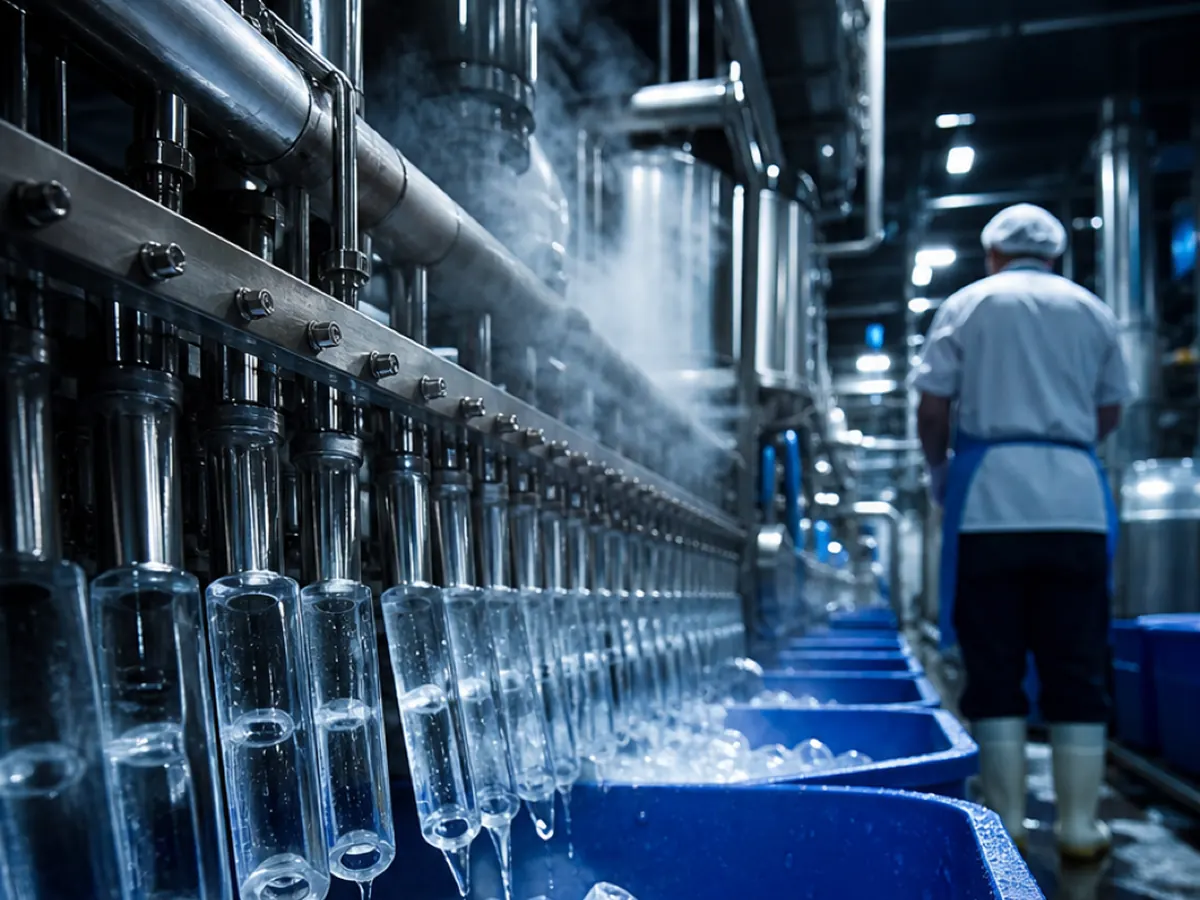
The ice with a hole through it is the drinking ice. Thailand manufactures it at ฿0.80 a kilo in factories producing 670 tonnes a day, and delivers it daily to everywhere.
Every travel guide tells you to be careful with ice in Thailand. Almost none of them tell you what to actually look for.
Look for the hole.
น้ำแข็งหลอด — tube ice, the cylinders with a hole through the middle — is the ice made for drinking. Filtered water, purpose-made for consumption, and the shape is the giveaway.
That’s it. That’s the answer to one of the most-searched questions about this country, and it’s a shape.
Why the shape means something
Thai ice comes in distinct types with distinct purposes.
น้ำแข็งหลอด — tube ice, small or large, with the characteristic hole. Made for consumption. น้ำแข็งซอง — block ice, sold in bags or sacks. น้ำแข็งบด — crushed. น้ำแข็งเกล็ด — flake.
The types aren’t decorative. They’re different products for different jobs: some for drinks, some for keeping fish cold on a market stall, some for packing around beer crates.
The rough rule foreigners can use: if it has a hole, it was made to go in a glass. If it’s an unidentifiable crushed heap, it may have been made to keep something cold rather than to be swallowed, and it’s worth a moment’s thought about where you are.
In practice, in Bangkok, in any normal restaurant or 7-Eleven, you are fine. The caution applies at the margins: a stall in a market at the end of a long hot day, ice that has been sitting in an open bucket.
But nobody tells you the rule, so you spend your first month either paranoid or indifferent, when there’s a perfectly simple signal available.
The industry underneath
Here’s what makes this a Bangkok Logic piece rather than a travel tip.
Ice in Thailand is a manufactured product with an industrial supply chain and a daily delivery network, and it is completely invisible unless you look.
Single factories produce 400 tonnes a day. Another runs at 670 tonnes a day across three product types. Small operators run machines making 500 to 2,000 kilograms daily. The sector is regulated, the Department of Industrial Works oversees tube ice plants, particularly around ammonia refrigeration systems.
And the production cost is around ฿0.80 per kilogram.
Eighty satang. For a kilo.
That number does two things. It explains why ice is everywhere: at that cost, no vendor in Thailand has any reason to be sparing with it. And it explains article 62 You are not buying dinner, where I noted that moo kratha restaurants charge for ice separately and that this is part of the margin.
They are buying it at eighty satang a kilo. Now you know why it’s on the bill.
The delivery network nobody sees
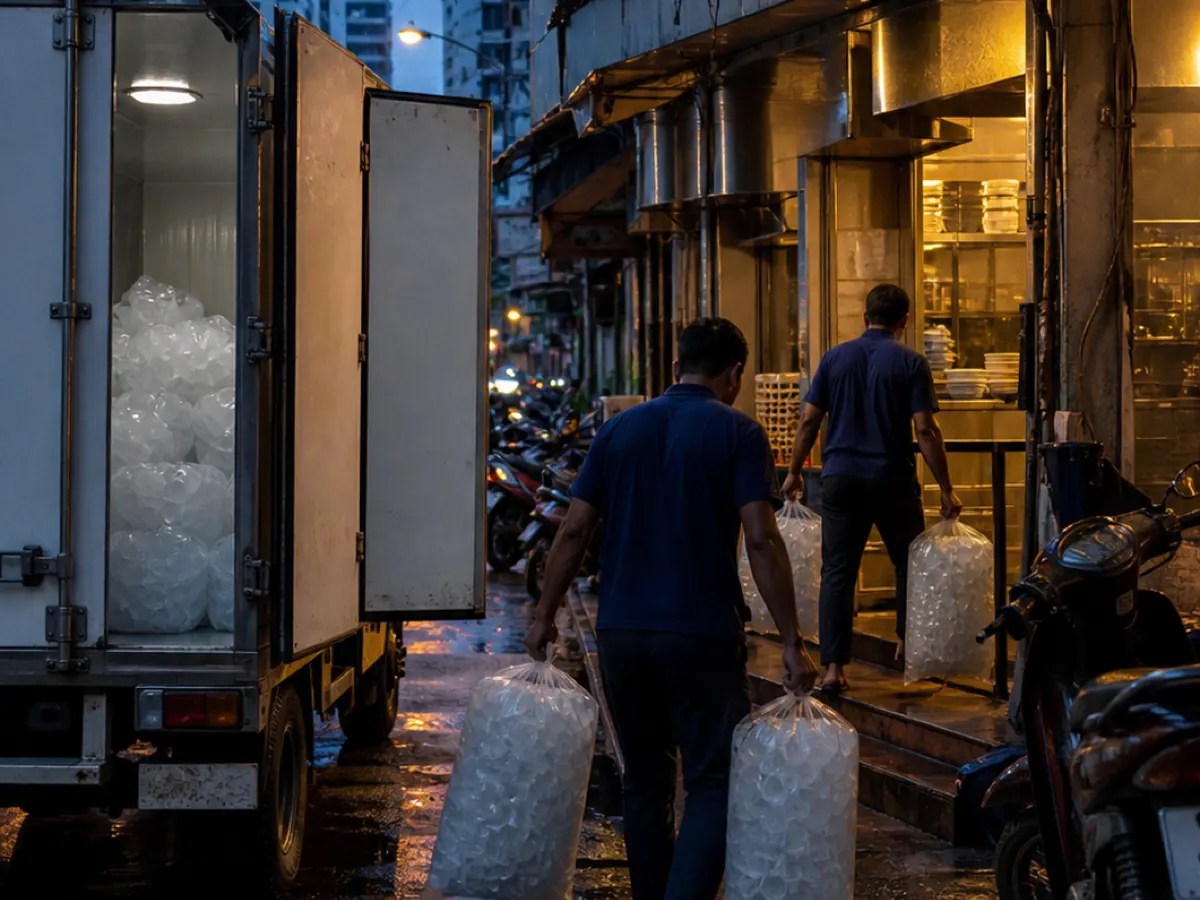
Ice arrives daily. Everywhere.
Every restaurant, every cart, every market stall, every convenience store, every bar in this country receives ice, every day, in bags or sacks, from a delivery network operating largely before most people are awake.
It’s the same shape as article 31’s wholesale markets — an overnight logistics system supplying a city, running on thin margins at enormous volume, entirely invisible to the people it serves.
And it’s another entry in article 61’s pattern: private infrastructure performing what is functionally a public utility function. In a tropical country, cold is not a luxury. It’s food safety, it’s drink service, it’s how fish reaches a market stall in edible condition. That entire function is delivered by a fragmented private industry that nobody has ever described as infrastructure.
The bit that puts it in perspective
Ice first reached Thailand in the mid-nineteenth century, shipped in from abroad at considerable expense.
It was rare enough, and strange enough, that blocks of it were put on public display for people to come and look at.
People queued to see ice.
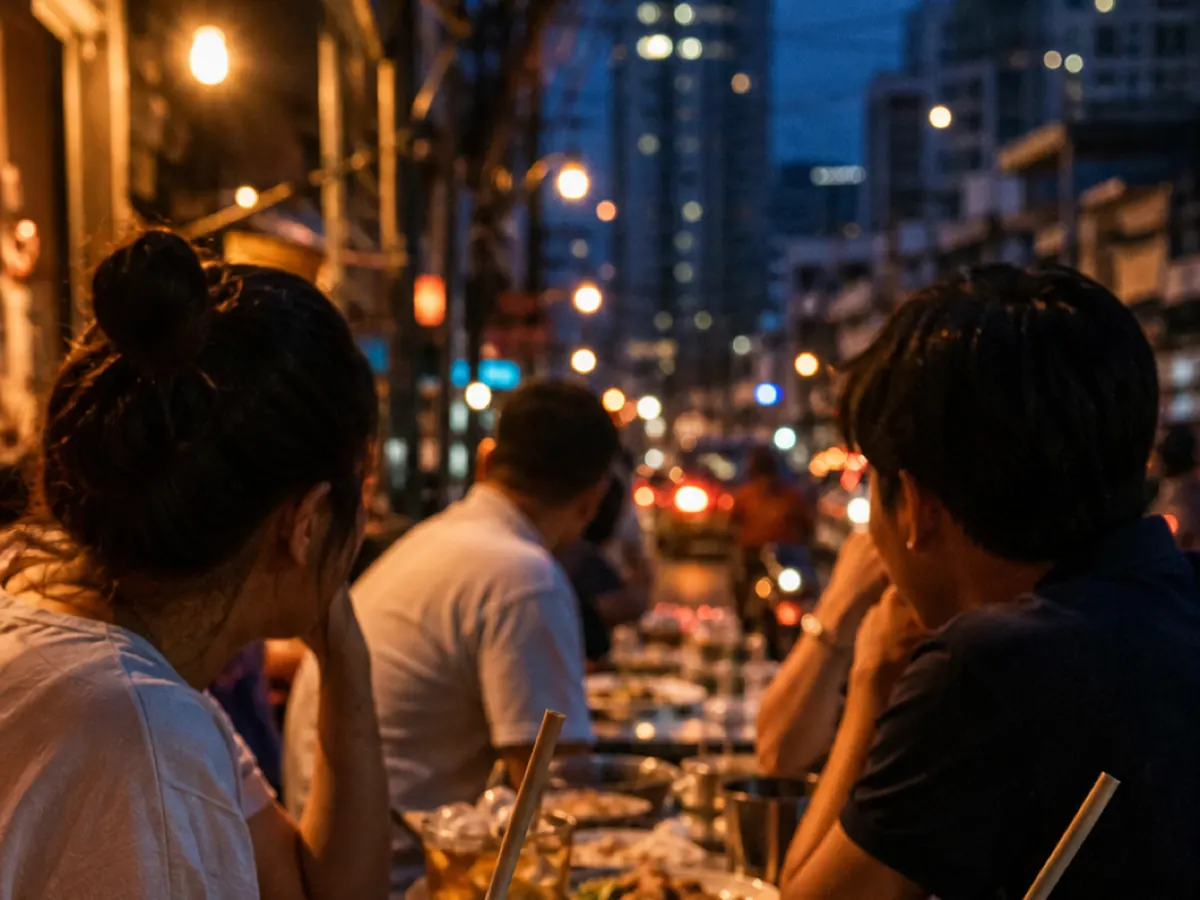
Within roughly a century and a half, this became a country where ice is manufactured at eighty satang a kilo, delivered daily to every corner of every city, given away free with every drink, and taken so completely for granted that foreigners assume it’s tap water someone froze.
I find that a genuinely good piece of industrial history, and it’s the sort of thing that only becomes visible when you ask why something ordinary is the shape it is.
Common misconceptions
“Thai ice is made from tap water.” Tube ice is manufactured from filtered water in regulated plants. It’s a food product, not frozen tap water.
“All ice in Thailand is risky.” The overwhelming majority is fine. The rule is the shape, and the caution applies at the margins rather than generally.
“The hole is decorative.” It’s a product of how tube ice is manufactured, and it functions as a recognisable marker of consumption-grade ice.
“Restaurants make their own.” Almost none do. It’s bought in and delivered daily by a substantial industry.
“Charging for ice is a scam.” It costs the restaurant something, and article 62 You are not buying dinner explains why it’s a line item — the buffet is priced at cost and the margin is in what you drink.
Common questions
- Is ice safe to drink in Thailand?
- Tube ice — the cylinders with a hole through the middle — is manufactured from filtered water for consumption and is the standard in restaurants and shops. Crushed or unidentifiable ice in informal settings warrants more thought.
- What is น้ำแข็งหลอด?
- Tube ice, the consumption-grade product, recognisable by the hole.
- Why does Thai ice have a hole in it?
- It's a result of the tube manufacturing process, and it functions as a visual marker distinguishing drinking ice from other types.
- How much does ice cost to make?
- Around ฿0.80 per kilogram.
- Do restaurants make their own ice?
- Almost none. It's bought in and delivered daily by a large manufacturing and distribution industry.
- Why do some places charge for ice?
- It's a real cost to them, and in buffet formats it's part of the beverage margin that keeps the food price low.